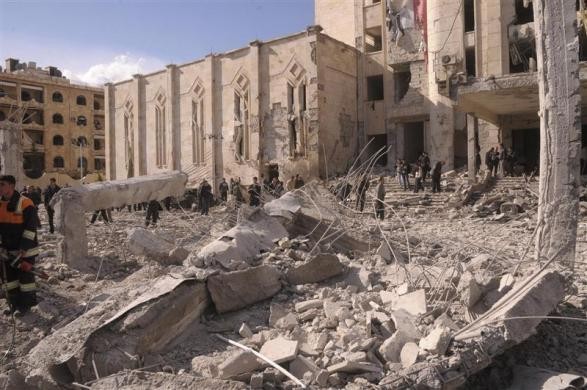
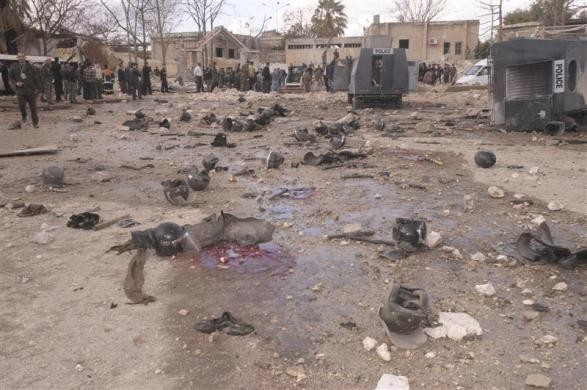
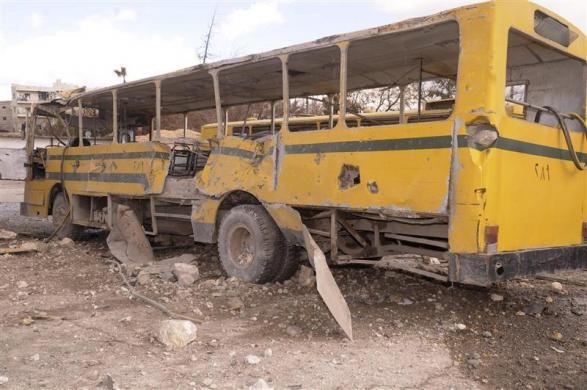
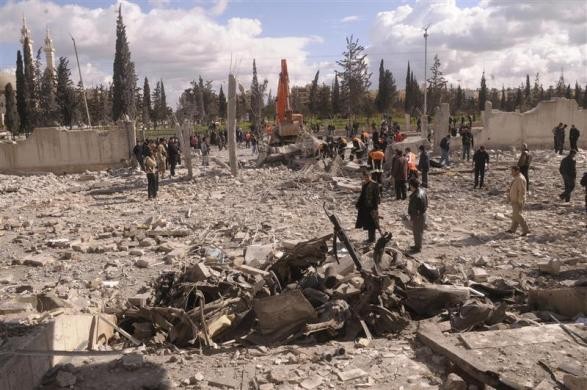
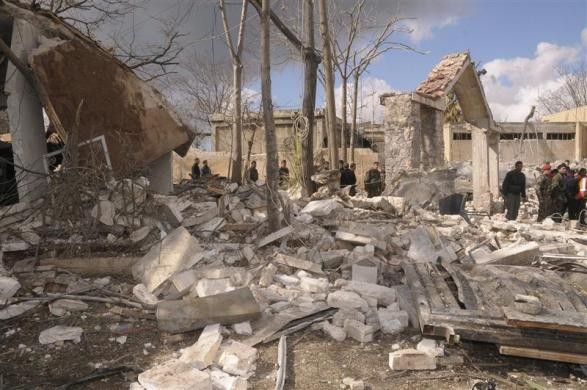
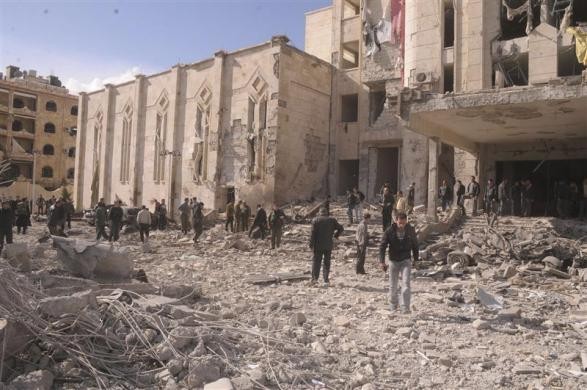
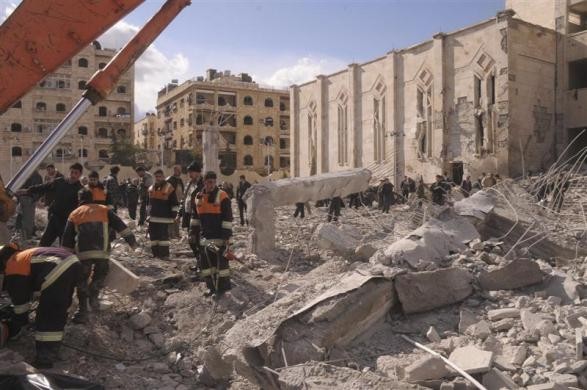
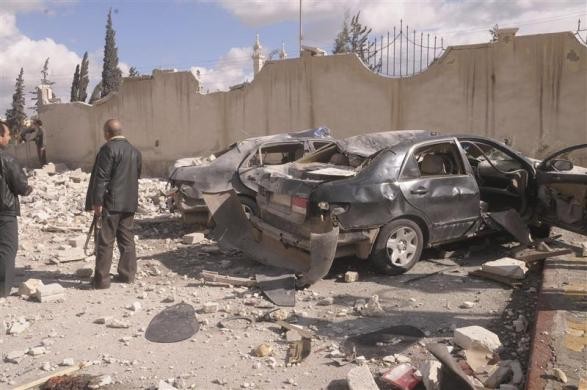
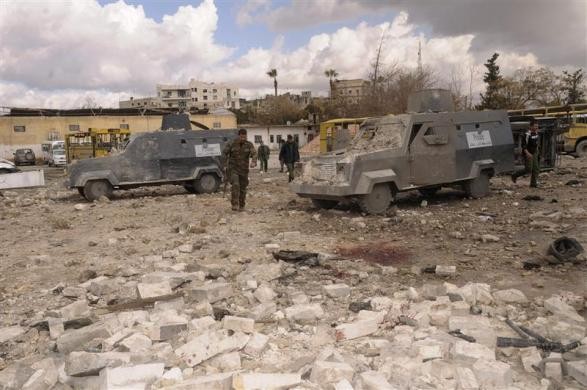
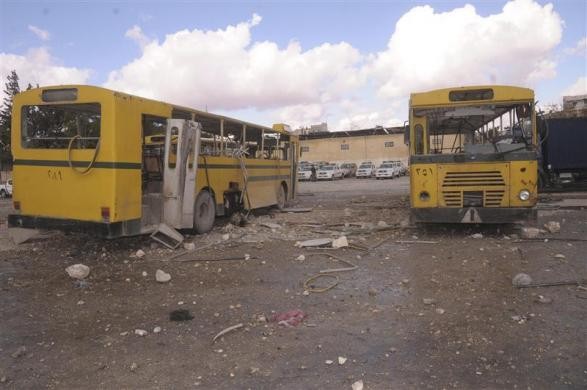
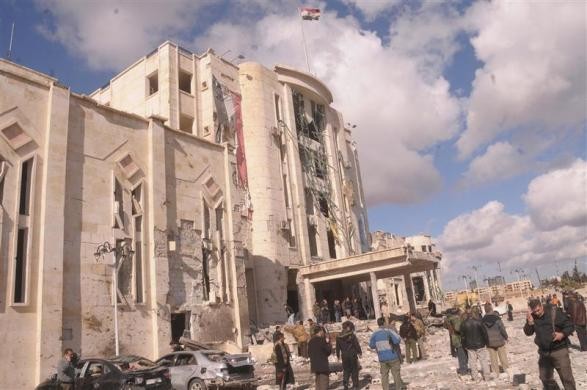
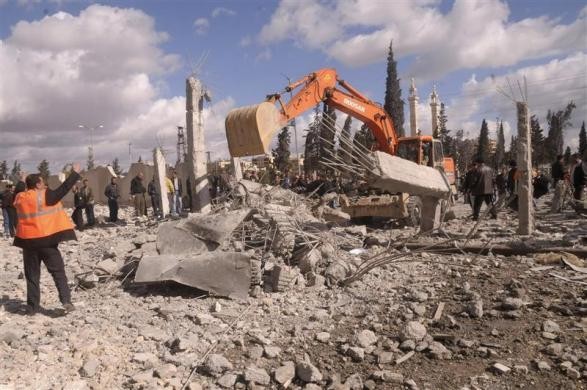
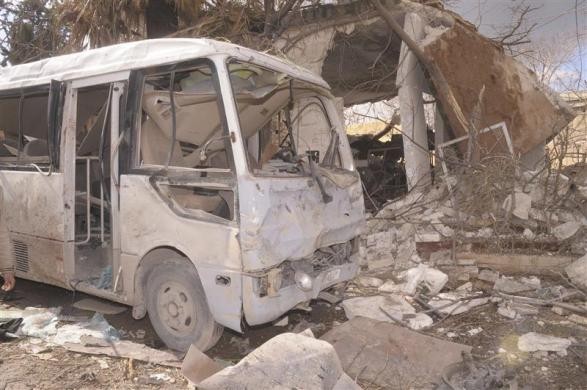
Syrian security and civil defence members inspect the site of an explosion in Syria's northern city of Aleppo, February 10, 2012.Reuters
Syrian security and civil defence members inspect the site of an explosion in Syria's northern city of Aleppo, February 10, 2012.ReutersPolice helmets lie on the ground outside the police headquarters building, one of two sites of bomb blasts in Syria's northern city of Aleppo, February 10, 2012.ReutersA damaged bus is seen outside the police headquarters building, one of two sites of bomb blasts in Syria's northern city of Aleppo, February 10, 2012.ReutersSyrian security personnel inspect the site of an explosion in Syria's northern city of Aleppo, February 10, 2012.ReutersSyrian security personnel inspect the police headquarters, one of two sites of bomb blasts in Syria's northern city of Aleppo, February 10, 2012.ReutersSyrian workers inspect the site of an explosion in Syria's northern city of Aleppo February 10, 2012.ReutersSyrian workers inspect the site of an explosion outside a military security building, one of two sites of bomb blasts in Syria's northern city of Aleppo, February 10, 2012.ReutersDamaged cars are seen outside a military security building, one of two sites of bomb blasts in Syria's northern city of Aleppo, February 10, 2012.ReutersSyrian security personnel inspect damaged riot police vehicles outside the police headquarters building, one of two sites of bomb blasts in Syria's northern city of Aleppo, February 10, 2012.ReutersDamaged buses are seen outside the police headquarters building, one of two sites of bomb blasts in Syria's northern city of Aleppo, February 10, 2012.ReutersA view of a damaged building at the site of an explosion in Syria's northern city of Aleppo, February 10, 2012.ReutersAn excavator removes debris at the site of an explosion in Syria's northern city of Aleppo, February 10, 2012.ReutersA damaged vehicle is seen outside the police headquarters building, one of two bomb blasts sites in Syria's northern city of Aleppo, February 10, 2012.Reuters
Twin bomb blasts decimated the Syrian security headquarters at Aleppo on Friday, killing over 25 people in the worst ever violence witnessed in the 11-month-long uprising against President Bashar al-Assad.
The twin car bombings timed two minutes apart, had a devastating impact, as mangled bloodied bodies and severed limbs lay strewn on the pavement outside the targeted buildings. The incident apparently shattered the calm and peace of an early morning Muslim Sabbath at Aleppo city, Syria's commercial capital.