Nasa’s Wise Discovers Millions of Black Holes Across Universe
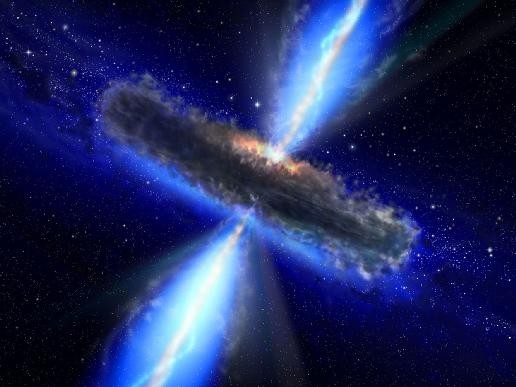
Nasa astronomers have discovered millions of black holes across the universe. They have also discovered mysterious objects called hot DOGs or dust-obscured galaxies.
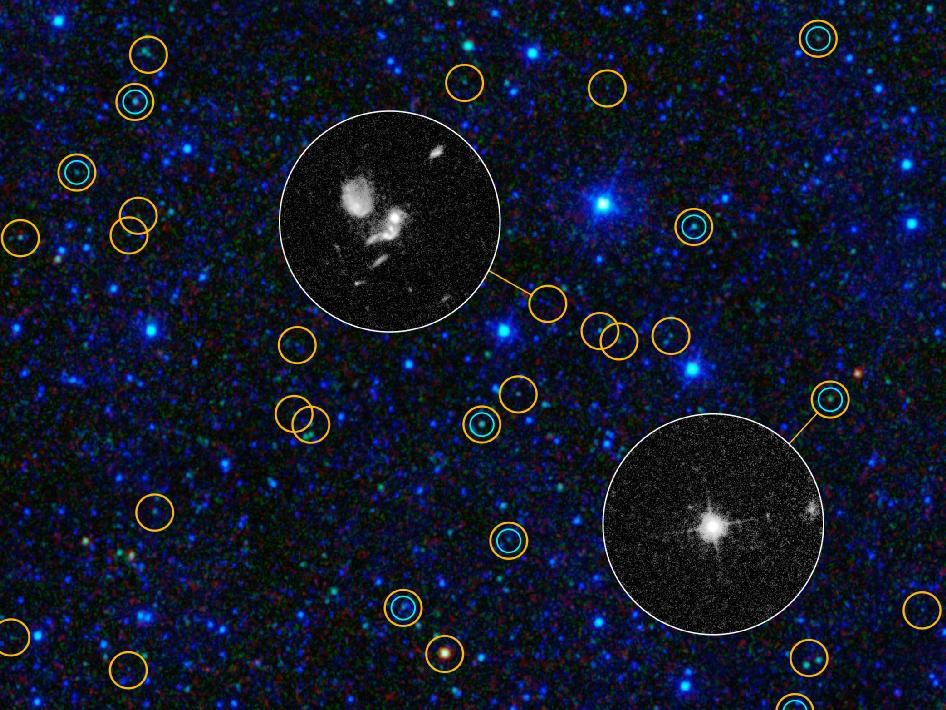
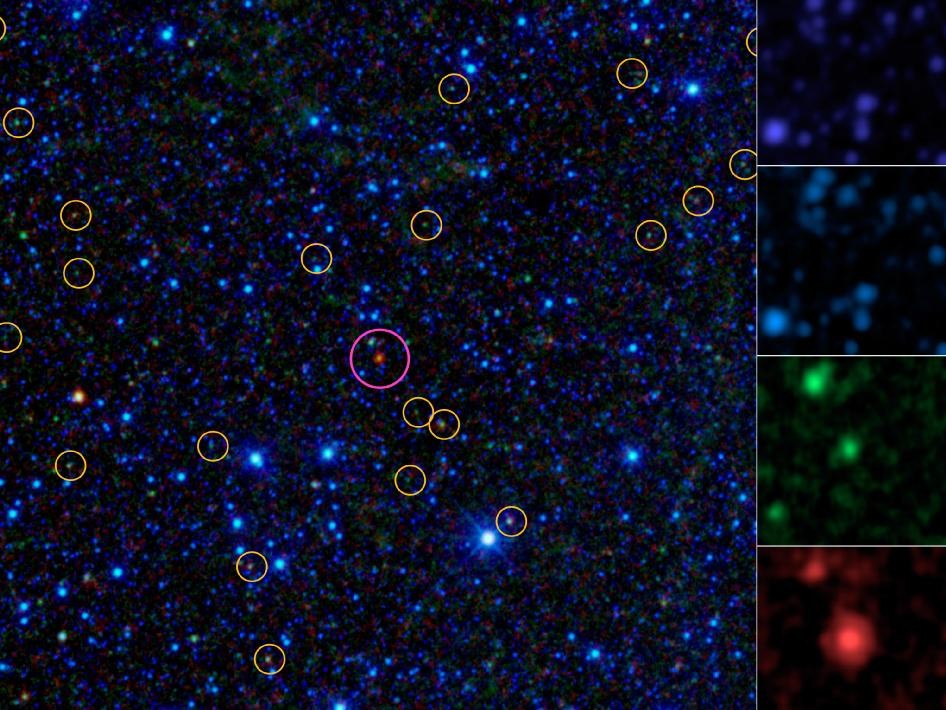
Astronomers claim that dust-obscured galaxies are quite bright, but could be viewed only by using infrared telescopes, like the Wise telescope, because the galaxy is covered by a thick dust cloud.
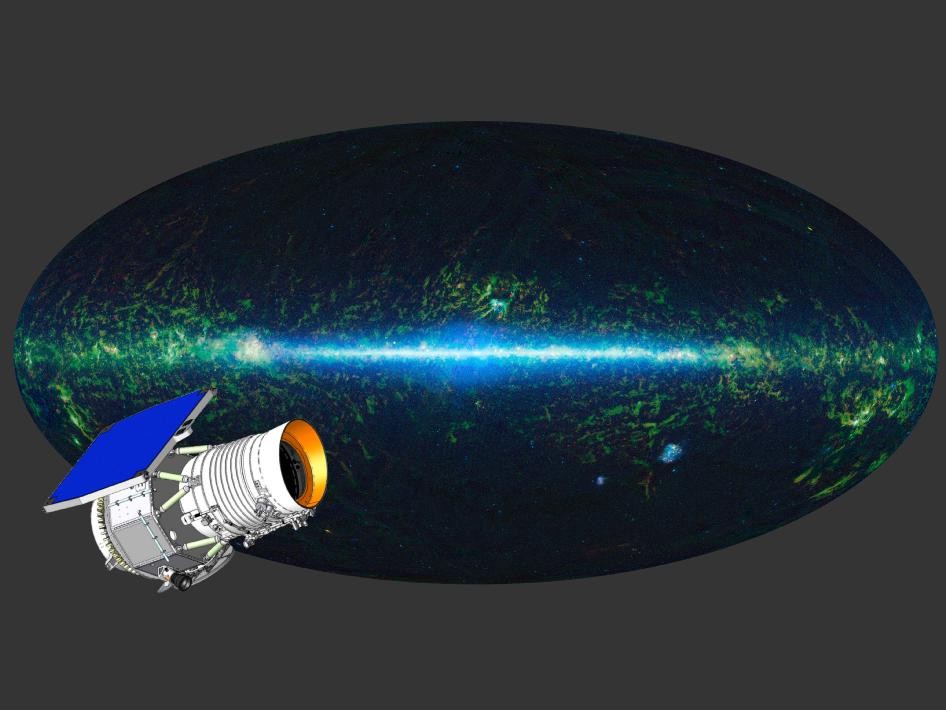
The discovery was made while analysing images sent from Nasa's Wide-field Infrared Survey Explorer (Wise) telescope.
"Wise has exposed a menagerie of hidden objects," said Hashima Hasan, Wise programme scientist at Nasa headquarters in Washington. "We've found an asteroid dancing ahead of earth in its orbit, the coldest star-like orbs known and now, supermassive black holes and galaxies hiding behind cloaks of dust."
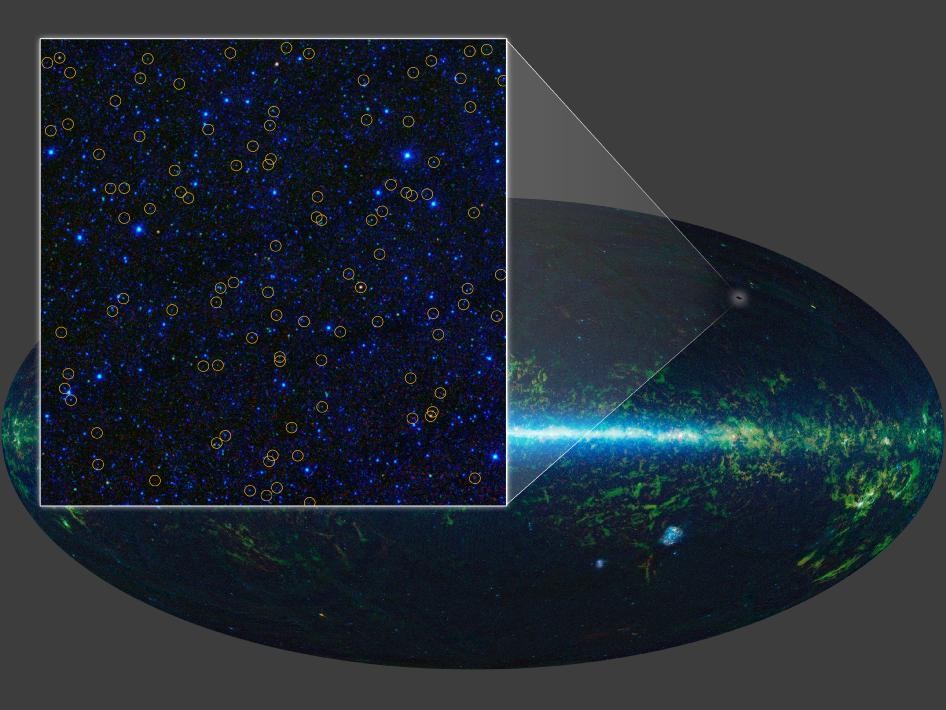
Astronomers have identified about 2.5 million actively feeding supermassive black holes across the full sky, stretching back to distances more than 10 billion light-years away. Nearly two-thirds of these black holes had never been detected before because dust blocks their light. Wise easily sees these monsters because their powerful, accreting black holes warm the dust, causing them to glow in infrared light.
Till now, Wise has discovered 1,000 brightest dust-obscured galaxies. These dust-obscured galaxies can pour out more than 100 trillion times as much light as our sun. Even though they are so bright they cannot be viewed because they are blanketed by dust, but show up only in the longest wavelengths of infrared light captured by Wise.
"These dusty, cataclysmically forming galaxies are so rare Wise had to scan the entire sky to find them," said Peter Eisenhardt, project scientist for Wise. "We are also seeing evidence that these record setters may have formed their black holes before the bulk of their stars. The 'eggs' may have come before the 'chickens."
Wise scanned the whole sky twice in infrared light, completing its survey in early 2011. The telescope has captured millions of infrared images of the sky. The images from Wise have led to several discoveries.
"The latest findings are helping us better understand how galaxies and the behemoth black holes at their centres grow and evolve together," said Peter.
© Copyright IBTimes 2025. All rights reserved.
- MOST READ