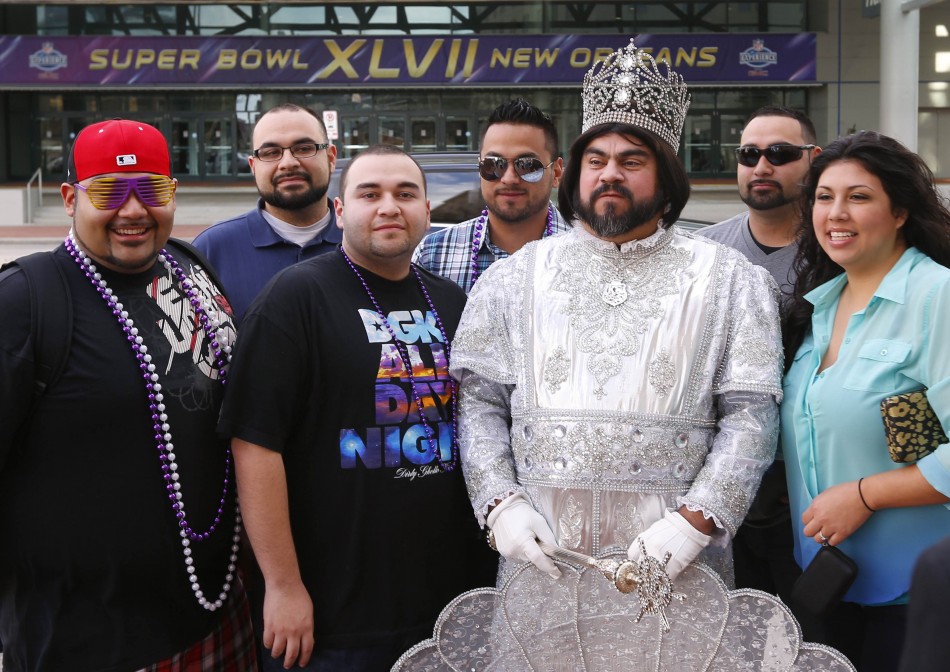
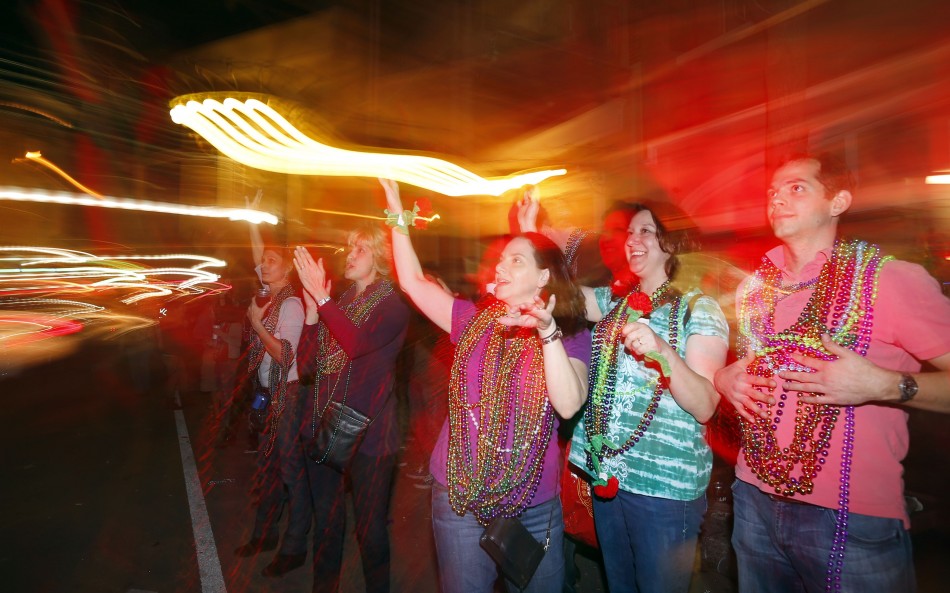
Mardi Gras 2013 New Orleans: Big Easy Welcomes Fat Tuesday with Iconic Parade [SLIDESHOW]
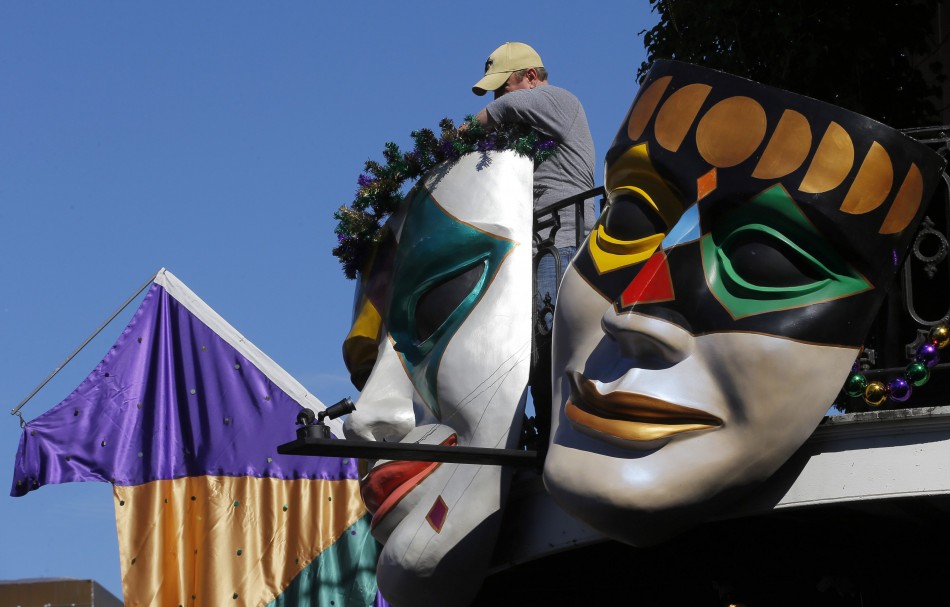
All round the world carnivals, festivities and parades - like the legendary Rio Carnival 2013 - have begun counting down the days to Fat Tuesday; or Shrove Tuesday, if you prefer. For 'tis the season of Lent and that means much of the Western world is preparing to enter a period of fasting beginning from Ash Wednesday.
This period of festivity is not only about and endless stream epicurean delights. It is also about an infectious wave of colour and good cheer and fellowship. For it may be that the Carnival of Rio de Janeiro and the Mardi Gras of New Orleans and the Gay Mardi Gras of Australia are separated by kilometres of land and water but the spirit that drives each parade and every person is the same.
The parade in New Orleans is, like the Rio Carnival, particularly special. The city has an exotic and mysterious charm that is all its own and Mardi Gras in New Orleans is like nothing anywhere else in the world.
And, as with any glamorous party anywhere in the world, celebrities are not slow to join. This year, international pop sensation Kelly Clarkson and veteran actors GW Bailey and Gary Sinise are some of those expected to be in New Orleans.
Reuters estimates there will be approximately a million people in New Orleans for Fat Tuesday next week. And the fact this year New Orleans hosted the Super Bowl as well means the city's coffers are expected to grow by approximately £630m.
Click Start to see a slideshow of exciting photographs from the Mardi Gras 2013 festival in New Orleans and Mobile, in the neighboring state of Alabama
Mardi Gras 2013 in New Orleans and Mobile
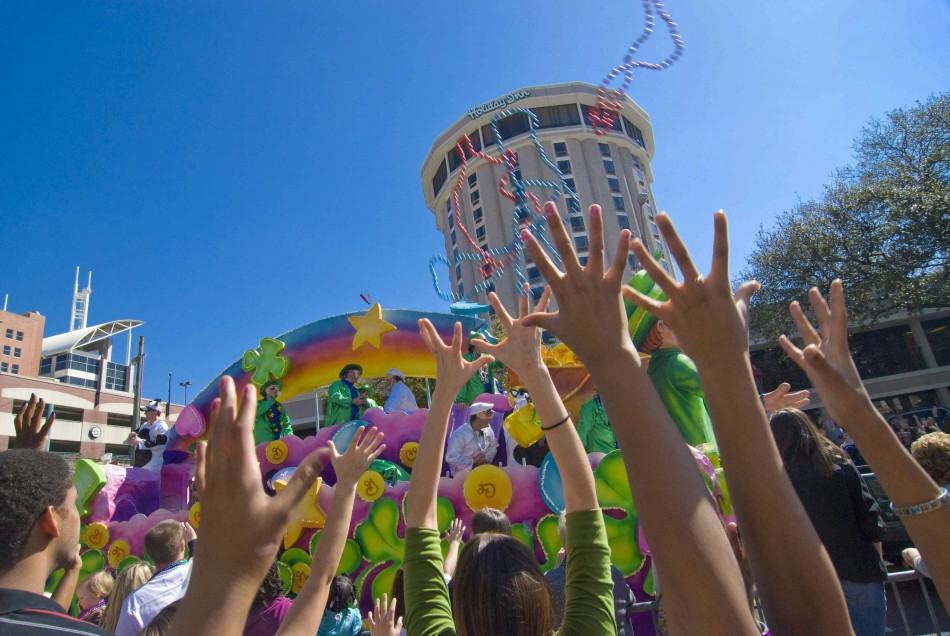
The tradition of pre-Lenten parades in the US began in the city of Mobile, in the state of Alabama. New Orleans’ parades are now far more famous, though. The two cities are a little over 200km apart. The cities of Mobile and New Orleans host multiple parades in the week leading up to Fat Tuesday.
Mardi Gras 2013 in New Orleans and Mobile
The Mardi Gras parade in New Orleans attracts up to three times the number of visitors compared to the parades in Mobile. According to history, a Mobile resident named Michael Krafft helped lead the city's first Mardi Gras parade on New Year's Eve in 1830. Krafft's group came to be known as the Cowbellion de Rakin Society for the cowbells and rakes they used for their spontaneous celebration. Floats and themes were added ten years later.
Mardi Gras 2013 in New Orleans and Mobile
As many as 500,000 King cakes are sold during Mardi Gras in New Orleans; in the week leading to Fat Tuesday. In addition, 50,000 are shipped out-of-state via overnight courier. The sugar-coated pastries include a tiny plastic baby doll inside; the person who finds it is declared "king" and must buy the next cake or give the next party.
Mardi Gras 2013 in New Orleans and Mobile
One of the most photographed objects in all of Mardi Gras is the Boeuf Gras float in the Rex parade. Since the Middle Ages, the bouef gras (fatted bull) has been the symbol of the last meat eaten before Lent. While once a live bull was included in the procession, now a huge papier-mache figure appears.
Mardi Gras 2013 in New Orleans and Mobile
The University of New Orleans believes the economic impact of the annual Mardi Gras parade generates well over £500m every year. In 1991, the largest of the supply stores for the New Orleans Mardi Gras parade sold 41 million pairs of beads. And up to 95 percent of the New Orleans metropolitan area’s 30,000 rooms are booked during Mardi Gras weekend.
Mardi Gras 2013 in New Orleans and Mobile
Every year, on the evening of 6 January, the Phunny Phorty Phellows (PPP), a group of about 50 costumed men and women, trumpet the official opening of the Carnival season by riding a decorated streetcar along the St Charles Avenue line. Accompanied by a lively Dixieland band, the group feasts on king cake and tosses throws to delighted onlookers
Mardi Gras 2013 in New Orleans and Mobile
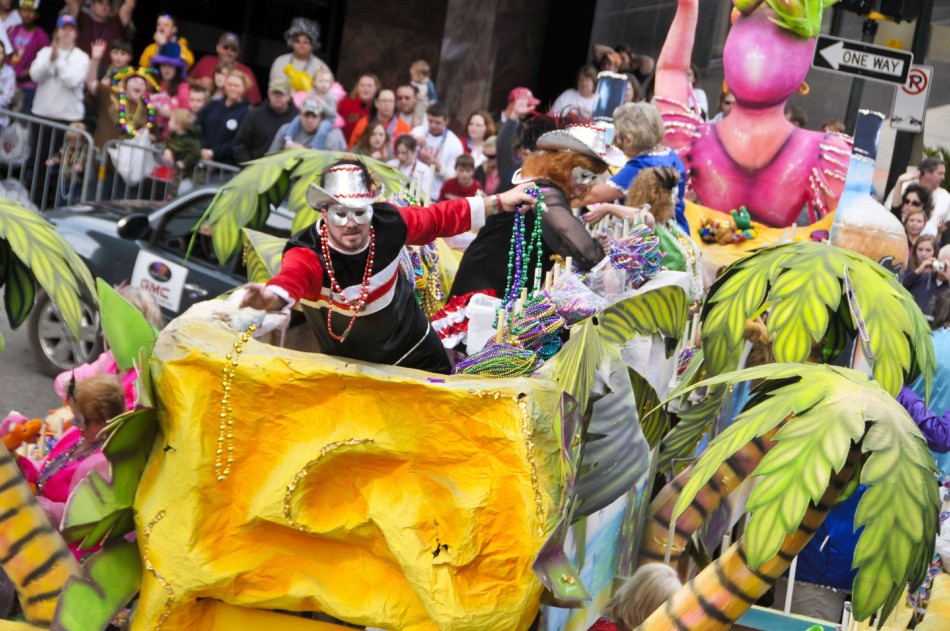
The super parades of Endymion and Bacchus, scheduled for the Saturday and Sunday before Fat Tuesday, feature a combined total of 75 floats, 60 marching bands and more than 250 units. Their 2,300 members toss more than 1.5 million cups, 2.5 million doubloons and 200,000 gross of beads.
Mardi Gras 2013 in New Orleans and Mobile
The Krewe of Comus was founded in 1857 and used to be one of the biggest events of Mardi Gras. It was also dedicated to a tradition of secrecy concerning its membership. In protest of the 1992 anti-discrimination ordinance, Comus stopped parading rather than provide a public list of its members. The krewe still holds its annual ball.
Mardi Gras 2013 in New Orleans and Mobile
The 24th float in the Twelfth Night Revelers parade of 1871 featured Santa Claus, who passed out gifts to the kids in the crowd. And, while on the subject of throws, the iconic beads of Mardi Gras are actually plastic. Glass beads have not been used since 1970. Those came from Czechoslovakia. The plastic beads come from Hong Kong.
Mardi Gras 2013 in New Orleans and Mobile
In addition to celebrations in New Orleans and Rio, other famous celebrations of Fat Tuesday take place in Baranquilla in Colombia, Port-of-Spain in Trinidad and Tobago, Mazatlan in Mexico and Quebec City in Canada. The first known Mardi Gras parade in New Orleans took place in 1837.
Mardi Gras 2013 in New Orleans and Mobile
The official colors of Mardi Gras have meanings. Purple is for justice, gold is for power and green is for faith. These were chosen by the Grand Duke of Russia in 1857. The tradition of handing out items to the audience dates back to Renaissance Europe.