Israel Recruits Teenagers to Fight Cyber Warfare

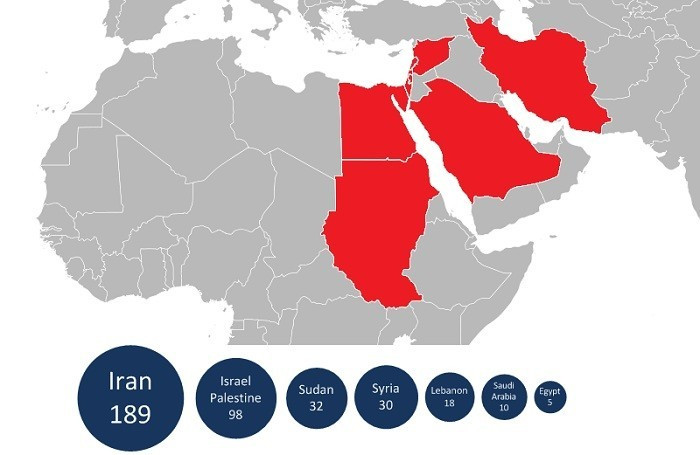
Israel is poised to launch a fresh national programme aimed at training young people in cyber defence in response to growing concern about online attacks from Iran.
Prime Minister Benjamin Netanyahu said the programme, named Magshimim Le'umit, will provide a three-year course and targets students aged 16-18.
During an address at the Ashkelon Academic College, the Jerusalem Post claims Netanyahu said Israel's systems are under attack from Iran, adding: "We are bolstering our ability to deal with these threats via the Israel National Cyber Bureau (INCB) that we established."
The prime minister continued by saying that children are the "future interceptors" for the state of Israel, and that: "We are one of the world's leaders in the field of cybernetics, and we must maintain this position."
Last week, Iran's navy launched a simulated cyber-attack against the country's defence network to test the army's capability to detect and block viruses and hackers.
In another development, researchers from a leading Finnish computer security lab have outlined a list of core threats for 2013.
State-sponsored cyber warfare, which was an important trend in 2012 with three major malicious programmes (Flame, Gauss and miniFlame) emerging, will undoubtedly continue this year according to Kaspersky Lab.
The malware known as Flame has been in operation since March 2010 but no security software detected it until last year, due to the complexity of the software and the targeted nature of the attacks. Its aim was to steal information from infected machines, "including but not limited to computer display contents, information about targeted systems, stored files, contact data and even audio conversations".
Kaspersky expects "more countries to develop their own cyber programmes for the purposes of cyber-espionage and cyber-sabotage".
"These attacks will affect not only government institutions, but also businesses and critical infrastructure facilities," it said.
© Copyright IBTimes 2026. All rights reserved.
- MOST POPULAR IN Politics