Chinese EV Maker BYD Overtakes Elon Musk's Tesla as World's Leading EV Seller Despite Market Share Decline
BYD achieved this feat without selling their cars in the US
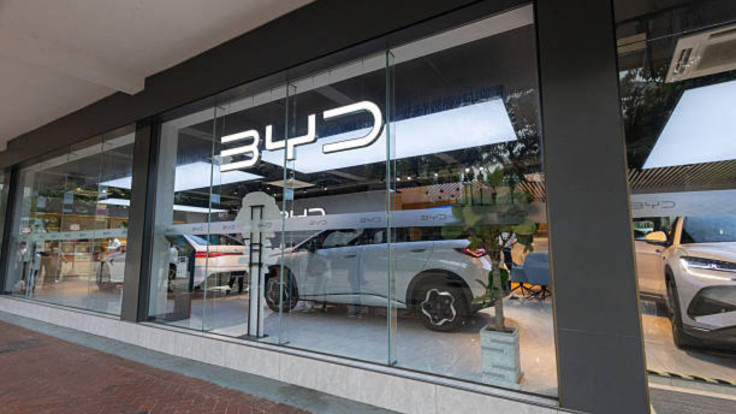
In a remarkable shift within the electric vehicle industry, Chinese manufacturer BYD has surpassed Tesla as the global leader in EV sales for 2025. Despite facing its own hurdles, including a shrinking market share in its domestic arena, BYD achieved this feat through robust growth and strategic expansion.
This development marks a significant turnaround from over a decade ago when Tesla's chief executive, Elon Musk, downplayed BYD's potential as a rival.
Sales Figures Highlight the Gap
BYD reported delivering 2.26 million pure electric vehicles in 2025, representing a substantial 28 per cent increase compared to the previous year. In contrast, Tesla experienced its most severe annual sales downturn ever, with deliveries dropping 8.6 per cent to 1.6 million units.
This marked the second consecutive year of decline for the American company, following a slight 1 per cent dip in 2024.
Notably, BYD accomplished this without entering the US market, where Tesla derives roughly half its revenue. China, however, remains a key territory for Tesla, serving as its second-largest customer base.
Tesla's fourth-quarter performance was particularly weak, with around 418,000 vehicles sold, a 15.6 per cent fall from the prior year and a stark contrast to the third-quarter surge driven by impending policy changes.
Challenges Impacting Tesla's Performance
Tesla's struggles stem from intensified rivalry and external pressures. Once enjoying annual growth rates nearing 50 per cent, the company has contended with offerings from BYD and established players like traditional global carmakers. Additionally, Musk's involvement in political spheres, including his leadership of a US government efficiency department under the Trump administration, sparked widespread backlash.
Protests at showrooms in Europe and the US, along with isolated incidents of vandalism, deterred potential buyers.
A US federal tax credit of £5,570 ($7,500), which lapsed on 1 October, prompted a buying frenzy in the third quarter, potentially cannibalising later sales. In response, Tesla introduced more affordable variants of its Model 3 and Model Y, priced about £3,713 ($5,000) lower than standard models.
However, these compromises on range and features may not fully offset the lost incentive.
BYD's Domestic Pressures Amid Global Gains
While celebrating its sales crown, BYD navigates fierce competition in China, the planet's biggest car market. The company sold over 4.6 million vehicles overall, including hybrids, but this reflected the slowest expansion in five years.
Profit margins suffered, with declines noted in the second and third quarters of 2025.
HSBC's research show that China's automotive landscape features around 150 brands and more than 50 EV specialists, fostering relentless price battles. Competitors such as Geely, which saw nearly 90 per cent sales growth in the first 11 months, alongside emerging names like Leapmotor and Xiaomi, have chipped away at BYD's dominance.
Its market share slipped from a 2023 high of 35 per cent to 29 per cent in the same period of 2025, with domestic sales down over five per cent.
State-run media reported that BYD's founder, Wang Chuanfu, acknowledged at an investor gathering that rivals had narrowed the firm's technological edge and that product distinctions needed sharpening. He hinted at forthcoming innovations to reclaim momentum.
What Lies Ahead for Both Car Giants
Investor sentiment remains mixed. Tesla's shares climbed 1.2 per cent in early trading following the announcements and ended 2025 up 18.6 per cent overall.
Optimism centres on Musk's visions for autonomous taxi fleets and humanoid robots, though the robotaxi initiative has under-performed, confined to Austin and San Francisco rather than broader rollout.
For BYD, overseas pushes counter domestic woes, despite tariffs in some regions scrutinising its pricing tactics. As the EV sector evolves, both companies' adaptability will determine their trajectories in an increasingly crowded field.
© Copyright IBTimes 2026. All rights reserved.
- MOST POPULAR IN Business