

Ivan Kraynov: Building Global Businesses Across Industries
Exploring Ivan Kraynov's Methodology in Business Growth and Investment
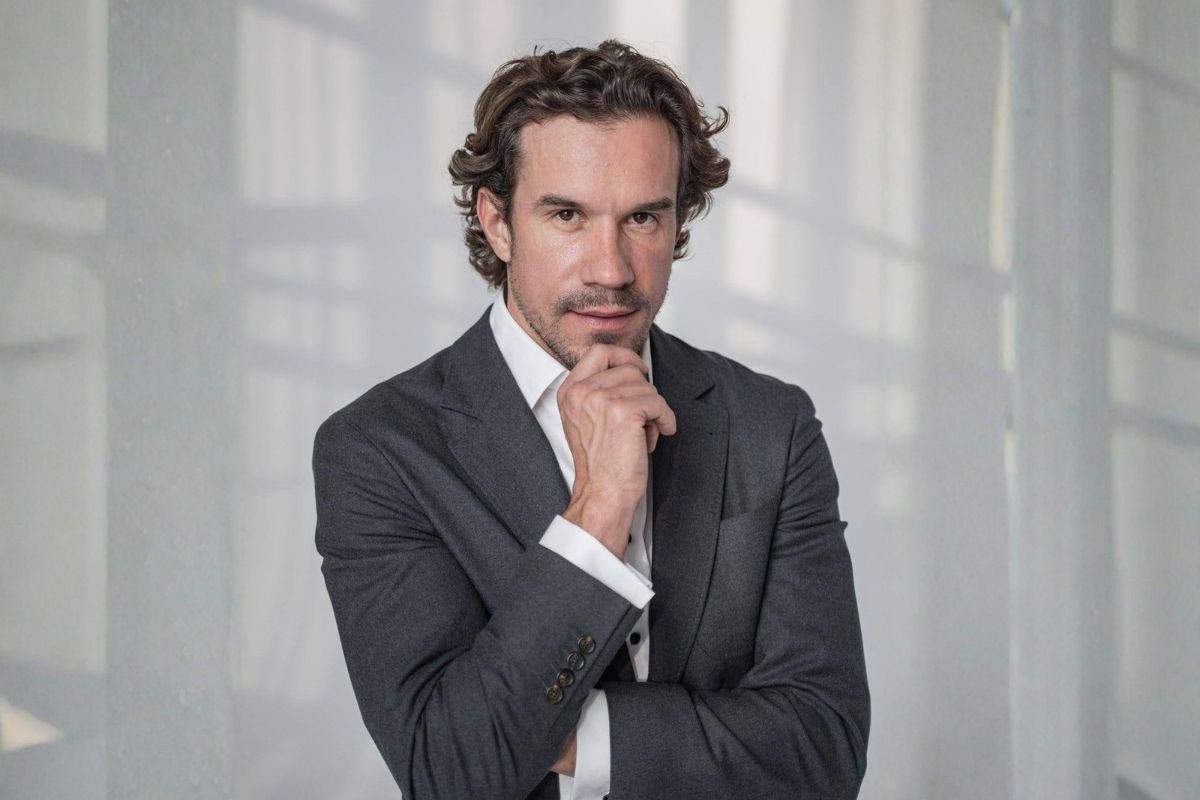
Ivan Kraynov is a co-founder of the consulting firm ZenVIND and an investor in health products, payments and retail. A single method links ventures that share almost nothing at product level: back experienced founders, read commercial signals early, revise assumptions against fresh evidence, then rebuild execution country by country.
The Role of a Co-Founder
ZenVIND is his only co-founder role. Everywhere else he invests.
That agency sells advisory and brand strategy, commercial and digital analytics, plus custom software. Its services stretch from business strategy and market entry to process improvement, scaling and digital transformation.
In a November 2025 Entrepreneur Loop interview, Kraynov named ZenVIND among his main advisory initiatives, still early in development.
Investing and founding carry different obligations. Investors assess a venture from outside, then decide on capital. Co-founders define what gets sold, how the offer is positioned, which capabilities need building over the following years.
Four disciplines sit inside that structure. Advisory covers strategy and entry planning. Brand specialists handle positioning and communication. Analysts read commercial data and digital performance. Engineers build custom software.
Most client mandates touch at least two of the four at once, which is the argument for keeping them under a single roof instead of selling one narrow service.
Co-founders also live with decisions after making them. Hiring, partner terms, the next country of entry: at an early-stage employer such choices sit with the founding group itself, with nobody left to delegate them to.
ZenVIND therefore works as two things at once: an operating firm and a base for later bets.
A Consistent Approach to Business Growth
Several principles recur in Ivan Kraynov's approach to business development across different industries.
- Demand signals first. Falling repeat purchases or a lower average order flag trouble long before quarterly reporting. Inside a software product the same warning arrives through user behaviour, support tickets, retention curves.
- Readiness to leave the plan. Startups revise their first assumptions once they learn what buyers actually do. Founders concentrate on the product, customers on the job they need done; priorities drift apart.
- Service as part of the offer. Onboarding, support, communication and reliability shape experience as much as features. In crowded categories that is often the only room left for differentiation.
- Loyalty without discounts. Discount and bonus programmes buy transactions, not attachment. Kraynov weights individual preference and repeat contact instead.
- Systems over individuals. Firms leaning on one or two key people meet a ceiling at the first attempt to scale.
Project selection follows the same logic. 'I invest in teams, not business ideas,' he has said: the sector comes second to the people running it. Speed is not expected either. Reliable repeat custom in saturated categories takes over a year of testing and adjustment.
Much of this reasoning appears in his columns. They cover questions founders should answer before launching, signs of a fundable AI venture, customer loyalty inside hyper-competitive markets, sectors still drawing venture capital, and why software startups run closer to restaurants than most of their owners admit.
Building Businesses Across Different Industries
Ivan Kraynov's business portfolio spans four sectors: consulting, wellness, payments and hospitality. What holds that list together is sequence rather than sector logic.
Moving between industries never means copying a single operating model everywhere. Consulting firms run on expertise, client relationships, delivery. Wellness labels depend on product-market fit, repeat purchase, distribution, acquisition cost. Payments add reliability requirements and financial-infrastructure constraints.
Sequence explains the portfolio better than sector logic. Consulting produced operating knowledge and a working partnership; nutrition came next, as a category where product and distribution decide outcomes; fintech and restaurant brands sit alongside as smaller positions.
Each new industry arrived after the previous one had settled, never as parallel bets placed at once.
Wellness as the Current Focus
Health products now lead his investment priorities.
Jollie, built for the United States, sells mango-flavoured collagen jelly sticks direct from its site, subscription included, and gathered an early audience through social media, TikTok especially.
Management calls the label first in America to use fruit purée in this format. Flavours are expanding past mango.

Technology and Consumer Positions
PayPilot extends the portfolio into fintech, a category judged on reliability rather than on taste, which puts the method under a different kind of pressure.
ABC Coffee Roasters, a specialty roaster established in Dubai, is expanding into Europe and the UK, making it the clearest live test of whether a concept built for one market travels.
TIMELESS runs premium lounge bars in the Emirates, the earliest of these positions and the source of much that he later wrote about service.

What Changes Across Markets
Geography is the second variable. Jollie targets US buyers, the coffee and hospitality labels operate from Dubai. Pricing, positioning, distribution, regulation, shopping habits differ everywhere.
International expansion becomes a sorting exercise: which parts of a model transfer, which need rebuilding locally.
Long-Term Partnerships as a Growth Strategy
Kraynov co-founded ZenVIND with Nikolay Prokofyev, Vitalii Prokofev and Dmitrii Prilipko. Their backgrounds cover IT, hospitality, wellness, finance. This group moves between ventures together instead of assembling fresh teams each time.
That mix matters across borders. Expansion means unfamiliar regulation, tax systems, purchasing habits, contractor pools. Direct experience of a country catches problems, while fixes remain cheap.
Partnerships also fail predictably. Friction between co-founders, unclear responsibility, repeated operational mistakes slow a firm as effectively as a bad commercial call. Early recognition is most of the defence.
That defence works better with a mixed group, which can attack a question from several directions at once. Entering a new territory involves commercial strategy, technology, customer acquisition, financing simultaneously; colleagues holding all four backgrounds see the dependencies between them.
Long collaboration lowers the cost of starting something new. Partners already know how decisions get made, where responsibilities overlap, which disagreements need settling early. Execution risk stays. Entry into unfamiliar sectors or countries becomes more structured.
Co-investment operates the same way. The ZenVIND co-founders back ABC Coffee Roasters jointly, so due diligence, terms and later operational calls run through people who have already tested each other's judgement.
Repeat collaboration of that kind is closer to a method than to a preference for familiar faces.
Experience Behind Every Business
Commerce was an early ambition; Kraynov has said he never seriously considered another professional path.
His outlook came from places where mistakes surface quickly, Dubai above all. By his count, more than 13,000 food and beverage venues compete there for the same customers, leaving no room to await quarterly reports before correcting weak decisions.
Price, service or communication changes reach demand almost immediately. Such conditions teach a single habit: check numbers weekly, read a bad week as information, not noise.
Competitive chess gives him a second reference point, and interviewers usually reach for it first. Years at the board train the habit of calculating several moves ahead, together with a preference for discipline over raw talent. Preparation matters; so does repeating the right actions daily.
He has compared winning a medal with watching a project post strong financial results. Both rewards arrive long after the effort that produced them, which shapes how he reads early signs inside a young venture: slow evidence beats fast enthusiasm.
The unglamorous side is present too. Routine and operational detail are what he finds hardest, and uncertainty never fully clears: strong colleagues and a sound plan still leave luck in the equation.
Entrepreneurship, on his account, comes down to managed risk – knowing how much uncertainty you carry and deciding inside that limit.
Conclusion
Ventures differing sharply on the surface follow one recognisable pattern underneath. ZenVIND supplies the advisory base, Jollie carries the current health priority, PayPilot extends range into technology, the Emirates labels sit alongside.
Each territory demands something different from the same model. That is why the next stage looks likely to widen the footprint rather than narrow it to a single industry.
Planned American launches point in the same direction: another category, another regulator, a familiar short list of people deciding what happens next.
© Copyright IBTimes 2026. All rights reserved.