

How Sacha Delhoux Co-Founded a Company as CTO and Reached a $17 Million Acquisition at 19
The young CTO built blockchain data infrastructure, led an engineering team and helped develop systems later acquired by Fomo, according to Axios.
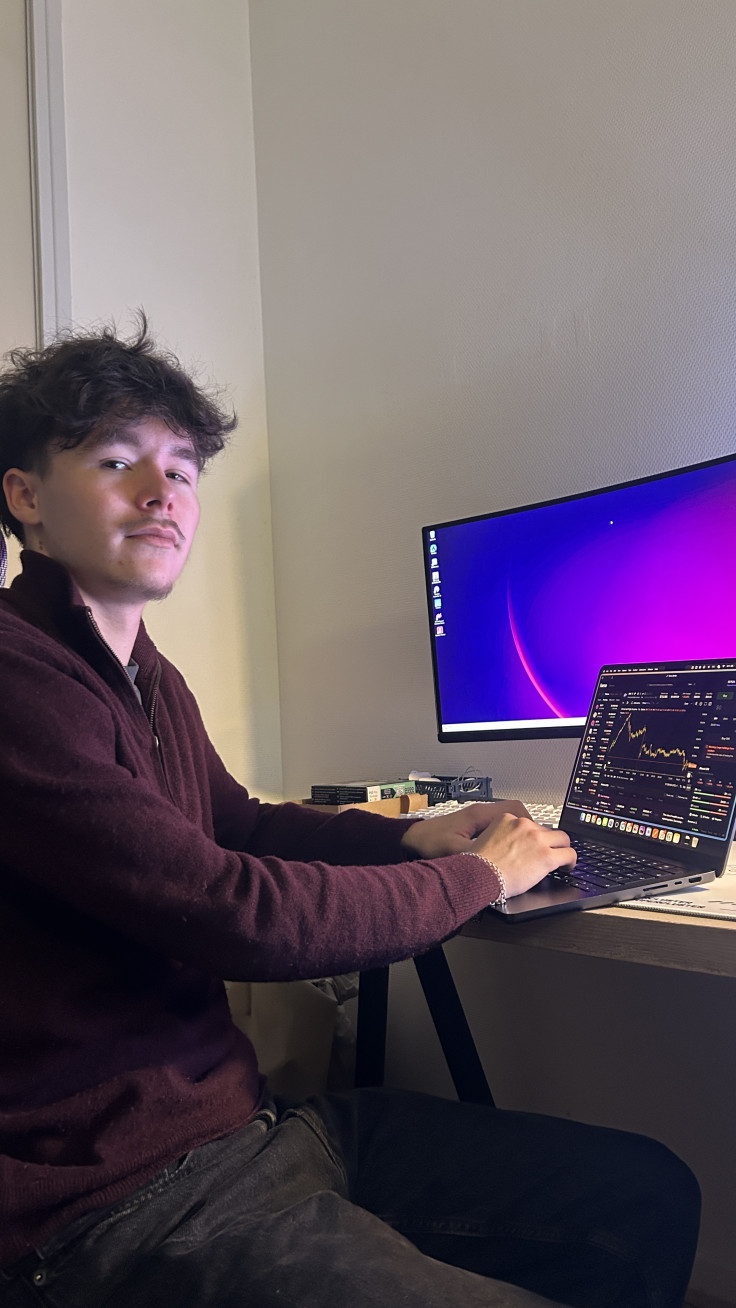
At 19, Sacha Delhoux was already responsible for Technology that other companies depended on. As co-founder and Chief Technology Officer of Mobula Labs, he was recruiting engineers, setting technical priorities, supporting customers, reviewing work, and making architectural decisions for production systems. The agreement that would bring Mobula's technology into Fomo was reached before Delhoux turned 20 and announced shortly after his birthday.
The more interesting part of that timeline is the level of responsibility he had taken on by then. Delhoux was not simply attached to the company as a young co-founder while other people handled the technical work. He had personally built major parts of Mobula's core technology before taking responsibility for how the larger platform evolved and how multiple engineers contributed to it.
"I knew people were going to notice my age before they understood what I had actually done," Delhoux says. "The only useful response was to keep building, take responsibility, and let the work become the evidence."
Programming had been part of his life long before Mobula. Delhoux began experimenting with software at around eight years old, encouraged by a grandfather who introduced him to computers and information systems. His father was also interested in blockchain and experimented with small programs built around the technology. By roughly 14, Delhoux was exploring NFTs and projects in the Solana ecosystem, but his interest gradually shifted away from using blockchain products and toward understanding how they were built.
"I liked being able to look at a system and ask how it worked," he says. "Once I started learning more about blockchain, I became much more interested in the infrastructure behind the applications than in simply using them."
One of the first major systems Delhoux built at Mobula was its Solana data infrastructure. Applications needed to process large volumes of protocol-specific activity to identify tokens, liquidity pools, swaps, prices, and market changes. Delhoux designed and implemented essential components that collected and normalized that information into the same internal models and APIs Mobula used for other blockchains.
The system became an important foundation for Mobula's pricing, routing, security, and real-time data products. Customers could access reliable Solana data without building and operating their own indexing infrastructure, while other Mobula engineers could develop additional products on top of a shared system.
As the platform grew, Delhoux faced a larger architectural question. Building separate systems for every blockchain and protocol could have allowed Mobula to release some integrations faster in the short term, but it also would have created duplicated logic, inconsistent data models, and increasingly difficult maintenance.
Delhoux instead designed and led the implementation of a chain-agnostic architecture. Blockchain- and protocol-specific behavior remained inside the relevant integration layer, while the resulting information was normalized into shared internal models. The approach required more design work at the beginning, but it allowed Mobula to add networks and protocols without rebuilding the infrastructure for each integration. It also gave customers a more consistent interface across blockchain ecosystems and made subsequent integrations faster and safer to develop.
"Being responsible for the technology did not mean I should personally do every task," Delhoux says. "The harder part was giving engineers enough ownership to move quickly while making sure everyone understood how their work affected the rest of the system."
When Delhoux began recruiting, Mobula still had a small founding technical team in which the founders were personally responsible for most core development and infrastructure. He subsequently recruited and helped organize a dedicated engineering team covering blockchain integrations, backend systems, APIs, data processing, and infrastructure.
His responsibilities changed with that growth. Instead of personally implementing most critical systems, he increasingly defined ownership, reviewed architectural decisions, established technical priorities, and worked to keep contributions from multiple engineers consistent across the platform.
Credibility was another problem Delhoux had to solve. He says his age initially made it harder to establish trust with experienced founders, investors, customers, and engineers. Rather than trying to persuade people that age should not matter, he focused on producing work that could be evaluated on performance and reliability.
"Being young made credibility harder at first," Delhoux says. "I learned that measurable results were a better answer than arguing about my age."
One of those measurable results came from Mobula's pricing and liquidity-routing infrastructure. Delhoux developed systems capable of reducing complex pricing and routing calculations to approximately 5 to 10 milliseconds, compared with approximately 300 milliseconds for comparable processes through competing solutions. The system analyzed fragmented liquidity across multiple pools, calculated possible execution paths, and determined optimized amounts quickly enough to support real-time trading applications.
He also developed weighted pricing methodologies intended to reduce the influence of manipulated, inactive, or low-liquidity pools. Another system analyzed burned liquidity across every pool associated with a token rather than relying on a single market. Together, those systems were designed to improve the speed and reliability of information delivered to applications and later became part of the technology acquired by Fomo.
Fomo itself provides a public example of an application that depended on Mobula's infrastructure before the acquisition. Mobula supplied Fomo with real-time token discovery, universal search, market data, and security-enriched information. The integration included data used to analyze liquidity, developer holdings, sniper activity, bundled supply, and other potential risks before tokens appeared in discovery experiences.
Mobula also provided a real-time WebSocket feed that allowed Fomo to receive continuously updated market information without repeatedly requesting each asset. That infrastructure was particularly important because Fomo was building for mainstream users who could not be expected to conduct their own technical analysis of every token or liquidity pool.
The acquisition followed that period of technical and organizational development. Fomo acquired Mobula's proprietary software and intellectual property in a transaction reported by Axios at $17 million, with key members of Mobula's engineering team joining Fomo. Delhoux then joined Fomo's engineering organization to continue developing the technology at a larger scale.
Delhoux's age makes the sequence unusual, but it does not carry the story by itself. The stronger evidence is in the systems he built, the architectural choices he made, the engineers he helped organize, and the performance improvements those systems produced. By the time the agreement with Fomo was reached, the technology had already become infrastructure that external applications depended on.
© Copyright IBTimes 2026. All rights reserved.