

Solcoa's $75 Million Raise Accelerates a Critical Rare Earth Buildout
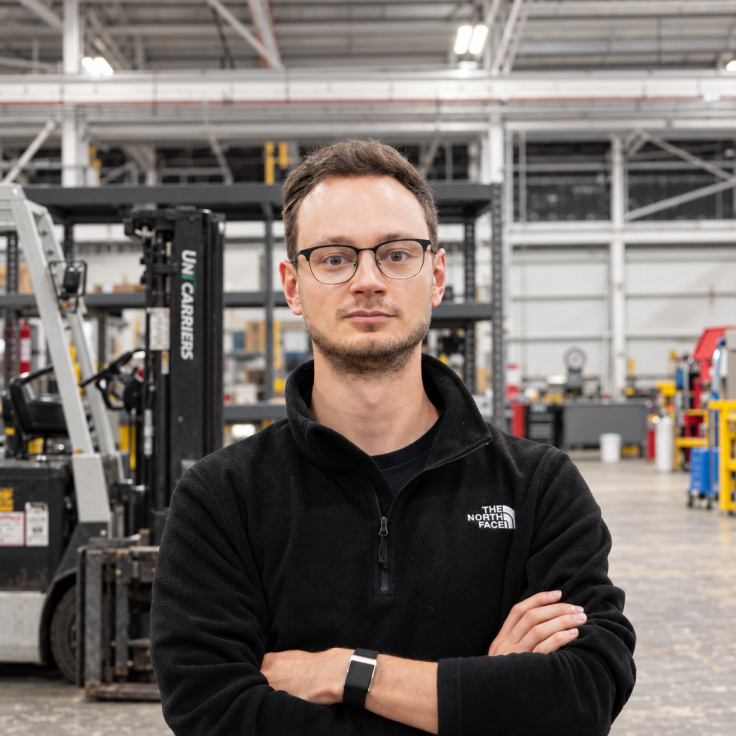
Solcoa Industries has raised $75 million to build its first commercial rare earth metallization plant, giving the company new capital at a moment when U.S. manufacturers are facing tighter sourcing requirements and continuing uncertainty around Chinese supply. The financing includes $45 million in equity led by Bain Capital Ventures, alongside investors including Gigascale Capital, Long Journey Ventures, Felicis, Dylan Field, and Alexis Ohanian, as well as $30 million in debt and equipment financing anchored by J.P. Morgan. For Laurynas Veckys, a founding team member at Solcoa, the raise moves the company into a new stage: converting a planned industrial project into material that customers can qualify and use.
The capital is intended to support Solcoa One, a commercial-scale facility designed to produce rare earth metals used in high-performance permanent magnets. Solcoa says the plant is expected to produce 500 tonnes annually of neodymium-praseodymium, or NdPr, and samarium metal once commissioned. Laurynas has been involved in the work required to connect that future production with customers, feedstock, qualification requirements, and the broader supply chain the plant will serve.
That work carries a deadline. Beginning January 1, 2027, U.S. defense acquisition restrictions covering neodymium-iron-boron magnets expand across the supply chain, from mining through production of the finished magnet, subject to specified exceptions. Companies that have relied on supply chains with significant exposure to China therefore have to examine more than the origin of the final magnet. Intermediate processing matters too.
"The deadline may be written as a date, but the work behind it starts years earlier," Laurynas said. "You need supply, production capacity, customer qualification, and an operating system that can support all of it before someone can confidently say they have a compliant source."
Solcoa is focused on one of those intermediate steps: metallization, where rare earth oxides are converted into the metals needed for magnet production. Even material sourced outside China can encounter a bottleneck if later processing depends on a covered country. Solcoa's work is aimed at adding U.S.-based metallization capacity to that chain.
Laurynas now serves as Chief of Staff at Solcoa, working across commercial and operational priorities tied to that buildout. He says his work includes discussions with automotive manufacturers, major technology companies, magnet makers, and U.S. government stakeholders. Those conversations help determine whether future production can move beyond announced capacity and into customer supply chains, where material still has to be tested, approved, and incorporated into purchasing plans.
"A new supplier only matters if the customer is prepared to qualify the material and build it into their own plans," Laurynas said. "Production and demand have to develop together."
China's export controls have added another layer of uncertainty. China introduced controls on specified medium and heavy rare earth items in April 2025, while broader measures announced later in 2025 were subsequently suspended through November 10, 2026. More recent U.S.-China trade arrangements have extended into January 2027. For manufacturers, the details may continue to change, but access to Chinese-linked material can still be affected by licensing requirements and shifting trade policy while U.S. buyers face tighter sourcing expectations.
The policy response in the United States has become more active as well. Federal investment in domestic producers, public-private financing structures, and new defense-supply-chain measures have placed critical minerals higher on the industrial-policy agenda. A July 2026 executive order on defense supply chains called for additional mapping of critical material dependencies, qualification of alternative sources, and tighter scrutiny of waivers.
Equipment still has to be procured, permits completed, feedstock secured, and material produced before customers can begin qualification. Those steps take time, and several have to begin well before the 2027 sourcing deadline.
"You cannot wait until the rule changes and then decide to build the supply chain," Laurynas said. "By that point, you are already late. The real work is making sure the material, the production, and the customer relationships are in place before the deadline becomes a problem."
The new financing gives Solcoa more room to move Solcoa One toward commercial production, but the plant still has to fit into a working supply chain. Feedstock must be available before output can scale, and customers need material they can test before they can make longer-term purchasing commitments. Laurynas's role sits inside that sequence, linking the commercial work around future demand with the operating decisions required to make production usable.
Demand is also moving quickly. Laurynas points to defense modernization, robotics, drones, and AI-related infrastructure as areas increasing demand for permanent magnets. Each adds pressure to a chain that already depends on raw materials, processing, metallization, and magnet production working in sequence.
For Laurynas, the immediate work after the raise is concrete. Solcoa One has to move from planned capacity toward production, customers have to qualify the material, and supply relationships have to be strong enough to support repeat purchases. The $75 million gives Solcoa capital to build. Laurynas is working on what has to happen around that build so the material can enter real supply chains before new sourcing rules make the margin for delay even smaller.
© Copyright IBTimes 2026. All rights reserved.