

How AI Is Changing Trading—and How Vicente Bermudez Is Making It Safer
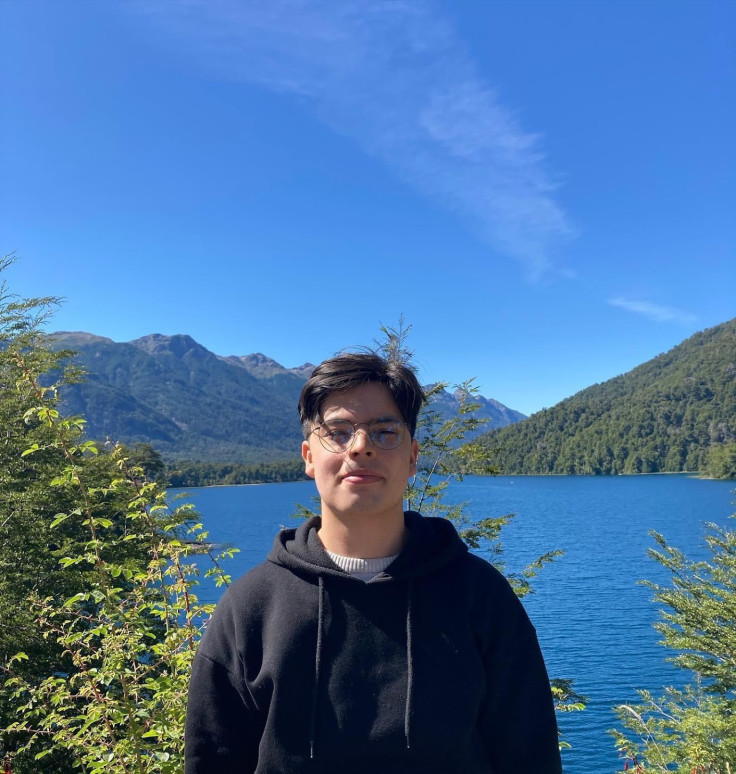
Before an AI trading system is trusted with real capital, Vicente Bermudez wants to know whether its apparent edge is genuine. He has personally designed the infrastructure for that decision: point-in-time data vaults, calibrated reinforcement-learning environments, measured order-book costs, sensitivity probes, and accounting checks built to expose false confidence before it reaches a live market, including reinforcement-learning environments, point-in-time data systems, leakage controls, and benchmarks designed to expose false confidence before it reaches a live market. His work begins where many demonstrations end: with the burden of proving that a profitable result was not created by flawed testing.
"A strong backtest does not tell you much until you know what the system was allowed to see," Bermudez says. "The first job is to prove that the result was not produced by information, costs, or assumptions that would disappear in the real world."
Rather than build another AI system that proposes trades, Bermudez is building the benchmark and test harness that determines whether such a system should act. He believes verification is the part of agentic finance that the industry often skips.
Financial data is unusually easy to mishandle. A trading strategy can appear successful if the testing environment gives it access to information that was not actually available at the time of the decision. Look-ahead bias can enter through misleading timestamps or through the way historical information is stored and presented to the agent. Bermudez's response is structural rather than procedural: he builds point-in-time data vaults intended to make reading future information impossible, not simply prohibited.
He designed the environment so future information is structurally unavailable to the agent, rather than relying on a rule against using it.
That separates a controlled financial experiment from a demonstration that only looks rigorous. Bermudez believes many AI trading claims fail because the test itself was too generous. The model may appear to discover a profitable pattern while the environment gives it access to future information or assumes trading costs below what the live market actually shows.
For his current independent research, Bermudez designed a reinforcement-learning platform for live prediction markets. He also developed three benchmark controls: pure noise, perfect foresight, and injected signals of known strength. Bermudez built the platform's position, cash, and profit-and-loss calculations and cross-validated the results to machine precision. He developed a sensitivity-probe method that places signals of known strength into a trading environment to determine what level of edge the test is capable of detecting. The method establishes whether the benchmark can distinguish a meaningful signal from noise before anyone relies on its judgment about an unknown strategy.
By injecting signals of known strength, Bermudez can measure the smallest edge the benchmark can detect and determine whether it rewards noise.
Cost measurement is another area where he has found a wide gap between assumption and reality. In one market Bermudez studied, live order books showed costs at roughly twice the standard assumption. "Costs are not a detail you add after the strategy works," he says. "They are part of the market the strategy is supposed to survive."
His approach is built around controls that can disprove an idea. Bermudez advises researchers to feed a system pure noise and confirm that it earns nothing, then provide perfect foresight and verify that the environment allows the system to profit. Only after those tests behave as expected does the real agent's performance begin to carry meaning. He also believes researchers should decide in advance what result would cause them to abandon a hypothesis, since the temptation to reinterpret a weak result can become difficult to resist after the data arrives.
"You should write down what would kill the hypothesis before the experiment starts," Bermudez says. "Otherwise, it becomes too easy to negotiate with yourself after seeing the result."
That willingness to document failure is central to his method. Bermudez treats negative results as useful engineering output when they identify exactly why an idea did not survive testing. A rejected strategy with a measured explanation can be more valuable than a fragile positive result that depends on favorable assumptions. For him, a hypothesis killed with a number attached still contributes to better judgment because it narrows what the system can honestly claim.
The research follows earlier professional work in payments, fraud detection, and AI-assisted trading systems. His current reinforcement-learning research is separate from those deployed systems and focuses on pre-deployment verification.
His independent research remains separate from those production systems. Its purpose is to develop the testing machinery that future financial agents may need before deployment. Bermudez sees reinforcement-learning environments as an increasingly scarce resource because realistic financial simulation requires more than historical prices. It requires honest timing, measured costs, reliable accounting, and controls strong enough to expose an illusion rather than reward it.
For Bermudez, the verification layer should eventually sit between AI systems and real capital in much the same way auditing supports accounting. The agent may generate an idea, while the infrastructure around it establishes whether that idea survived a test designed to prove it wrong.
"An AI trading system should earn the right to touch money," Bermudez says. "That starts with an environment built to challenge it, not flatter it."
© Copyright IBTimes 2026. All rights reserved.