

Benjamin Netanyahu Joins Donald Trump's Board Of Peace Amid Regional Reconstruction Row
Netanyahu embraces Trump's Board of Peace, but Gaza's reconstruction faces the harsh reality of unresolved tensions between demilitarisation and Israeli security demands.

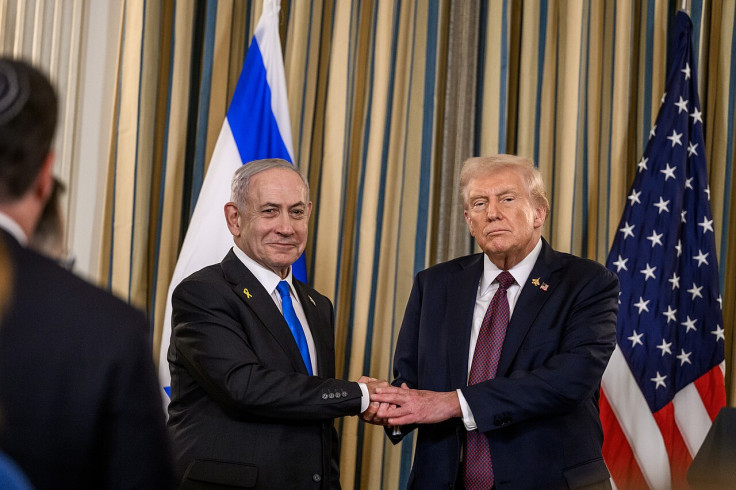
Diplomacy has a funny way of working. Just hours after accusing Donald Trump's circle of making decisions 'over Israel's head,' Prime Minister Benjamin Netanyahu reversed course entirely on Wednesday, announcing his acceptance to join the US President's newly minted Board of Peace. What looked like a snub became a strategic embrace—a remarkable turnaround that underscores just how contentious Gaza's reconstruction will become.
The about-face came swiftly. Netanyahu's office confirmed the prime minister would become a member of the board 'which is to be comprised of world leaders', accepting a renewable three-year term that offers something far more tantalising: a permanent seat for any nation contributing $1 billion (£740 million) to Trump's coffers. It's a peculiar arrangement that transforms international peace-building into something resembling a luxury membership club.
What triggered Netanyahu's initial fury? The inclusion of regional rival Turkey on the board's Executive Committee—alongside Qatar and Egypt—without consulting Jerusalem first. Netanyahu's office had bristled at what it called a decision made 'over Israel's head' and 'contrary to its policy', yet somehow that objection evaporated within days. The question now haunting observers: did Trump's administration simply override Israeli concerns, or did backroom negotiations secure assurances that Netanyahu found acceptable?
Board of Peace: The Exclusive Club Reshaping Gaza's Future
The Board of Peace represents something unprecedented in international governance—a Trump-chaired entity explicitly designed to sidestep traditional UN structures and concentrate decision-making power in Washington's hands. The leaked charter reveals the architecture of this ambition: Trump, as chairman, holds 'exclusive authority to create, modify or dissolve subsidiary entities as necessary or appropriate to fulfil the Board of Peace's mission'. Translation: Trump can reorganise the entire institution at will.
So far, roughly a dozen countries have confirmed participation—Israel, the UAE, Bahrain, Egypt, Albania, Armenia, Azerbaijan, Belarus, Hungary, Kazakhstan, Morocco, Turkey, and Vietnam. Others have proven reluctant. Norway refuses outright, citing concerns the proposal 'raises a number of questions'. France and Sweden have signalled similar reluctance. Russia remains silent, with the Kremlin merely 'examining the particulars', though Putin received an invitation.
The board's real work falls to its Executive Committee—a high-octane roster including US Secretary of State Marco Rubio, Trump's son-in-law Jared Kushner, former British Prime Minister Tony Blair, World Bank President Ajay Banga, and Apollo Global Management CEO Marc Rowan. These figures will oversee Gaza's transition into what Trump euphemistically calls a 'technocratic Palestinian administration'—essentially governance by appointed technocrats rather than elected representatives.
Gaza Reconstruction Amid Political Fragility and Fractured Trust
Here lies the paradox: whilst the Board of Peace grandiosely commands the stage, the real machinery of Gaza's everyday administration falls to a fifteen-person Palestinian technocratic committee led by Abdel Hamid Shaath, a former Palestinian Authority official. Shopkeepers, teachers, nurses—ordinary Gazans—will encounter this committee's decisions far more directly than they'll notice Trump's board.
Phase two of the ceasefire—which theoretically commenced this week—aims to establish 'transitional technocratic governance' focused on demilitarisation, reconstruction, and restoring shattered public services like water, electricity, healthcare, and education. Bulgaria's Nickolay Mladenov, a former UN Middle East envoy, will serve as the Board of Peace's representative on the ground, essentially acting as Trump's man overseeing operations.
Yet massive obstacles loom. Hamas has historically refused to surrender weapons without an independent Palestinian state—something Israel shows no willingness to concede. Israel insists it cannot move beyond phase one until Hamas delivers the remains of the final deceased hostage. The ceasefire itself has proven fragile: over 460 Palestinians have been killed in Israeli strikes since its October commencement, whilst Israeli forces report three soldiers lost to Palestinian attacks.
Netanyahu's conditional engagement is telling. His office simultaneously praised the technocratic committee whilst demanding Israel retain security oversight—a position fundamentally at odds with phase two's demilitarisation requirements. Critics note that accepting Trump's board while maintaining security control essentially allows Israel to govern through the board's machinery—a compromise that risks the entire reconstruction framework collapsing when disputes arise.
The Pope was invited too. Cardinal Pietro Parolin said acceptance 'will require time for consideration before giving a response'—diplomatic language for 'we're deeply sceptical'. That hesitation captures international sentiment: Trump's Board of Peace looks increasingly like a vehicle for American unilateral decision-making dressed in multilateral language.
© Copyright IBTimes 2026. All rights reserved.