

Gold Price: Why Global Central Bank 'Hoarding' Is Driving Prices Towards $4,900
Gold forecast to hit $4,900 in 2026 as central banks accelerate hoarding amid sanctions risk and currency volatility.

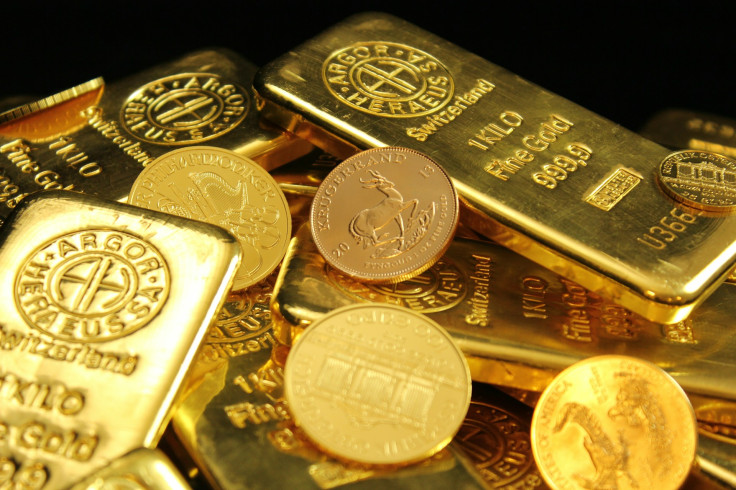
Gold is having a moment. Not the kind of moment that makes headlines for a single dramatic day—but rather the kind of slow-burning, structural shift that fundamentally rewires how major financial institutions think about reserves, diversification, and protection against an uncertain world.
As spot gold hovers around $4,400 per ounce, major banks including Goldman Sachs and J.P. Morgan are projecting prices could climb to $4,900 by the end of 2026. Behind this bullish outlook lies a phenomenon that rarely captures public attention but has profound implications: central banks around the world are hoarding gold at levels not seen in decades.
The numbers are striking. Central banks accumulated over 1,000 tonnes of gold in each of the last three years—a dramatic acceleration from the 400-500 tonne average over the preceding decade. According to FXEmpire, in November 2025 alone, central banks purchased a net 45 tonnes, whilst year-to-date purchases through November totalled 297 tonnes.
Poland's National Bank has emerged as a particularly aggressive buyer, adding 83 tonnes year-to-date and pushing its gold reserves to 531 tonnes—equivalent to 26 per cent of its total foreign exchange reserves. Brazil, Kazakhstan, and China have similarly increased their accumulations, with China's central bank reporting thirteen consecutive months of gold purchases despite record-high prices.
This is not market noise. This is strategic repositioning on a massive scale.
Why Central Banks Are Abandoning Dollars For Gold Bullion
The motivation driving this hoarding is straightforward: geopolitical risk and the erosion of confidence in traditional reserve currencies. Since Russia's invasion of Ukraine in 2022, the pace of central bank gold purchases has effectively doubled.
The underlying logic is visceral and practical. When the United States froze Russian foreign assets held in dollars, every other nation's central banker took note.
The implications were unmistakable: holding dollars, no matter how many you possess, carries sanctions risk. Gold, conversely, cannot be frozen. It cannot be seized by a hostile government. It is, by definition, a hedge against the very notion that the global financial system operates fairly and impartially.
'Central banks are swapping dollars for gold,' Bloomberg observed, capturing the essential shift driving this market. The World Gold Council's 2025 survey revealed that 95 per cent of central bank respondents expect their gold reserves to rise further next year. This is not speculative appetite. This is structural demand meeting geopolitical anxiety.
Beyond sanctions risk, central banks are contending with an uncomfortable reality: global debt levels are unsustainably high. Gold, yielding nothing but offering absolute stability, provides ballast to balance sheets weighted down by currency volatility and fiscal uncertainty.
As one analyst noted: 'Gold is one way to protect yourself from [debt] and build your balance sheets in order to pay those debts'.
The Technical Case For $4,900: Breaking Through The Triangle
Whilst the structural narrative around central bank demand provides the fundamental backdrop, technical analysis offers a compelling case for how high prices could climb in 2026. Spot gold has broken above a technical triangle formation that analysts had been monitoring, with a measured move from that breakout targeting $4,900 per ounce.
The uptrend line of the triangle, combined with the 50-day exponential moving average, converges around the $4,300 level—a zone of significant support that would need to be breached before any meaningful correction could occur.
Goldman Sachs' $4,900 year-end target assumes a 14 per cent gain from current levels and serves as the consensus estimate amongst major banks. J.P. Morgan, however, is more bullish, forecasting an average gold price of approximately $5,055 per ounce by the final quarter of 2026. Bank of America projects gold could reach $5,000, whilst Morgan Stanley targets $4,800.
These projections rest on multiple pillars beyond central bank demand. Anticipated rate cuts by the Federal Reserve reduce the opportunity cost of holding non-yielding gold. Geopolitical uncertainty—from military tensions in the Middle East to American enforcement actions around energy sanctions—persistently redirects capital toward assets perceived as insulated from political shock. And the cyclical weakening of the dollar, coupled with persistent currency devaluation concerns, enhances gold's appeal as a store of value that transcends any single sovereign currency system.
'Looking to 2026, we see around 585 tonnes of quarterly investor and central bank demand on average, comprising around 190 tonnes a quarter from central banks,' J.P. Morgan's Gregory Shearer explained, detailing the demand architecture supporting higher prices.
© Copyright IBTimes 2026. All rights reserved.