

NASA Opts To Err On The Side Of Caution; Decides To Bring Home Crew-11 Ahead Of Timeline
NASA says 1 Crew-11 astronaut had a medical situation on 7 January and is stable
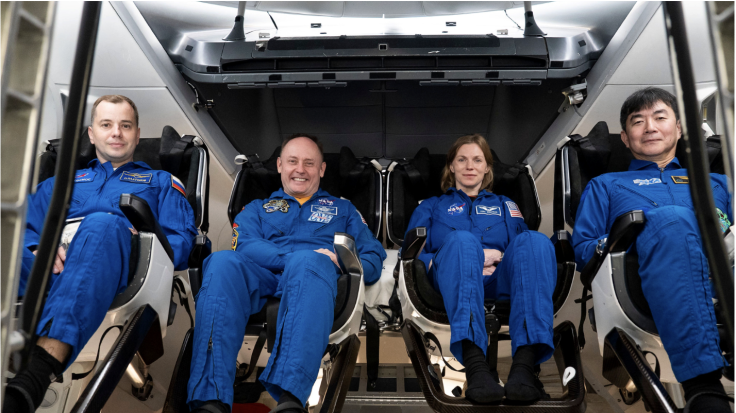
NASA will bring SpaceX Crew-11 home from the International Space Station 'within the coming days' after one crew member experienced a medical situation on 7 January. NASA Administrator Jared Isaacman said the astronaut is now stable, but the agency decided an early return is in the crew's best interest.
Isaacman said Dragon Endeavour will depart the station with NASA astronauts Commander Zena Cardman and Pilot Mike Fincke, JAXA astronaut Mission Specialist Kimiya Yui and Roscosmos cosmonaut Mission Specialist Oleg Platonov, ending the Crew-11 mission ahead of its planned departure. Reuters previously reported the crew had been expected to return later in 2026, but NASA has now confirmed an expedited, controlled return plan.
NASA Stresses: Not An Emergency Deorbit
NASA officials repeatedly stressed that this is not an emergency evacuation. Isaacman said NASA can bring astronauts home 'in a matter of hours' if needed, but that is not the situation here. Instead, NASA is planning a 'controlled expedited return' using standard processes, recovery ships and approved splashdown sites, once weather and readiness align.
NASA said it expects to provide a further update within 48 hours on the undocking and re-entry timeline. The agency has not publicly named the astronaut affected and has not described the medical condition, citing privacy.
Why NASA Wants The Astronaut Back On Earth
NASA Chief Health and Medical Officer Dr. J.D. Polk said the astronaut is 'absolutely stable' but that the medical incident raised enough concern that doctors want to complete a full medical workup on the ground. Polk said the space station has strong medical capability, but not the full testing equipment doctors would have in an emergency department.
Polk said the key problem is uncertainty. Until doctors can complete more tests, there is 'lingering risk' for the astronaut while still in orbit. In space medicine, that kind of uncertainty can matter, even if the person seems well. NASA's decision, he said, reflects the agency's long-standing approach to prioritise crew health and safety.
NASA Says Medical Issue Was Unrelated To Spacewalk Prep
The decision follows NASA's postponement of a planned spacewalk that was scheduled for 8 January. NASA's station programme said the spacewalk delay was linked to the medical concern, and Reuters reported the walk was to be carried out by Fincke and Cardman.
During the press conference, NASA officials said the medical situation had 'nothing to do' with the operational environment or spacewalk preparations. In other words, the strain of pre-spacewalk steps did not cause the issue, based on what NASA knows so far.
A Rare First For The Space Station Era
Polk said this appears to be the first time NASA has carried out what officials described as a controlled medical evacuation from the station, even though models have long suggested it could happen more often. He said NASA analyses have indicated the station should have seen a medical evacuation about every three years during its 25-year run, but none occurred until now.
NASA officials said the procedures being used are still 'nominal' because the agency does not want to increase risk by improvising. The difference is the timing: NASA is choosing to end the mission early, rather than waiting for the original schedule, because the crew has completed most objectives and returning now allows better medical evaluation on Earth.
Crew-11 Health Research For Deep-Space Missions
Before the decision to return early, NASA said Crew-11 was supporting health research aimed at preparing astronauts for longer missions beyond low Earth orbit. According to NASA, crew members took part in studies linked to the Human Research Program, which examines how spaceflight affects the body during extended missions.
The work included research into astronaut vision, physical performance and human response to spaceflight conditions that would be faced during future missions to the Moon and Mars. NASA has described the International Space Station as a critical testing ground for reducing health risks during deep-space travel.
NASA said the early return does not diminish the scientific value of Crew-11's work, noting that most mission objectives and research goals have already been met.
What Happens On The Station After Crew-11 Leaves
NASA said American astronaut Chris Williams, who launched to the station on 27 November aboard Soyuz MS-28, will maintain US presence in orbit after Crew-11 departs. NASA officials said the mixed-vehicle approach, with US and Russian spacecraft and cross-trained crews, is designed for situations like this.
NASA acknowledged there will be limits with a smaller crew, including a period without normal US spacewalk readiness because only one US crew member will remain. Still, officials said station operations are designed to be robust and can be supported by ground control teams and international partners while NASA works to restore the usual crew balance.
Crew-12 Timeline Under Review
Crew-12 is currently scheduled to launch as soon as mid-February, and NASA said it is evaluating whether an earlier launch opportunity is possible. NASA officials also said they do not expect any need to 'de-conflict' this work from other major programmes, describing the planning tracks as separate.
For now, NASA's message is consistent: the astronaut is stable, the return is planned rather than emergency, and the goal is to reduce uncertainty by getting the crew member access to full medical testing on the ground as soon as practical.
© Copyright IBTimes 2026. All rights reserved.