CIA Slammed After Declassified 1951 Report Linking Parasites and Cancer Cells Resurfaces Online
A resurfaced CIA document linking parasites and cancer cells reignites debate over early tumour research

A declassified 1951 CIA report titled 'Biochemical Resemblance Between Endoparasites and Malignant Tumours' has triggered a viral storm across social media, with theorists claiming it exposes a 'suppressed' parasitic origin for cancer.
The document, originally a summary of research by Soviet Professor VV Alpatov, was released in 2011 but has recently been weaponised by online communities to suggest that global health agencies have ignored a 'parasite-based cure.'
However, medical experts and historians clarify that the report does not present a hidden breakthrough; rather, it documents a 1950s Soviet effort to understand why cancer cells and parasitic worms share strikingly similar metabolic traits—specifically, their ability to thrive in low-oxygen environments and accumulate glycogen.
While the document is authentic, scientists state that modern oncology has long since categorised these similarities as 'evolutionary mimicry' rather than proof that all cancers are caused by infections.
The Declassified CIA Document
The CIA report primarily analysed Professor Alpatov's work on the 'amphibiotic' nature of both endoparasites and malignant tumours. Alpatov observed that both entities utilise a specific type of metabolism involving incomplete oxidation under aerobic conditions, a trait known as the Warburg effect in modern cancer biology. The document also noted that both parasites and cancer cells exhibited a similar reaction to optical isomers of atebrin, a common anti-malarial drug at the time.
While these observations were scientifically accurate for the era, they were intended to help researchers develop drugs that could target the specific enzymes shared by both parasites and tumours. It did not conclude that parasites caused the tumours, but rather that cancer cells 'behave' like parasites to evade the host's immune system and steal nutrients, a concept that is still explored in contemporary research.
But the CIA document itself did not present original research. Instead, it simply summarised the Soviet findings as part of the agency's routine monitoring of foreign scientific developments.
Why This Document Is Going Viral Now
Although the report was officially declassified years ago, it has recently gained attention online after being widely shared on social media. The resurfacing has triggered claims that the CIA once held evidence suggesting parasites could be linked to cancer.
Many viral posts have suggested the document proves a hidden cure or suppressed medical discovery. However, scientists emphasise that the report was merely discussing early theoretical research rather than presenting conclusive evidence.
The viral discussion highlights how historical scientific debates can be easily misunderstood out of context, particularly when intelligence documents are involved.
The Historical 'Parasite Theory' of Cancer
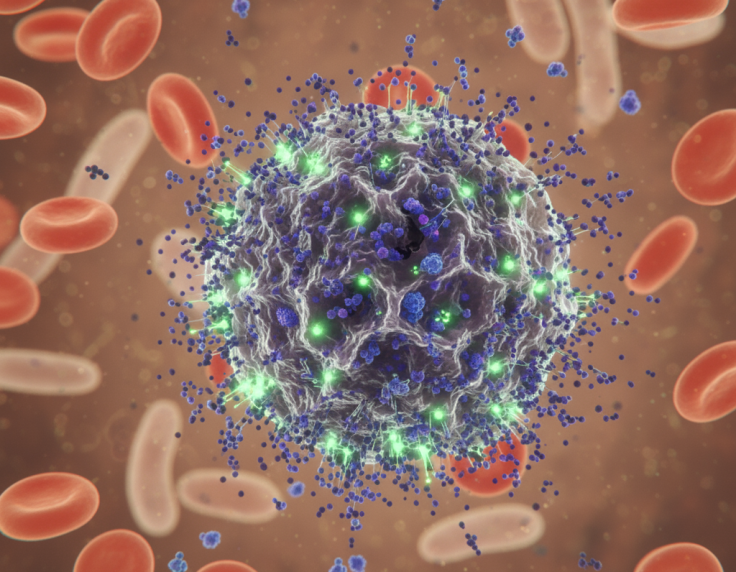
The idea that cancer might originate from infectious organisms is not new. In the late nineteenth century, some researchers proposed that microscopic organisms could invade the body and trigger tumour growth, an idea then prevalently known as the 'parasitic theory of cancer.'
This theory gained traction during an era when scientists were discovering that microbes caused diseases such as tuberculosis and cholera. Many researchers wondered whether cancer might also be caused by a similar external organism.
However, by the early twentieth century, evidence supporting a single microbial cause of cancer proved difficult to establish. Over time, the theory lost scientific support as researchers began to understand the complex genetic and environmental factors involved in tumour formation. For example, in 1914, evidence demonstrated by Theodor Boveri showed that cancer was linked to industrial exposures and likely caused by chromosomal abnormalities
Nevertheless, some infectious agents are now known to contribute to certain cancers, showing that early researchers were not entirely misguided.
Why Modern Science Recognises 'Some' Parasitic Links
Despite the viral claims of a 'suppressed truth,' modern medicine openly acknowledges that a small percentage of cancers are directly linked to chronic parasitic infections. The International Agency for Research on Cancer (IARC) identifies several helminths (parasitic worms) as Group 1 carcinogens, including:
- Schistosoma haematobium: Linked to squamous cell carcinoma of the bladder.
- Opisthorchis viverrini: Associated with bile duct cancer (cholangiocarcinoma).
- Clonorchis sinensis: Known as the Oriental liver fluke, which triggers chronic inflammation leading to malignancy.
In these cases, the parasite causes long-term tissue damage and inflammation that eventually triggers a genetic mutation in human cells. This is a far cry from the online narrative suggesting that 'cancer is a parasite.' Furthermore, a rare 2015 CDC case confirmed a man with a severely weakened immune system 'caught' cancer from tapeworm cells that proliferated in his body, but experts stress this was a unique biological anomaly, not a standard mechanism for human oncology.
The 'Speciation' Theory: Cancer As A New Organism
The resurfaced document has also reignited interest in the controversial 'speciation theory' of cancer, championed by biologists like Peter Duesberg. This theory suggests that cancer is not merely a mutation of human cells, but the evolution of a new, parasitic species with a unique, unstable karyotype (chromosome pattern). While this remains a fringe view, it highlights why early CIA-tracked research found the 'parasitic nature' of cancer so compelling.
Today, the 1951 report is viewed as a fascinating historical artefact of Cold War intelligence gathering, illustrating how the US monitored Soviet science for any potential edge in 'defensive' medical technologies, rather than a blueprint for a hidden cure.
© Copyright IBTimes 2026. All rights reserved.
- MOST POPULAR IN Science