

Did Andrew Share State Secrets With Epstein? Gordon Brown Calls for Major Police Probe
Gordon Brown has sent 'new and additional' information to multiple police forces as scrutiny intensifies over whether Andrew shared confidential material with Jeffrey Epstein.

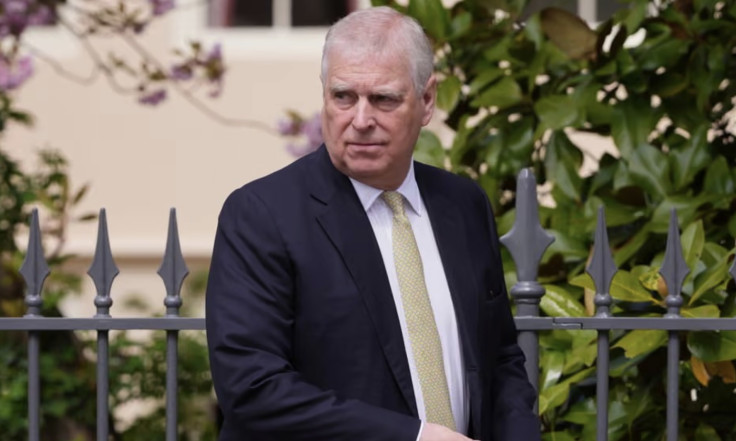
Andrew Mountbatten-Windsor, the former prince, is now suspected of conduct that is both mundanely bureaucratic and politically incendiary: misconduct in public office.
The allegation at the heart of the inquiry is stark. Investigators suspect Andrew may have forwarded privileged documents from official trade meetings to Jeffrey Epstein, the late financier and convicted sex offender whose orbit seems to leave a residue on every institution it touched. Andrew was arrested on suspicion of misconduct in public office and later released under investigation, meaning he could yet be questioned again as the case progresses.
'Misconduct in public office' is a serious common-law offence aimed at punishing grave abuses by those holding public roles — less tabloid scandal, more constitutional rot, if proven. Being 'released under investigation' is exactly what it sounds like: not cleared, not charged, but not currently behind bars either.
Brown's Letters Raise the Temperature
If the arrest was the spark, Gordon Brown has supplied the accelerant. The former prime minister has sent a series of five-page letters — described as containing 'new and additional information' — to multiple police forces, including the Metropolitan Police and constabularies in Surrey, Sussex, Thames Valley, Norfolk and Bedfordshire. Sussex Police confirmed it received a letter from Brown's office at 3:50 p.m. on Thursday, Feb. 19, and said the contents were being reviewed to determine 'the appropriate next steps.'
The letters, as reported, press police to widen the lens beyond the allegation of leaked documents and scrutinize Andrew's conduct during his decade as a UK trade envoy from 2001 to 2011 — a role that overlapped with Brown's time in Downing Street. Brown's concerns include whether Andrew used chartered RAF flights for personal engagements, potentially including meetings involving Epstein, and whether public funds were used in ways Brown calls 'wholly unacceptable.'
There is a faint, grim irony in how familiar parts of this sound. Andrew was once dubbed 'Airmiles Andy' because of his frequent travel, an epithet that landed because it hinted at entitlement rather than outright criminality. Brown is now effectively asking police to test whether the travel was not just tone-deaf, but operational — logistics, access, and who was allowed to accompany him.
A Map of Airfields and a Trail of Questions
Brown wants investigators to interview people from four government departments — the Ministry of Defence, the Department for Transport, the Foreign Office and the Treasury — about Andrew's trade envoy role and the oversight around it. He is also urging scrutiny of RAF-related records, including questions about the use of military assets and what, if any, guardrails existed when a royal mixed official duties with private relationships.
Then there is the aviation thread, which reads less like gossip and more like a compliance officer's nightmare. A BBC investigation previously reported that flight records and legal disclosures show Epstein-linked aircraft used UK airports repeatedly, and that passenger manifests sometimes listed women only as unnamed 'females,' highlighting how easily private aviation could move people with limited scrutiny. The BBC also quoted victims' lawyer Sigrid McCawley describing it as 'shocking' that there had never been a 'full-scale UK investigation' into Epstein's UK flights and contacts. The same report noted a Home Office acknowledgment that private aircraft were 'not subject to the same centralized record-keeping' as commercial flights, a loophole later addressed.
Andrew has not been charged and he has previously denied wrongdoing connected to Epstein, though he has not directly responded to the latest allegations described in the wake of his arrest. King Charles III, in an unusually stark statement, said he had learned 'with the deepest concern' of the news and emphasized: 'the law must take its course,' adding that it would not be right for him to comment further while the process continues.
© Copyright IBTimes 2026. All rights reserved.