

7 Things to Look for in a Smart Gym Before Buying One
From AI coaching to space-saving design, these are the smart gym features that can make home workouts easier to start and maintain
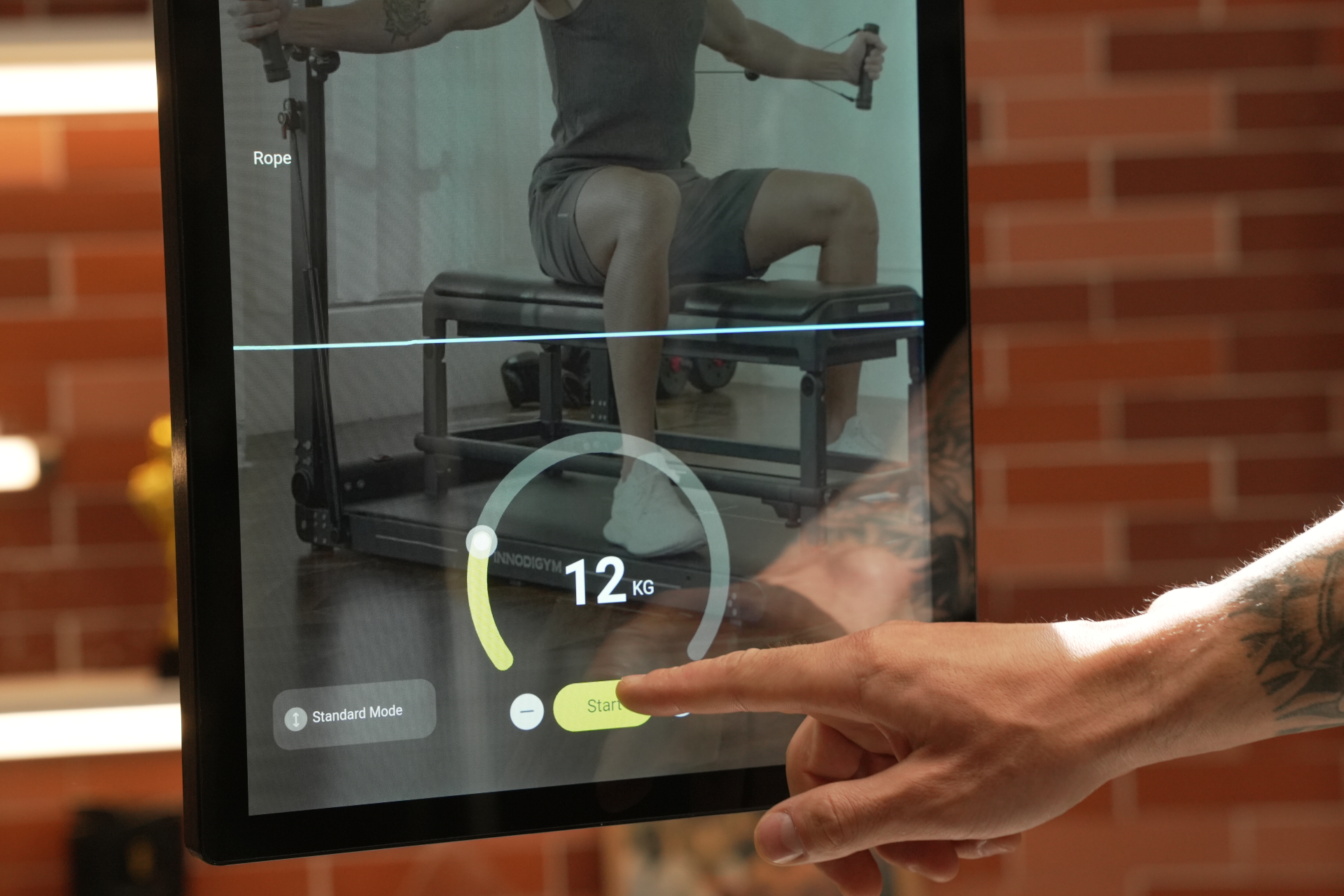
Buying a smart gym can feel surprisingly complicated. One model promises advanced coaching, another focuses on compact design, and a third advertises dozens of exercise options.
For someone trying to build a sustainable home fitness routine, comparing specifications alone rarely answers the most important question: 'Will this actually fit my lifestyle?'
The best smart gym is not necessarily the one with the longest feature list. It is the one that helps you exercise more consistently by reducing common barriers such as limited space, complicated setup, and lack of workout guidance.
Before making a purchase, here are seven practical things worth checking.
1. Does It Offer Enough Exercise Variety?
Many people abandon home fitness equipment because workouts become repetitive.
Look for a system that supports multiple movement patterns, including pushing, pulling, squatting, hinging, and core exercises. The more exercises a machine can handle, the less likely you are to outgrow it quickly.
The INNODIGYM OMNI X1 PRO, for example, is designed as an all-in-one smart gym with four different resistance training modes, allowing users to switch between training styles without changing equipment.
What makes exercise variety more meaningful is whether the equipment can still effectively recruit the target muscles. In a recent surface electromyography (sEMG) comparative study, researchers measured muscle activation while the same participant performed identical exercises on the OMNI X1 PRO and traditional gym equipment. The OMNI X1 PRO showed higher activation in several key movements, including:
- Lat pulldown: latissimus dorsi activation of 37.2% MVC vs 33.3% on traditional equipment.
- Cable crunch: average abdominal activation of 13.8% MVC vs 8.3%, with peak activation reaching 33.3% vs 19.8%.
- Bench press: chest activation of 34.8% MVC vs 31.4%, while triceps involvement was lower, suggesting a more chest-focused stimulus.
These findings suggest that a versatile smart gym can still deliver meaningful muscular engagement rather than simply offering more exercise options.
2. Can It Fit Comfortably in Your Home?
Space is one of the biggest reasons people avoid traditional home gyms.
Measure the area where the equipment will live, including the space needed during exercise, not just when stored. A machine that folds away or has a smaller footprint may be far more practical for apartments, shared living spaces, or home offices.
A compact smart gym can make the difference between equipment that is used daily and equipment that becomes permanent furniture.
3. Does It Provide Guided Workouts?
Having equipment is not the same as having a workout plan.
Beginners often struggle with exercise selection, while experienced users may want better progress tracking. Systems that include an AI fitness coach or guided workout platform can help reduce decision fatigue and make training feel more structured.
The value of coaching features is not only motivation; it is also convenience.
4. How Easy Is It to Start a Workout?
Pay attention to setup time.
If a workout requires assembling attachments, moving furniture, or navigating complicated menus, you may be less likely to train consistently. Ideally, a smart gym should be ready within a minute or two of deciding to exercise.
Quick setup is especially important for busy professionals who fit workouts into short breaks during the day.
5. What Resistance Range Does It Support?
Your fitness level will change over time, so choose equipment that can grow with you.
Check whether the resistance is suitable for both beginners and stronger users. Adaptive or electronically controlled resistance can be particularly useful because it allows finer adjustments than fixed-weight systems.
This is one area where smart resistance technology can offer a meaningful advantage over basic home equipment.
6. Does It Feel Durable Enough for Daily Use?
A smart gym is a long-term purchase, so build quality matters.
Look for solid construction, stable movement during exercises, and components designed for repeated use. Reading independent reviews can help identify issues such as wobbling, excessive noise, or inconsistent resistance.
Even advanced software cannot compensate for hardware that feels fragile.
7. Will It Still Be Useful in Two Years?
The final question is often the most overlooked.
Ask yourself whether the machine will continue to support your goals after the first few months. Can it handle strength training, endurance work, rehabilitation-style exercises, and progression over time? Does the software receive updates? Can multiple household members use it?
An all-in-one smart gym that remains versatile as your fitness improves is usually a better long-term investment than a cheaper machine with limited functionality.
A Practical Example: INNODIGYM OMNI X1 PRO
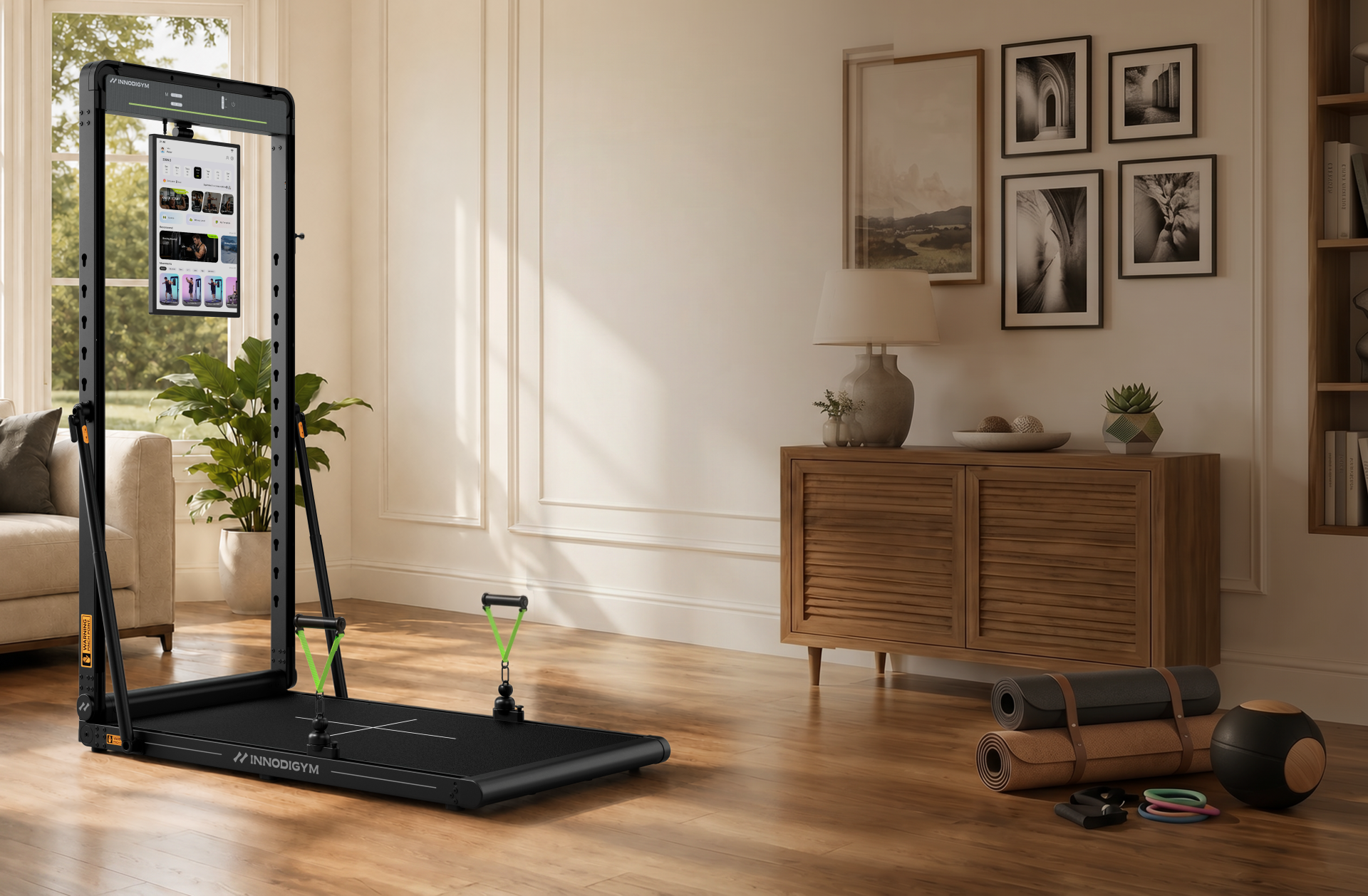
For buyers looking for a single system that addresses several of the points above, the INNODIGYM OMNI X1 PRO is positioned as a compact all-in-one smart gym that combines multiple resistance modes with AI-guided training features.
Its design focuses on reducing the need for separate strength-training equipment while providing a more structured home workout experience. The combination of four resistance training modes, AI fitness coaching, and a space-conscious footprint makes it a useful example of the broader trend toward integrated home fitness systems.
Importantly, in the earlier-mentioned sEMG comparative study, researchers observed that the OMNI X1 PRO produced:
- Stronger back-muscle recruitment during lat pulldowns, including higher activation of the lats, posterior deltoids, and middle trapezius.
- Stronger abdominal recruitment during cable crunches, with substantially higher average and peak rectus abdominis activation.
- Comparable activation in arm isolation exercises, such as biceps curls and triceps pushdowns, indicating a resistance feel similar to traditional equipment.
- Higher peak lat activation during rowing movements, even when average activation was comparable.
The researchers concluded that the OMNI X1 PRO was particularly effective in exercises where users often struggle to feel the target muscle working, such as back and core movements.
While traditional equipment maintained advantages in some heavy compound lower-body exercises, the study suggests that digital resistance can provide a training stimulus that is comparable to, and in some cases more targeted than, conventional gym equipment.
The Bottom Line
Choosing a smart gym is less about finding the most advanced technology and more about finding equipment that removes friction from your daily routine.
If you focus on exercise variety, space efficiency, guided coaching, quick setup, adequate resistance, durability, and long-term usefulness, you are far more likely to choose a system that supports consistent training rather than becoming another abandoned fitness purchase.
For many households, that practical fit matters more than any single specification.
Exclusive reader offer: Readers purchasing the INNODIGYM OMNI X1 PRO through the UK site can use the code IBTimes for 5% off their purchase.
Shop the INNODIGYM OMNI X1 PRO on the UK site and enter code IBTimes at checkout.
© Copyright IBTimes 2026. All rights reserved.