

Kylie Minogue and Nick Cave's Music Used to Train AI Without Consent or Payment, Publishers Say: 'Legitimising Larceny'
AI firms reportedly argued that licensing the entire internet is not possible

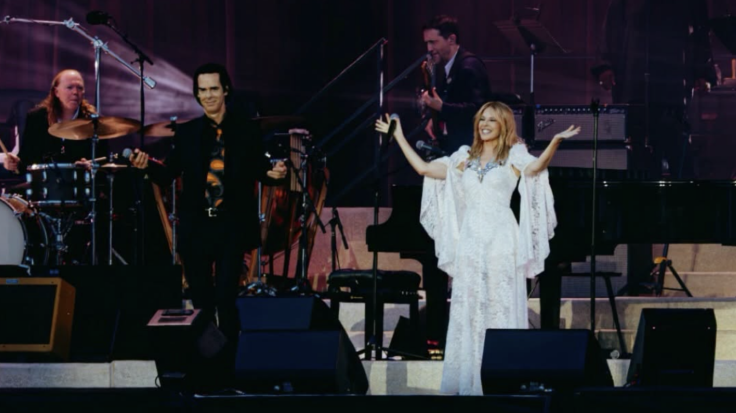
Kylie Minogue and Nick Cave are among the Australian artists whose music has allegedly been used to train artificial intelligence without their consent or payment, according to a global music publishing organisation, which warned that technology companies are pressuring Australia to water down copyright protections.
The dispute has triggered a debate around whether governments will protect artists' rights or modify copyright laws to accommodate the AI industry's demands.
The International Confederation of Music Publishers (ICMP), which represents major publishers including Sony, Warner, and Universal, has accused AI companies of pushing policymakers towards a system that would allow commercial training on copyrighted material without securing licences.
Its managing director, John Phelan, described the industry's approach as an attempt to legitimise the unauthorised use of creative work, warning that Australian policymakers were being pressured to 'legitimise larceny'.
'They're trying to strong-arm Australian policymakers into "if you don't do this, we won't invest,"' Phelan told The Guardian Australia.
The confrontation raises questions about the future value of music copyright as AI systems become capable of generating lyrics, compositions, and other creative material. Publishers fear that weakening protections could undermine artists' ability to control how their work is used, negotiate payment, and compete with technology trained on their own creations.
AI Evidence Puts Copyright Claims Under Scrutiny
The ICMP's warning comes amid evidence that AI systems can reproduce lyrics from Australian artists. In material supplied to The Guardian Australia, the organisation demonstrated that Google's Gemini could generate lyrics associated with Minogue, Nick Cave, and G-Flip.
Phelan also cited a music dataset reported by The Atlantic in June containing more than 12 million tracks sourced from YouTube videos. The collection includes works by Minogue, Cave, and Australian hip-hop group Hilltop Hoods.
The dispute extends beyond whether a song appears in a training database. AI systems can learn patterns from existing music and generate new material, raising concerns that technology could compete with the musicians whose work helped develop it.
Why Australia Faces Pressure to Change Its Laws
The ICMP says Australia is an international outlier in considering changes to copyright protections for commercial AI training. Phelan said 62 countries had considered potential changes, but none of the other 61 had introduced a new commercial text-and-data-mining exception or reduced copyright holders' exclusive rights in the way he described.
Tech firms warned that without changes to the legal framework, their ability to develop and operate frontier AI models in Australia could be constrained. Anthropic's special envoy, Jeffrey Bleich, told a parliamentary inquiry that obtaining licences from every rights holder represented a significant obstacle.
'You can't license the entire internet,' he said, arguing that online information was available to be viewed and studied, and that this was essentially what AI training involved.
However, Phelan believes that the expense of developing AI models, the pressure to generate returns, and ongoing copyright litigation in the US could be driving companies to seek legislative solutions elsewhere. 'They're seeing the legislative side as being the way to try to [find] a place to do business without licences, which will secure their future business model,' he said.
Albanese Faces a Test Over Artists' Rights
The dispute has put Prime Minister Anthony Albanese's government under renewed pressure to clarify its position on copyright and AI development. In July, Albanese said it would be 'theft' if artists could not retain control over whether their work was used to train AI and what they were paid for that use.
However, members of a parliamentary committee examining AI policy have since called for the government to review the existing framework, describing the current position as a stalemate between protecting creators and enabling the development of advanced AI systems.
In a joint letter to Albanese, the committee's Labor chair, Jo Briskey, and deputy chair, Liberal senator Jonathon Duniam, recommended that the government 'examine current copyright settings' while ensuring creators retain control over their work and receive payment.
The committee's deliberations have heightened concerns among music, film, news, and media organisations that changes could be pursued without adequate consideration of the consequences for creative industries.
© Copyright IBTimes 2026. All rights reserved.