

'Everything Has Gone Downhill': Trump Voters Swing to Democrats Ahead of November Midterm Elections
Voters expressed frustration over inflation, tariffs, immigration enforcement, and foreign policy

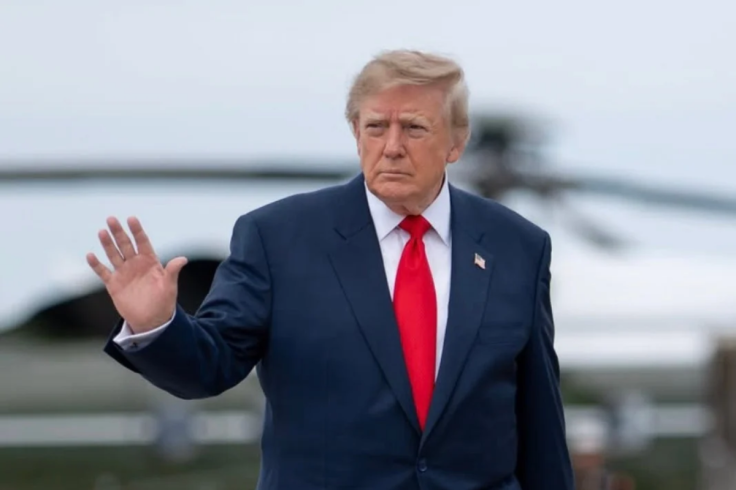
Donald Trump voters who backed Joe Biden in 2020 before switching to Republicans in 2024 are expressing growing regret ahead of November's midterm elections, with seven of 12 participants in a Georgia focus group saying the president's performance will influence them to vote Democrat, according to NPR.
Ten said they regretted voting for Trump, while 11 expressed disappointment with his performance, citing concerns about inflation, tariffs, ICE, the US-Iran war, and the overall direction of the country.
Trump Voters Cite Economic and Political Frustration
The response from focus groups offered a snapshot of how some voters who crossed party lines are reassessing their choices ahead of the November midterms.
Richard A., a 56-year-old Republican who said he had been out of work for 10 months, described a list of concerns about the country's direction under Trump. 'Food crisis, starting the war with Iran, inflation,' he said. 'ICE immigration has just torn families apart, has caused deaths. ... It just seems like everything has gone downhill.'
Charles P., a 43-year-old Democrat, also voiced disappointment with the administration, arguing that inflation had worsened and that the president's approach to tariffs and international relations had failed to deliver the results he expected. 'I just don't feel like there's any positive to this administration at all,' he said.
The participants' criticism reflects concerns about the cost of living, foreign policy, and immigration enforcement. However, the focus groups were not designed to measure the views of all Georgia voters, and their findings should not be treated as representative polling.
Elsewhere, an exclusive Harris poll for The Guardian found that 61% of Americans believe Trump's economy is already in a recession. Two-thirds of the poll participants said that gas prices and grocery prices are their most important issues heading into the election, followed by living expenses, healthcare costs, and foreign affairs.
Seven of 12 Say Trump Will Push Them Towards Democrats
Rich Thau, president of messaging firm Engagious, which moderates the groups, said the latest discussion marked a shift in how participants viewed the president's role in their midterm decisions.
'In previous months, when we asked people whether President Trump would influence how they vote, they would say things like, "Well, I'm looking mainly at the candidates themselves," or "I'm looking at the overall sort of environment in the country,"' Thau said. 'This month, seven out of 12 said that he would influence them to vote for Democrats. And that was new.'
Karla S., a 49-year-old Democrat who voted Republican in 2024, said her disappointment had changed her approach to the upcoming election. 'I did vote Republican for 2024,' she said. 'I made up my mind. I've been so disappointed that I'm just going to go straight and just do Democrat, Democrat, Democrat. Because I'm so disappointed with how this administration has been doing.'
Ten of the 12 participants also said they planned to vote for incumbent Democratic Senator Jon Ossoff, with some specifically citing his lack of alignment with Trump as a reason to keep him in office.
Voters Want Congress to Put Limits on Trump
Beyond dissatisfaction with the President, some participants said they wanted a Democratic-controlled Congress to act as a check on the Trump administration. Thau said some voters believed a change in congressional control could restore a measure of stability, particularly for the economy, by limiting the president's actions.
'There was some sense that Democrats could restore some semblance of order, and that they'd be able to control a bit of what the president is trying to do or has been doing, to the point where that might restore some of their confidence in the economy,' Thau added.
Thomas M., a 65-year-old independent, said he expected a Democratic-led Congress to impose greater oversight on the president. 'I think there would be more controls placed on Trump with people who are not afraid to stand up to him,' he said.
Thau also noted that some respondents believed Republicans retaining control would give Trump greater freedom to pursue his agenda because members of his party were reluctant to challenge him.
The focus groups were conducted by Engagious and market research recruiting firm Nelson Recruiting as part of the Swing Voter Project, which NPR partners with monthly.
While the findings offer insight into the reasoning behind some voters' decisions, the small sample cannot establish how widely those views are shared across Georgia or predict the outcome of November's elections.
© Copyright IBTimes 2026. All rights reserved.