

ICE Rejects Automatic Body Cameras That Start Recording When Agents Draw Weapons
DHS cited First Amendment concerns, while the GAO said automatic activation could improve accountability

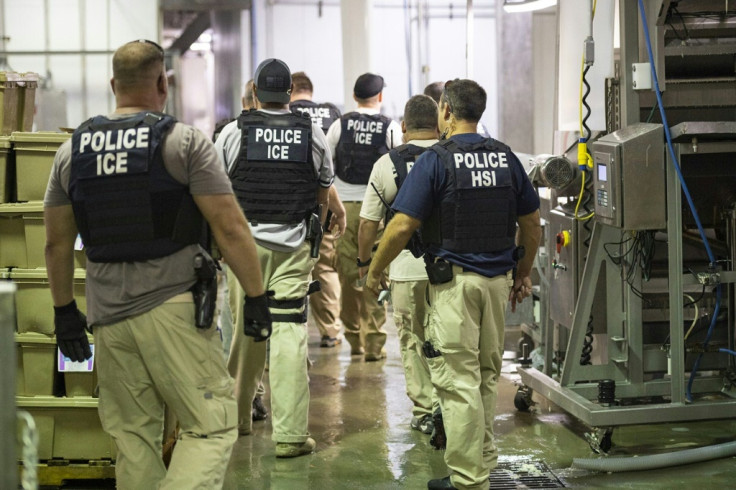
US Immigration and Customs Enforcement (ICE) has rejected a congressional watchdog's recommendation to automatically activate agents' body cameras when they draw their weapons, putting the agency at odds with a push for stronger accountability as questions persist over when federal immigration officers record their encounters with the public.
The Department of Homeland Security (DHS), which oversees ICE, argued that automatic recording could capture sensitive interactions with informants and victims or inadvertently film bystanders exercising their First Amendment rights. The Government Accountability Office (GAO), however, said automated activation could help ensure officers record unexpected use-of-force incidents, improving transparency, accountability, and public trust.
The GAO review found that ICE and US Customs and Border Protection (CBP) have struggled with inconsistent camera-use guidance, outdated programme plans, and limited measures to assess whether their body-camera programmes are working.
DHS Cites Privacy Risks in Rejecting Automatic ICE Camera Triggers
In its September 2026 report, publicly released on 14th October, the GAO recommended that ICE introduce additional controls, including automated camera activation, to help ensure officers comply with existing body-camera policies.
The proposed technology could activate cameras when an officer draws a weapon or when a related action, such as activating emergency lights, occurs. The aim is to reduce the risk of officers failing to record incidents that unfold unexpectedly, rather than during a planned enforcement operation.
DHS rejected the recommendation, arguing that the potential risks outweighed the benefits. It warned that automatic triggers could result in the unauthorised recording of sensitive interactions with informants or victims. ICE's existing rules require officers to activate cams during specified enforcement activities, including arrests, searches, brief detentions, and even at the beginning of pre-planned enforcement activities.
CBP's Approach Highlights the Divide Within Homeland Security
The disagreement is particularly notable because CBP, another agency under the DHS, has already adopted automatic camera activation controls, according to the GAO review. The contrast raises questions about why a safeguard considered useful in one part of federal immigration and border enforcement has been rejected for ICE.
CBP began issuing body-worn cameras in August 2021, while ICE started deploying them in March 2024. By June 2026, CBP had deployed approximately 11,500 cameras, nearly all to Border Patrol. ICE had deployed around 4,800 cameras by April, distributed almost evenly between Enforcement and Removal Operations and Homeland Security Investigations.
Despite their different deployment timelines, both agencies face shortcomings in programme management. The GAO found that CBP and ICE had not updated their programme plans since 2022 and 2024, respectively, despite changes in deployment and a 2025 pause in further camera distributions.
The watchdog also found that most offices across the two agencies lacked specific operational guidance explaining when personnel should use cameras in their particular circumstances.
Confusion Over Camera Rules Raises Accountability Concerns
The GAO's findings suggest that the problem extends beyond the technology itself.
Officers interviewed at six of the 10 field locations reviewed by the watchdog were uncertain about when cameras should be activated, according to reporting on the findings. Questions included whether recording was required during vehicle searches and the transport of detainees.
At one ICE office, uncertainty over the rules was so significant that personnel had not begun using their cameras even after receiving training. The report also found that, through September 2025, no ICE agents had received written reprimands for failing to comply with body-camera policies. Only one CBP agent had received a written reprimand during the period covered by the review.
In all, the immediate consequence of DHS's decision is that ICE will not adopt the specific automatic-activation safeguard recommended by the GAO. Officers remain subject to existing camera-use requirements, but the watchdog's proposed additional control will not be implemented under the department's current position.
Note that the DHS agreed with six of the watchdog's seven recommendations but declined to implement automatic activation controls for ICE.
© Copyright IBTimes 2026. All rights reserved.