

Bangladesh's First Female PM Khaleda Zia Dies at 80, Ending a Political Era
The BNP leader died at Evercare Hospital following 36 days of treatment
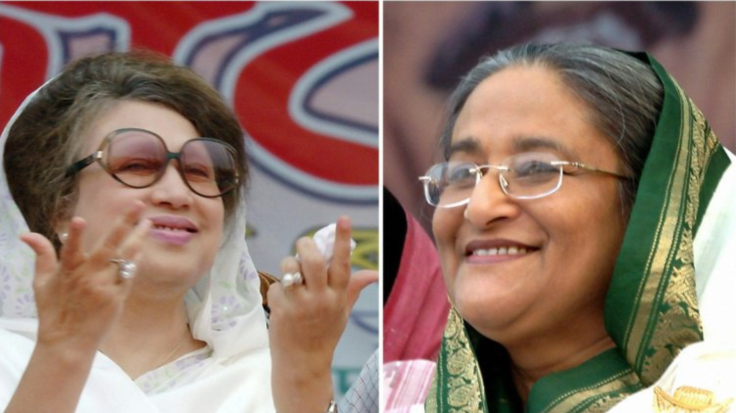
Khaleda Zia, who served as Bangladesh's first female prime minister and spent decades battling Sheikh Hasina for political dominance, died on Tuesday at the age of 80.
Zia passed away at 6 am local time at Evercare Hospital in Dhaka, where she had been receiving treatment for 36 days after being admitted on 23 November with infections affecting her heart and lungs, according to Al Jazeera.
The BNP said in a statement posted on Facebook that their beloved national leader had left them and requested prayers for her departed soul.
Zia had long suffered from multiple health complications, including liver cirrhosis, arthritis, diabetes and chronic conditions involving her kidneys, lungs, heart and eyes. Her care was overseen by a medical board led by cardiologist Shahabuddin Talukder, with specialists from Bangladesh, the UK, the US, China and Australia.
Earlier this month, efforts were made to transfer her abroad for advanced treatment, but the plan was abandoned due to her fragile condition.
The Battling Begums of Bangladesh Politics
Her death closes more than 30 years of political rivalry with Sheikh Hasina, a period when the two women were known as the battling begums of Bangladeshi politics.
Zia served as prime minister from 1991 to 1996 and again from 2001 to 2006, becoming the country's first woman elected to the office. She won her first term in 1991, and her opponent in that election and several since was Hasina, CNN reported.
With Hasina now in exile in India following her ouster in August 2024, Zia's death marks the end of an era that defined Bangladesh's political landscape for a generation.
Deeply saddened by the passing of Begum Khaleda Zia, Chairperson of the BNP and former Prime Minister of Bangladesh. Her lifelong service to Bangladesh and its growth and development leaves a lasting legacy.
— Shehbaz Sharif (@CMShehbaz) December 30, 2025
Begum Zia was a committed friend of Pakistan. My Government and the…
From Widowhood to Power
Zia didn't choose politics. It chose her. Born in Dinajpur in 1946, she married army officer Ziaur Rahman in 1960, years before he would become president in 1977.
When her husband was killed in a 1981 military coup, Bangladesh was thrown into chaos. Zia had never been politically active, but senior BNP leaders turned to her as the only person who could hold the party together and carry on her husband's work.
Her political ascent was rapid: a general BNP member in early 1982, vice chair by 1983, and by August 1984 she had secured the party chairpersonship.
Fighting Authoritarianism
She built her reputation fighting military dictator Hussain Muhammad Ershad, who seized power in 1982. When he called elections in 1986, she refused to participate whilst the Awami League took part. That decision, viewed as principled resistance to military rule, earned her widespread respect.
The military dictator fell from power in 1990, clearing the path for Zia to win the premiership the following year. Her rise to become the first woman to lead Bangladesh in a deeply conservative society remains central to how she'll be remembered.
Corruption Claims and Political Persecution
A court convicted her in 2018 over allegations she misused funds meant for orphans. She always insisted the charges were politically motivated, tools that Hasina's government used to sideline her.
In 2020, the Awami League leader suspended Zia's prison sentence on health grounds, with the condition that she would not travel abroad or take part in political activities. In January 2025, Bangladesh's Supreme Court acquitted Zia and overturned her earlier 10-year prison sentence, Bloomberg reported.
After Hasina fled to India in August 2024, an interim government led by Nobel Peace Prize winner Muhammad Yunus finally allowed Zia to seek treatment in the UK. Hasina had blocked at least 18 earlier requests.
Legacy and Family
Zia's personal life was marked by tragedy. Her younger son, Arafat Rahman Koko, died of cardiac arrest in 2015 whilst living abroad. Her elder son, Tarique Rahman, spent years in exile after being arrested during an anticorruption drive in 2008.
Tarique came home on 25 December, just five days before her death, to massive crowds of supporters. He's been the party's acting chair since 2018 and will now lead the BNP into elections scheduled for 12 February.
During her final days, Muhammad Yunus had asked the people to pray for Zia, calling her a source of utmost inspiration for the nation.
She is survived by her elder son, Tarique Rahman, who remains her political heir.
© Copyright IBTimes 2026. All rights reserved.