

Claude Cowork Is Here — And It's Automating Everything
Claude Cowork allows AI to autonomously handle complex, multi-step tasks, marking a major shift in how people work with AI
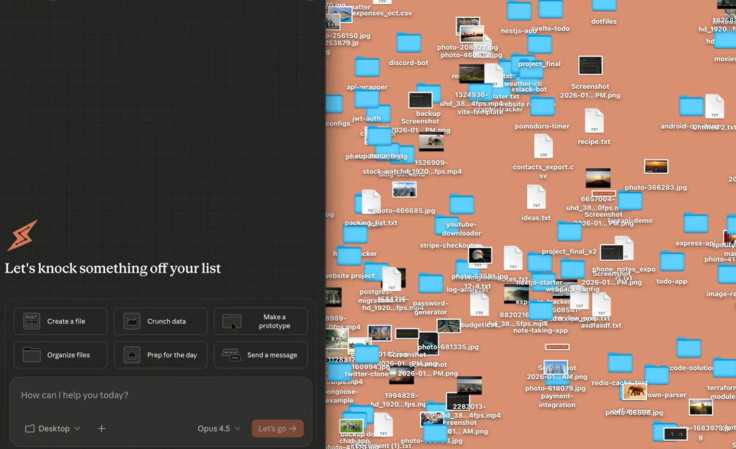
Anthropic has taken another step toward making artificial intelligence a practical workplace assistant with the launch of Claude Cowork, a new feature designed to automate everyday digital tasks.
Rather than acting solely as a conversational chatbot, Cowork allows Claude to interact directly with files and folders on a user's computer, transforming how people manage documents, data and routine admin.
The feature signals a broader shift in AI development away from passive chat interfaces and toward so-called agentic systems that can take action on a user's behalf. From organising messy downloads to generating spreadsheets from receipts, Cowork positions Claude as something closer to a digital colleague than a tool that waits for prompts.
Read More: Apple Taps Google Gemini to Power Siri AI, Signalling Big Shift for iPhone Users
Read More: Google AI Health Overviews May Fail Patients When Medical Advice Matters Most
For now, access is limited. Cowork is available only to macOS users subscribed to Claude Max, Anthropic's power-user tier, priced between $100.00 (£78.50) and $200.00 (£157.00) per month depending on usage. Still, its arrival offers a glimpse into how AI-powered work automation could soon move into the mainstream.
How Claude Cowork Works in Practice
Claude Cowork operates by giving the AI controlled access to a specific folder on a user's computer. Once permission is granted, users can chat with Claude and ask it to carry out tasks directly within that folder.
These tasks range from renaming files according to a chosen convention to reading documents and producing new outputs such as spreadsheets, summaries or draft reports.
Anthropic has highlighted practical examples, including sorting receipt screenshots into organised folders and automatically creating an expense spreadsheet. The system also supports connectors, allowing Cowork to link with external services such as productivity apps or payment platforms to build presentations, documents or other projects.
Felix Rieseberg, a member of Anthropic's technical staff, said in a statement to CNET that the idea grew out of unexpected user behaviour. 'We built it for coding, but people started using it for everything including taxes, managing receipts, organising files, random life admin', he said.
Cowork, he added, is designed to make those capabilities accessible to non-developers through a familiar chat interface.
Why Anthropic Thinks Cowork Matters
At its core, Cowork reflects Anthropic's belief that AI agents should reduce friction rather than add complexity. Instead of repeatedly uploading files or copying outputs into the right format, users can queue tasks and let Claude work through them independently, offering updates along the way.
Anthropic describes the experience as 'much less like a back-and-forth and much more like leaving messages for a coworker'.
This approach aligns with a wider industry trend. AI systems are increasingly being built to perform multi-step actions, from booking travel to compiling reports, without constant supervision. Competitors are pursuing similar strategies, but Anthropic's focus with Cowork is on everyday productivity rather than flashy demonstrations.
By building on the same underlying agent technology as Claude Code, Cowork also extends the company's ecosystem beyond developers. That could broaden its appeal at a time when businesses and individuals alike are looking for tangible returns from AI subscriptions.
Risks, Limitations and What Comes Next
Anthropic has been clear that Cowork is still a research preview, effectively a beta release. While Claude cannot access anything it has not been explicitly permitted to see, the company warns that unintended actions are possible, including the deletion of local files if instructions are unclear.
There are also security concerns. Prompt injection attacks, where malicious instructions are hidden in external content, could theoretically cause an AI agent to behave in harmful ways.
Anthropic says it has built defences against these risks but advises users to avoid using Cowork with sensitive data.
Despite the caveats, Cowork hints at a future where AI agents handle much of the digital busywork that consumes modern workdays.
If Anthropic can refine the safeguards and expand access beyond early adopters, Claude Cowork may prove to be an important step toward AI that truly earns its place at work.
© Copyright IBTimes 2026. All rights reserved.