

Crypto ATM 'Scams Are Draining Millions' as Police Stop Elderly Man Mid-Fraud on Camera
Footage of the incident has renewed calls for tighter regulation and clearer warnings around crypto ATMs, which scammers increasingly use to target older and vulnerable people.
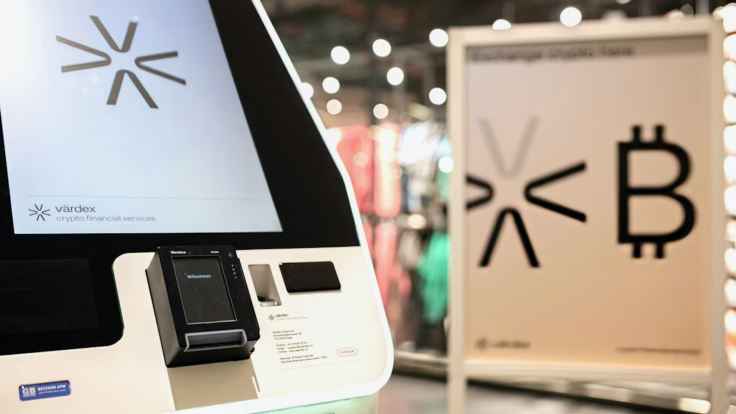
Crypto ATM scams are accelerating into a national crisis as 2026 begins, with police and federal investigators (FBI) warning that elderly Americans are being coerced into handing over life savings at Bitcoin kiosks in convenience stores.
Newly released bodycam footage shows officers intervening just in time to stop an 80-year-old Vietnam War veteran from transferring thousands of dollars under the direction of fraudsters posing as government officials.
Authorities say the footage highlights a wider emergency, one that has already drained hundreds of millions of dollars and shows no sign of slowing.
A Police Intervention Caught on Camera
The incident unfolded inside a petrol station on South Dixie Highway, where deputies encountered a visibly distressed elderly man clutching his phone at a cryptocurrency ATM.
According to police, the caller on the other end identified himself as 'Agent John Krebs' and repeatedly ordered the victim not to hang up.
Moments later, an officer stepped in and halted the transaction, preventing the transfer of nearly $15,000 (£11,800).
Law enforcement officials say such interventions are rare, mainly because crypto ATM transactions are processed almost instantly and are extremely difficult to reverse once completed.
The FBI reported a 33 per cent increase in crypto ATM-related losses, noting that the speed of these transactions makes them almost impossible to reverse once the 'send' button is pressed.
The crisis is most acute in Florida and California, where the high density of Bitcoin ATMs in convenience stores like Circle K and 7-Eleven has created a 'fertile hunting ground' for international syndicates.
How the Scam Works
According to warnings issued by the FBI, criminals typically impersonate government agencies, banks or technology companies. Victims are told their identity has been linked to fraud, money laundering or a computer virus.
They are then instructed to withdraw cash from their bank and deposit it into what scammers falsely describe as a 'secure government locker,' which is, in reality, a third-party Bitcoin ATM. Once the cash is converted, the funds are transferred to offshore digital wallets beyond the reach of victims or police.
The Federal Trade Commission (FTC) has repeatedly stressed that no government body will ever demand payment using cryptocurrency or QR codes.
The Anatomy of a $333 Million Crisis
The scam relies on a potent mix of psychological terror and technical confusion. Scammers typically initiate contact via a 'computer virus' or Amazon account pop-up or a spoofed call claiming the victim's identity has been linked to money laundering. They then instruct the victim to withdraw large sums of cash from their traditional bank and locate the nearest 'secure government locker' which, in reality, is a third-party.
Industry data from Coin shows there are now nearly 40,000 of these machines worldwide, many located in high-traffic, low-oversight areas. Because these kiosks often operate with minimal 'Know Your Customer' (KYC) requirements for smaller transactions, they have become the preferred tool for 'money mules' and overseas fraudsters.
The FBI's latest report highlights that over 70 per cent of the $333 million lost last year was stolen from individuals aged 60 or older, who are often less familiar with the irreversibility of blockchain technology.
Legal Backlash Against ATM Operators
The 'exploding' rate of fraud has led to a fierce legal and political backlash against the companies that operate these kiosks. In September 2025, the District of Columbia Attorney General Brian Schwalb filed a landmark lawsuit against Athena Bitcoin, alleging the company knowingly benefited from scam victims and failed to implement adequate fraud warnings while charging undisclosed fees as high as 26%.
Similarly, retailers have faced internal pressure from staff who are often the first to witness these crimes in progress.
An investigation by the ICIJ revealed that some Florida-based district managers have expressed open hostility toward the machines, with one recorded on bodycam saying, 'I hate these machines; I'd like to get them out of the stores.' Despite this, lucrative long-term contracts, some extending through mid-2026, ensure that the kiosks remain a fixture of the retail landscape for the foreseeable future.
A Call for National Regulation
As 2026 begins, several states are debating 'iron-fist' legislation to curb the drain of wealth. St. Paul, Minnesota, and Stillwater, Minnesota, have already moved to ban the devices entirely, while other jurisdictions like Lincoln, Nebraska, are proposing mandatory fraud warning signs on all kiosk transactions.
For the elderly victims who have already lost their life savings, these measures may come too late. Police departments are now urging families to have 'the talk' with older relatives, emphasising that no government agency will ever demand payment via a Bitcoin or a QR code.
As the FBI spokesperson noted, the rise in these scams is 'clear and constant,' and without federal intervention, such as the Crypto ATM Fraud Prevention Act of 2025, 'drain' is poised to break new records in the coming year.
For victims, the consequences are often devastating and irreversible. For regulators, the challenge is balancing innovation with protection.
What is no longer in doubt is that crypto ATM scams have evolved from isolated incidents into a systemic threat.
© Copyright IBTimes 2026. All rights reserved.