

Cop Explains Why He Used Police Spy Tools to Stalk a Woman He Met: 'I Saw a Shiny Thing, Teasing and All That'
Lamar Roman used police systems to access the woman's personal details before pulling her over
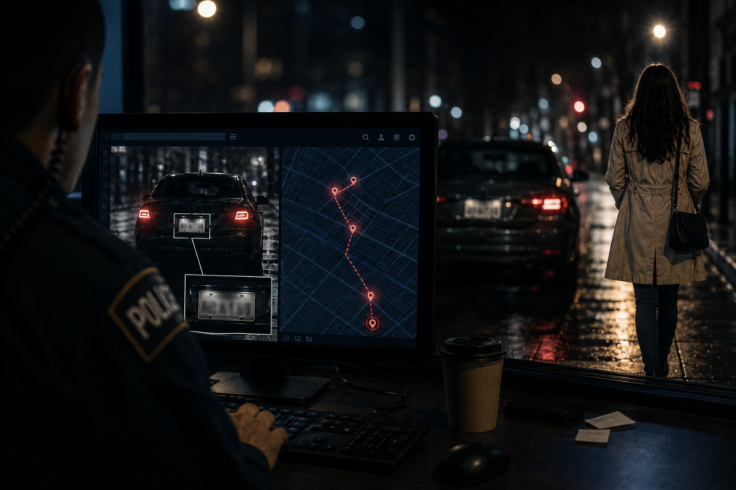
A former Florida sheriff's deputy admitted misusing law enforcement databases and putting a woman's license plate on a police hotlist after meeting her on the set of Bad Monkey.
Body camera footage sheds light on the investigation into Lamar Roman and why he used police systems to find the woman before pulling her over. The case highlights the risks of giving officers access to powerful surveillance systems without adequate safeguards.
'You Don't Look Them Up in a Database'
Detective Jenna Moeller, who investigated the case, described the surveillance to the woman in body camera footage. 'He met you on the Bad Monkey set; he was flirting with you,' Moeller said.
Moeller explained that Roman accessed the woman's driving records, vehicle information, photograph, and other personal details. She also said deputies had repeatedly been warned against using law enforcement systems for personal reasons.
'We've had deputies misuse databases,' she said, adding that officers were repeatedly told, 'You see a hot chick, you don't look them up in a database. That's not what it's for.' She said the bigger concern was Roman's use of license plate readers to track the woman's movements.
The Police System That Helped Him Track Her Down
The surveillance system alerted Roman when the woman's vehicle was detected. Investigators said he drove up to 70 mph and crossed into oncoming traffic while passing vehicles. An approaching truck had to veer away to avoid a collision.
Roman then turned on his emergency lights and pulled her over. The woman told investigators she recognised him at once and feared she was about to be stopped. Roman allegedly told her, 'I told you I would find you and pull you over.' He also asked why she was not following him on Instagram.
'I Saw a Shiny Thing'
Asked whether he had any legitimate reason to pull the woman over, Roman said, 'No.' Investigators then asked why he had put her vehicle on the hotlist. Roman said he got 'the high from it' and claimed she had been 'leading on' or 'pushing it'.
During the interview, Roman offered a striking explanation for his actions. 'I mean, it's a tough month, and I saw a shiny thing and teasing and all that,' he told investigators. 'I knew that when I put that (into the system), I'm like, "Fuck."'
Roman acknowledged that he 'didn't need to' search the database. He also said he was 'just going to say hi' when he stopped the woman. 'Yeah, I know it's stupid,' he admitted.
Former Deputy Avoids Jail Under Plea Deal
Roman was fired by the Monroe County Sheriff's Office and arrested in March for allegedly misusing law enforcement computer systems. He later entered a pretrial intervention programme that allows him to avoid jail, with the charges to be dropped if he successfully completes its requirements. Under the agreement, he must stay out of trouble for two years, have no contact with the woman, complete 100 hours of community service, continue psychotherapy, and pay about $1,700 in investigative and prosecution costs.
Roman's case comes amid growing scrutiny of automated license plate reader networks, which can record vehicle locations and allow law enforcement agencies to search those records.
The ACLU of Wisconsin has warned of a 'disturbing trend' in law enforcement's abuse of Flock and ALPR technology, citing cases in which officers allegedly used the systems to track people for personal reasons.
The incident shows how technology designed to help police find suspects can become a tool for personal surveillance when officers misuse their access.
© Copyright IBTimes 2026. All rights reserved.