Mars' Life-Supporting Climate Suggested In NASA's Perseverance Rover Exploration
Mars was habitable once upon a time and study suggest it had warm and wet tropical climate similar to Earth
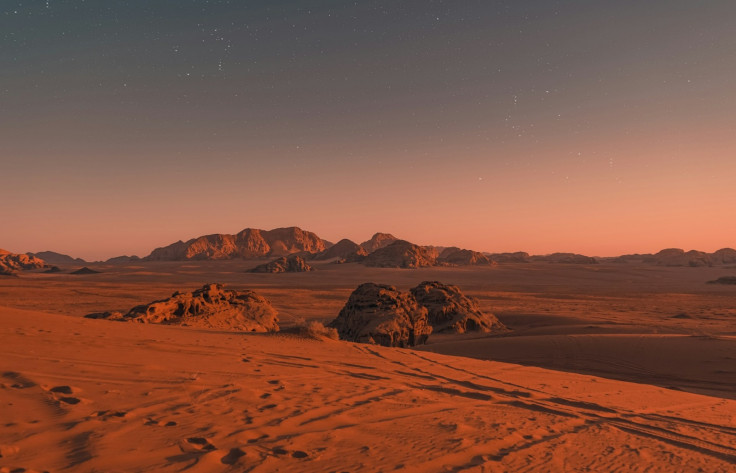
Mars has signs of life based on new evidence gathered by NASA's Perseverance rover. Researchers from Purdue University have found startling proof within Martian rock samples, suggesting the Red Planet had a tropical climate in the past and described this as 'humid climates and heavy rainfall' comparable to the weather on Earth.
The researchers drew their compelling conclusions after meticulously analysing rock fragments retrieved from the planet's Jezero Crater. These samples contain geological proof that Mars once had a warm and wet climate, making it capable of supporting life.
Geological Discovery: What Researchers Detected on the Rocks
The research, detailed in the journal Communications Earth & Environment, revealed specific mineral traces that support the long-held belief that ancient Mars was a truly habitable planet. Led by Adrian Broz, a research associate in the lab of Briony Horgan, the study focused on the chemical composition of the crater's bedrock.
The group's analysis further demonstrates that the environment on Mars in that era offered perfect, stable conditions where life could have been sustained and thrived for millions of years. Specifically, Martian rocks analysed by the Perseverance rover are composed of white, aluminium-rich kaolinite clay.
This type of clay only forms when rocks and sediment are completely leached of other minerals by heavy rainfall over the course of millions of years.
Alteration history of aluminum-rich rocks at Jezero crater, Mars https://t.co/56lcc6B3NG pic.twitter.com/3ZYdZedGGt
— Communications Earth & Environment (@CommsEarth) December 1, 2025
Broz explained that this weathering is only possible in environments like tropical regions with rainforests, wherein kaolinite clay naturally forms.
'Elsewhere on Mars, rocks like these are probably some of the most important outcrops we have seen from orbit because they are just so hard to form,' Horgan stated. 'You need so much water that we think these could be evidence of an ancient warmer and wetter climate where there was rain falling for millions of years.'
Broz added, 'So when you see kaolinite on a place like Mars, where it's barren, cold and with certainly no liquid water at the surface, it tells us that there was once a lot more water than there is today.'
Why NASA Picked Mars' Jezero Crater to Explore
NASA strategically selected Jezero Crater on Mars for the Perseverance rover exploration mission because of its ancient river delta formation. This geological feature is considered to be an ideal repository where traces of water and crucial organic molecules–potential biosignatures of past life–would have been deposited and preserved.
The presence of kaolinite within the delta's marginal unit suggests that water was not just present, but persistent. Because of the discovery, scientists can now prioritise samples taken from this location for return to Earth.
A 360° view from the surface of Mars from Perseverance Rover.
— Wonder of Science (@wonderofscience) November 4, 2025
📸: NASA/JPL-Caltech/Simeon Schmauß pic.twitter.com/nVr76UqJAk
Challenges for the Mars Sample Return Mission
While the in-situ analysis is promising, definitive proof of life requires laboratory equipment far more sophisticated than what a rover can carry. NASA's Perseverance Rover landed on Jezero Crater in 2021. The craft is currently collecting rocks and soil samples that will be retrieved by future missions, with the samples expected to reach Earth between 2035 and 2039. However, the timeline may change due to budget and engineering challenges.
'We want to bring those back as quickly as possible to study them in state-of-the-art facilities,' Dr Nicola Nicky Fox, associate administrator for NASA's Science Mission Directorate, said. 'Mars Sample Return will allow scientists to understand the planet's geological history and the evolution of climate on this barren planet where life may have existed in the past and shed light on the early solar system before life began here on Earth. This will also prepare us to safely send the first human explorers to Mars.'
© Copyright IBTimes 2026. All rights reserved.
- MOST POPULAR IN Trending