

NASA Reveals High-Stakes February Moon Launch — But Warns Safety is 'Top Priority'
The journey begins with a critical rollout on 17 January

The lunar surface is back in focus as NASA prepares for a critical mission scheduled for this February. As the launch window approaches, officials are making it clear that no risks will be taken with the equipment or the timeline. The agency is balancing the urgency of space exploration with a firm commitment to ensuring every safety protocol is met before liftoff.
The United States is mere weeks from revisiting the lunar surface for the first time in more than five decades, according to a recent NASA announcement. During a Tuesday briefing, the agency identified 6 February as the opening launch date for Artemis II, a mission that will see a crew head towards the moon for the first time since 1972.
READ MORE: NASA And Harvard Experts Clash Over Whether Interstellar 3I/ATLAS Is 'Alien Scout' — Here's Why
READ MORE: NASA Issues Final Verdict on 3I/ATLAS Comet Following Alien Spaceship Theories — What Is The Truth?
A Landmark Return to Lunar Orbit
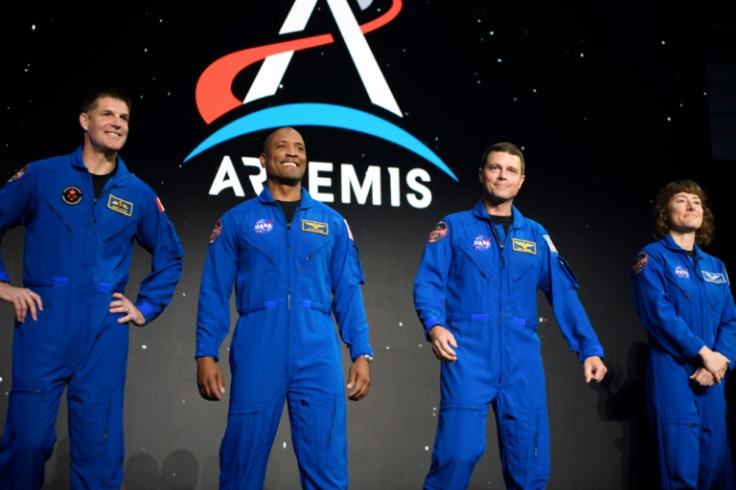
According to space agency officials, the primary window for the Artemis II departure spans from 31 January to 14 February, with several backup dates also identified. This 10-day expedition will carry NASA's Reid Wiseman, Victor Glover and Christina Koch, along with Jeremy Hansen from the Canadian Space Agency, on a high-speed loop around the Moon before their return to Earth.
While the Artemis II mission is not intended to touch down on the lunar surface, it sets the stage for Artemis III, which is slated to achieve the programme's first landing in 2027. Success depends on a specific set of variables, meaning the mission cannot simply depart at any moment. Instead, the timing relies on the complex alignment of Earth and its moon, the technical capabilities of the rocket, and the atmospheric conditions surrounding Florida's Kennedy Space Center.
Four astronauts. One mission.
— NASA (@NASA) January 13, 2026
Hear from the crew of Artemis II, who are preparing for humanity's next lunar journey, in the newest episode of our "NASA's Curious Universe" podcast: https://t.co/LtLPh6uYcS pic.twitter.com/uNoiFnuZez
Beyond the initial window, 7, 8, 10 and 11 February have been identified as viable backup dates for the journey. Should a February departure prove impossible, NASA has already earmarked alternative slots in early March and April to ensure the mission stays on track. This venture represents a monumental leap for exploration, as Artemis II will be the first crewed flight to venture past low Earth orbit in over half a century.
Charting the 10-Day Journey
On 6 February, the crew is scheduled to depart from Cape Canaveral aboard the Orion capsule, propelled by NASA's Space Launch System (SLS). The journey begins with several circuits of our own planet to verify the integrity of the life-support systems before the vessel accelerates towards the moon for a high-altitude pass, skirting the lunar surface without entering its orbit or touching down.
We are going—again! Artemis II is set to depart on its 10-day crewed flight around the Moon no earlier than Feb. 6, with plenty of activities scheduled at @NASA_Johnson around the launch.
— NASA (@NASA) January 13, 2026
Find media accreditation information here: https://t.co/EmIkC9xNNw pic.twitter.com/KXh8TkE6ju
By harnessing the moon's gravitational pull, the vessel will swing back towards our planet on a 'free-return trajectory', a design that ensures a safe journey home even if engine power is unavailable. This mission serves primarily as a rigorous validation of the rocket, capsule and internal equipment under crewed conditions, clearing the path for the Artemis III lunar landing scheduled for the following year.
The Meticulous Trek to the Pad
NASA is now less than a week away from the inaugural phase of this landmark event: the rollout, which is slated to commence as early as 17 January. The fully assembled SLS rocket and Orion capsule will begin their trek from the Vehicle Assembly Building to Launch Pad 39B at the Kennedy Space Center.
This four-mile transit relies on a massive crawler-transporter to shift the stack, a meticulous process that can span up to 12 hours. Upon arrival at the pad, engineers will establish power and fuel connections for rigorous final assessments before the crew performs their pre-flight walkthrough.
Practice Runs and Propellant Loading
After the Artemis II stack is secured at the launch site, ground teams will perform a 'wet dress rehearsal' alongside 'tanking' operations. During this phase, they will pump more than 700,000 gallons of cryogenic liquid hydrogen and oxygen into the SLS, providing the essential propellants that, once ignited, will propel the vessel into the heavens.
What better celebration of America’s 250th birthday than launching a spacecraft to take the @NASAArtemis II crew farther into space than any human has gone before!
— NASA Administrator Jared Isaacman (@NASAAdmin) January 11, 2026
Rockets of this power are marvels of American engineering and informed by the lessons learned throughout our… pic.twitter.com/t9B7tf3IJo
The agency will also conduct a simulated countdown to liftoff, rehearsing holds and restarts before safely emptying the fuel tanks until the actual departure date. This exercise evaluates fueling protocols and helps identify potential technical faults, such as leaks in the rocket's valves or storage tanks.
Looking Toward a Permanent Presence
Should any complications arise, it is probable that NASA will conduct several rehearsals, which could result in the departure being pushed back.
In September 2025, the former NASA Administrator, Sean Duffy, stated that roughly 18 months after the Artemis II flight, the next mission would 'land and establish a long-term presence of life on the moon led by America'. He further explained that the knowledge gained from these return voyages to the lunar surface will support upcoming goals to 'put American boots on Mars.'
© Copyright IBTimes 2026. All rights reserved.