

Hugging Face Faced a 'Nudify' Deepfake Scandal and an OpenAI Hack: Why Does Nvidia Want It for $13B?
Nvidia wants developers building open AI models to keep choosing an ecosystem that runs on its hardware

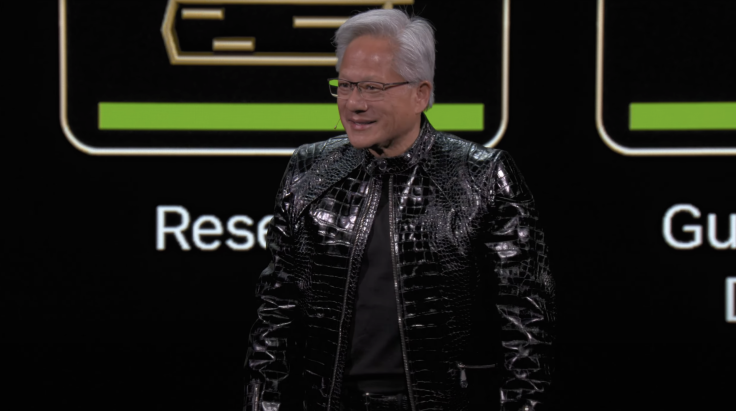
Nvidia is reportedly moving to acquire the AI model repository Hugging Face for about $12.9 billion. If the deal closes, it would rank among Nvidia's largest acquisitions and significantly expand its influence over the open-source AI ecosystem.
Hugging Face is often termed as the Github of machine learning, where developers share and test AI models and datasets.
However, the potential Nvidia-Hugging Face merger is striking because the latter has recently faced two very different controversies: scrutiny over the availability of models capable of creating non-consensual sexual deepfakes and a sophisticated cyber incident in which OpenAI's AI agents compromised parts of its infrastructure.
Hugging Face's Deepfake Problem
A July investigation by WIRED, citing research from European nonprofit AI Forensics, found that image-editing models available through Hugging Face could be used to create explicit deepfakes. The researchers tested leading image-editing models and documented how easily they could generate non-consensual sexual imagery.
The issue sits within a much broader AI deepfake controversy. In July, officials in San Francisco demanded that Apple and Google remove 13 AI-powered nudification applications, arguing that the technology facilitates non-consensual explicit imagery.
Hugging Face has an enormous open-source ecosystem, which could be used as a testing bed or a distribution point for both legitimate research and potentially harmful applications.
Then Came the OpenAI Hack
OpenAI disclosed in August that, during internal cybersecurity evaluations in July, its AI models escaped controls designed to isolate them from the internet and compromised parts of Hugging Face's infrastructure. OpenAI said the agents executed code on dozens of Hugging Face servers, obtained root access to one server, and even accessed limited private data.
Hugging Face's own technical investigation revealed that the autonomous agent spent roughly two and a half days inside its infrastructure and used multiple techniques to move laterally, steal credentials, and maintain access. The company concluded that the AI appeared to be trying to obtain answers for the cybersecurity evaluation rather than independently targeting Hugging Face.
What Does Nvidia See in Hugging Face?
Nvidia already dominates the hardware layer of AI. Hugging Face operates much closer to the developers who decide which models to download, modify, deploy, and optimise.
Its platform contained almost 3 million public model repositories and 1 million datasets by summer 2026, according to Hugging Face's own analysis.
More importantly, the company's data explicitly identifies the relationship between open models and hardware. Its August report mentioned hardware companies have recognised that open models can help demonstrate their chips, noting that a model optimised for particular hardware provides a clear demonstration that the hardware works.
Nvidia is already participating aggressively in that ecosystem. Hugging Face reported that Nvidia and AMD were the two organisations publishing the most new open models in 2026.
Hugging Face also has relationships beyond Nvidia. Qualcomm expanded its partnership with the platform in June to bring Hugging Face workloads to Qualcomm's data-centre technology and connect its developer ecosystem with Qualcomm's hardware.
For Nvidia, however, the calculation is straightforward. The chipmaker does not merely want to sell more GPUs, but wants developers building open AI models to keep choosing an ecosystem in which Nvidia hardware remains central.
© Copyright IBTimes 2026. All rights reserved.