

Peter Schiff Warns Gold Above $4,600 Signals a 'Full-Blown' US Debt Crisis
Schiff believes that policymakers could be struggling to lower Treasury yields without undermining the US dollar

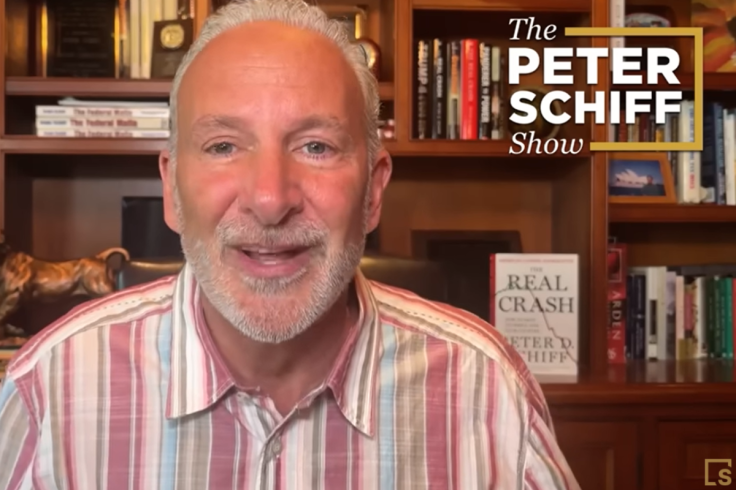
Peter Schiff is betting that gold has not finished its latest surge, arguing that the US Treasury's attempt to contain long-term borrowing costs is exposing a much bigger problem: investors may be losing confidence in Washington's ability to control inflation, Treasury yields, and the US dollar.
Gold has already moved above $4,600 per ounce, gaining roughly 15% during the first three weeks of August, according to Schiff. For the prominent gold bull, that performance is itself a warning that markets are questioning the Federal Reserve's supposedly hawkish inflation stance.
'Gold is trading above $4,600,' Schiff wrote on X earlier this week. 'This doesn't happen with a hawkish Fed determined to do whatever it takes to lower inflation. It happens when investors realize the Fed is bluffing and intends to let inflation run away.'
Gold is trading above $4,600. So far, over the first three weeks of August, gold is up 15%. This doesn't happen with a hawkish Fed determined to do whatever it takes to lower inflation. It happens when investors realize the Fed is bluffing and intends to let inflation run away.
— Peter Schiff (@PeterSchiff) August 21, 2026
The timing matters. The Treasury announced on 19th August that it would double the maximum size of certain long-dated Treasury buyback operations to at least $4 billion from $2 billion. The programme covers 10- to 30-year Treasury securities and is scheduled to run from 9th September onwards. The US Treasury Department said the operation was designed to improve liquidity in older Treasury securities.
However, the immediate market reaction was not enough to convince Schiff that policymakers had solved the underlying problem. Treasury yields initially fell following the buyback announcement, but the move quickly faded.
The 10-year yield subsequently climbed back to 4.637%, while the 30-year yield reached 5.175%. The 30-year yield had reached roughly 5.34% before the announcement, its highest level since 2007.
Schiff explained that the simultaneous rise in gold and Treasury yields is particularly significant because conventional market logic would normally expect higher bond yields to make non-interest-bearing gold less attractive.
'Once again, gold and Treasury yields are rising together,' Schiff wrote, adding that this shows investors do not expect a hawkish Federal Reserve to successfully contain inflation, while also fearing that a dovish Fed could allow inflation to accelerate.
The US Dollar Is the Missing Key in the Puzzle
The economist believes that investors and foreign governments are selling Treasuries and buying gold, creating a difficult policy dilemma.
If the Fed stays hawkish for longer, higher interest rates could increase the government's debt-servicing burden and place additional pressure on the economy. In contrast, if policymakers turn dovish and trim rates, investors could interpret the move as an acceptance of higher inflation, potentially weakening the dollar and strengthening demand for gold.
'If you think gold prices and Treasury yields are rising fast now, wait until the dollar starts to drop sharply,' he wrote in another X post. 'Dollar weakness is the missing piece that will complete the puzzle necessary for a full-blown U.S. sovereign debt crisis.'
If you think gold prices and Treasury yields are rising fast now, wait until the dollar starts to drop sharply against its major fiat currency counterparts. Dollar weakness is the missing piece that will complete the puzzle necessary for a full-blown U.S. sovereign debt crisis.
— Peter Schiff (@PeterSchiff) August 21, 2026
The $4 billion Treasury buyback operation is intended to support liquidity and influence the long end of the Treasury market, but critics argue that buying a limited quantity of bonds cannot fix the structural dynamics pushing yields higher, including massive government borrowing, persistent inflation, and a debt burden that has now surpassed $40 trillion.
Schiff also addressed the question: What happens if Treasury intervention becomes larger and more frequent? He believes it would eventually weaken the dollar, drive up inflation, and bolster demand for tangible assets.
In all, Schiff's tweets indicate that if policymakers cannot force yields lower without undermining confidence in the greenback, gold could become the market's preferred escape route.
Disclaimer: Our digital media content is for informational purposes only and does not constitute investment advice. Please conduct your own analysis or seek professional advice before investing. Remember, investments are subject to market risks, and past performance does not guarantee future returns.
© Copyright IBTimes 2026. All rights reserved.