

Nvidia Makes $96 Billion in Three Months as Jensen Huang Says AI Boom Is Only Getting Started
AI boom drives Nvidia's record-breaking revenue growth
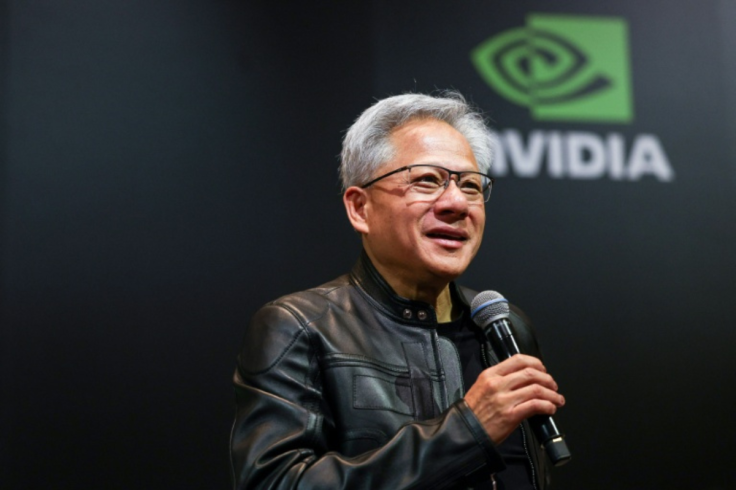
Nvidia generated more than $96 billion (about £71 billion) in quarterly revenue as demand for the computing power behind artificial intelligence continued to accelerate.
The chipmaker reported revenue of $96.2 billion for the three months ending 26 July, representing a 106 per cent increase from the same period last year. Net income reached $59.7 billion (£44 billion), up 126 per cent year on year.
Chief executive Jensen Huang said AI had reached an 'inflection point' and was now performing profitable work for businesses. Nvidia expects its growth to continue as technology companies, governments and start-ups build increasingly powerful AI systems.
Nvidia Doubles Its Quarterly Revenue
The company's second-quarter revenue increased 18 per cent from the previous three months and more than doubled from $46.7 billion (£34.4 billion) a year earlier.
Nvidia also reported earnings of $2.46 (£1.81) per diluted share, compared with $1.08 (£0.79) during the same quarter last year. Adjusted earnings reached $2.22 (£1.63) per share, beating Wall Street's expectations.
The results marked another record quarter for a company that has become one of the biggest beneficiaries of the global AI investment boom.
Nvidia began as a producer of graphics processors for video games. Its chips are now essential components in the data centres used to train and operate applications including AI chatbots, image generators and autonomous machines.
Data Centres Produce $89 Billion
Nvidia's data-centre division generated a record $89 billion (£66 billion) during the quarter, an increase of 117 per cent from a year earlier.
That means infrastructure used by cloud providers, AI developers and large companies accounted for more than 92 per cent of Nvidia's total revenue.
Amazon, Microsoft, Google and Meta are among the technology groups spending enormous sums on data centres equipped with advanced graphics processing units.
Demand has expanded beyond the largest US technology companies. Governments are developing national AI infrastructure, while research laboratories and start-ups are building increasingly sophisticated models.
Huang said one major AI laboratory had been driving much of the expansion a year earlier. Nvidia now sees multiple frontier laboratories growing simultaneously, alongside open-source developers, new start-ups and physical AI systems.
Nvidia Predicts Its First $100 Billion Quarter
The company expects revenue to reach approximately $108 billion (£80 billion) in the current quarter, plus or minus two per cent.
If achieved, the forecast would make this Nvidia's first quarter with revenue above $100 billion (£74 billion). It would place the company alongside a small group of technology giants capable of generating that amount within three months.
Nvidia also predicted that annual revenue could increase by approximately 70 per cent during the fiscal year ending in January 2028.
The forecast suggests the company believes the AI infrastructure boom has years left to run, despite repeated warnings that current levels of spending may be unsustainable.
Amazon Orders Two Million More Nvidia GPUs
Nvidia announced an expanded agreement with Amazon Web Services (AWS) alongside its earnings results.
AWS plans to deploy an additional two million Nvidia Blackwell Ultra, Rubin and Rubin Ultra graphics processors across its global infrastructure during 2027 and 2028.
The systems will support AI agents, scientific research, enterprise automation and physical AI applications, including robots and autonomous technology.
Amazon had previously planned to add more than one million Nvidia processors beginning in 2026. The companies said demand had already exceeded those expectations.
Supply Shortages Could Limit Growth
Nvidia's biggest immediate challenge may not be finding customers but producing enough systems to satisfy them.
The company warned that shortages involving memory components could restrict how quickly it expands. Advanced AI processors require specialised high-bandwidth memory, which has become more expensive as demand rises.
Nvidia must also compete with customers developing chips of their own. Amazon, Google and Microsoft are investing in custom processors intended to reduce their reliance on outside suppliers.
Investors have additionally raised concerns about whether AI companies will eventually earn enough money to justify the billions being spent on infrastructure.
For now, Nvidia's results show little evidence of demand slowing. Its quarterly revenue has more than doubled, Amazon is ordering millions of additional processors and Huang believes AI computing is entering what he described as a 'golden age'.
© Copyright IBTimes 2026. All rights reserved.