

McDonald's Franchisees May Push To Cut $800,000 NEXT Upgrade Costs by 20-40%, Analyst Says Amid Debt Fears
A Wall Street analyst expects operators to negotiate the cost of McDonald's Restaurant NEXT overhaul amid concerns over debt, returns and delayed prototype tours
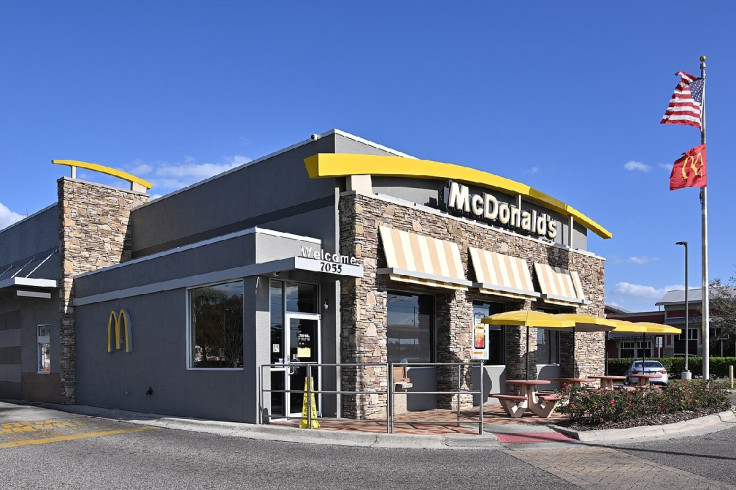
McDonald's franchisees may seek to cut the company's estimated $800,000 NEXT upgrade cost for a traditional US drive-through restaurant by 20 to 40 per cent, according to a Wall Street analyst, as some operators raise concerns about debt levels, financial risk and the scale of the fast-food chain's overhaul.
Gregory Francfort of Guggenheim Securities told Bloomberg he expected franchisees to negotiate the proposed costs rather than accept the plan in its current form.
He estimated that operators might seek reductions of 20 per cent to 40 per cent, while accepting some elements of the programme and resisting others.
If applied to the estimated $800,000 investment for a traditional US drive-through restaurant, a 20 per cent to 40 per cent reduction would bring the figure to between $480,000 and $640,000.
These are illustrative calculations based on the analyst's estimate, not revised costs announced by McDonald's.
Inside McDonald's NEXT Overhaul
McDonald's detailed its NEXT strategy on 23 September 2026, presenting it as a plan to attract more customers, increase restaurant productivity and strengthen restaurant economics. The strategy has four pillars: Menu, Consumer, Restaurant and People.
McDonald's estimates that Restaurant NEXT will require about $800,000 in incremental investment for a traditional drive-through restaurant in the US.
McDonald’s ambitious plan to overhaul its restaurants and menu is sparking angst among US franchisees.@dani_lsc has more on the upgrades that will cost at least $800,000 per location https://t.co/RL5DZwiLmk pic.twitter.com/cfSFNZa9cy
— Bloomberg (@business) October 6, 2026
The company puts the typical requirement at $650,000 to $700,000 in its international operated markets. Although McDonald's plans to help fund the programme, franchisees remain concerned about the investment required and the returns it may generate.
McDonald's plans to provide about $8.5 billion in NEXT-related support through 2036, including about $5 billion by the end of 2030.
The support will combine rent relief and capital assistance, with the company estimating that $1.5 billion to $2 billion of the amount planned through 2030 will be allocated to capital partnering for Restaurant NEXT.
Why Franchisees Are Pushing Back on Costs
McDonald's operates more than 46,000 restaurants worldwide. Restaurant NEXT is intended to modernise restaurant design and operations, introduce technology and improve productivity, with implementation phased according to market needs and franchisees' capacity to invest.
Reported concerns include the cost of the investment, the programme's details and uncertainty over returns. According to Bloomberg, some restaurant operators have said they worry about taking on debt for the improvements and want more detail on how the changes will boost sales.
McDonald's has sought to address those concerns. Chief financial officer Ian Borden said the company had set aside funds to assist some restaurants, although the level and form of support will vary by market.
'Importantly, those investments will be phased over time,' Borden said. 'So franchisees can invest progressively as capabilities are deployed and benefits are realized.'
Phasing the investment could ease the immediate financial burden, but it would not resolve questions about the expected returns.
Franchisees Want More Detail Before Committing
Bloomberg reported that McDonald's had postponed planned tours of a prototype restaurant for franchisees until next year. The delay could leave operators waiting longer to assess the proposed changes before committing to the investment.
The dispute matters because McDonald's relies heavily on its franchised model. The company says approximately 95 per cent of its restaurants worldwide are owned and operated by independent local business owners, while McDonald's sets brand standards and strategic direction. When headquarters asks for a major investment, the relationship becomes a negotiation over risk as much as ambition.
McDonald's says NEXT is intended to make restaurants easier to run by simplifying operations, modernising designs and expanding the use of ArchIQ, its generative AI-enabled restaurant technology. The company expects the programme's operational changes and technology deployments to improve restaurant-level efficiency as implementation progresses.
McDonald's is targeting gross restaurant-level efficiency gains of about 250 basis points, equivalent to 2.5 percentage points, once the relevant NEXT elements are fully deployed across the US and international operated markets.
The company estimates that this could translate into roughly $100,000 in gross annual cash-flow benefits for an average US restaurant and an approximately four-year payback for franchisees after partnering support. These figures are projections, not guaranteed results.
Squeezed Between Investment Demands and Value Deals
The cost of the proposed investment comes as McDonald's competes to attract price-conscious customers.
In June 2024, McDonald's launched a limited-time $5 Meal Deal at participating US restaurants, offering a choice of McDouble or McChicken, small fries, four-piece Chicken McNuggets and a small soft drink. In April 2026, it expanded its US McValue menu with an Under $3 selection featuring at least 10 items across breakfast, lunch and dinner at participating restaurants.
Those offers are intended to attract price-conscious customers. They also underline the commercial tension facing franchisees: McDonald's is asking operators to invest heavily in the future while competing on low prices in the present.
The company also faces separate legal pressure. In October, a customer filed a proposed class-action lawsuit in federal court in Illinois alleging that McDonald's AI-enhanced pricing tools facilitate unlawful price coordination among franchisees. The complaint alleges that the system uses non-public store-level data to generate pricing recommendations that could undermine competition between restaurants.
McDonald's rejects the allegations, saying its AI-enabled tools offer optional pricing recommendations and do not automate, coordinate or fix prices. The company says franchisees retain responsibility for setting menu prices. The lawsuit alleges that the tools nevertheless facilitate unlawful coordination.
The lawsuit's allegations have not been established in court. The case remains at an early stage, and its claims should not be treated as findings of fact.
If McDonald's can show franchisees a credible route to lower costs, stronger sales and manageable debt, NEXT may gain traction. If not, the cost of the proposed investment is likely to remain a central issue in discussions between McDonald's and its franchisees.
© Copyright IBTimes 2026. All rights reserved.