

Rob Reiner Confided 'My Son Can Hurt Me' Just Before Nick Allegedly Slashed Their Throats
Rob Reiner's tragic final hours: Inside the years of domestic turmoil that led to the Hollywood director's murder.
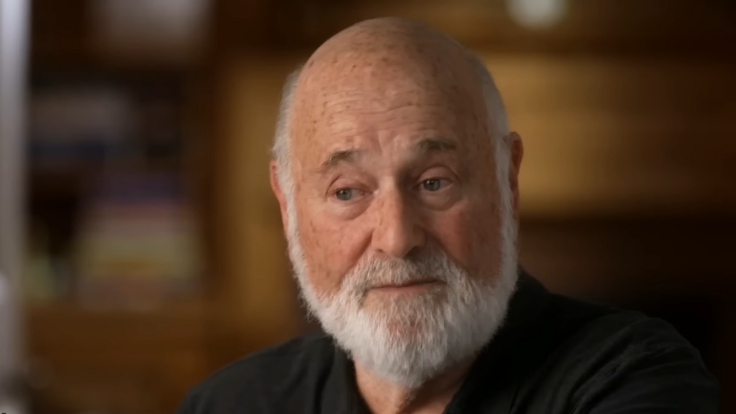
Behind the high hedges and security gates of a £13.5 million Brentwood mansion, one of Hollywood's most respected families were living with a level of turmoil few outsiders suspected. On 14 December 2025, that private crisis ended in horror, when director Rob Reiner and his wife, Michele, were found in their bedroom with their throats slashed. Their 32‑year‑old son, Nick, now stands accused of their murders.
What has emerged since paints a chilling portrait of a family fighting a losing battle against addiction, mental illness and escalating violence – all while neighbours saw nothing more than a successful Hollywood household.
Police Calls Expose Hidden Turmoil Inside Reiner Home
Brentwood is known as one of Los Angeles' quietest, most affluent enclaves – the sort of place where a noisy party is usually the greatest disturbance. Inside the Reiner home, however, police logs suggest a very different story.
Newly revealed Los Angeles Police Department records show officers were dispatched to the property at least five times between 2013 and 2019 for what are euphemistically described as 'calls for service'. These ranged from welfare checks to a formal 'battery of family violence' investigation.
The first recorded call came in the early hours of 4 August 2013, when officers arrived at 3.31 a.m. for a welfare check. It was an early sign that something was badly amiss behind closed doors. By 2 February 2014, police were responding to a daytime noise complaint – logged as 'gone on arrival' – but the most disturbing incident followed three years later.
On 5 May 2017, at 4.04 p.m., officers returned under a code used for a family violence battery investigation. This time, a full police report was taken. Two more visits followed in 2019: a welfare check in February and, that September, a '918M' – LAPD shorthand for a mental health‑related call involving a male subject.
'There's been quite a few calls for service at the Reiner house,' an insider close to the department said, noting how unusual that was for the usually sedate, tightly‑patrolled neighbourhood.
Death certificates now confirm that on 14 December Rob, 78, and Michele, 70, died within minutes of each other from 'multiple sharp force injuries' inflicted with a knife. Their daughter Romy is said to have discovered her father's body at around 3.30 p.m., initially unaware her mother had also been killed. Emergency responders found Michele just a minute later. Nick was arrested that evening at around 9.15 p.m. near the University of Southern California in Exposition Park.
Nick Reiner's Long Battle With Addiction And Mental Illness
At the centre of this tragedy is Nick Reiner, a one‑time screenwriter whose struggles with drugs and mental health had been documented for years. He has now been charged with two counts of first‑degree murder.
Nick had reportedly been treated for schizophrenia and cycled through rehab at least 18 times since the age of 15. At the time of the killings he was living in the estate's guest house – a space he previously admitted to 'trashing' during a drug‑fuelled rampage.
In the months leading up to his parents' deaths, his behaviour is said to have deteriorated after doctors changed his medication in an effort to stabilise him. Those close to the family describe him as 'erratic', 'dangerous' and 'alarming', and say his parents were increasingly frightened of what he might do.
That fear appears to have shaped their final hours. On 13 December, Rob and Michele attended a Christmas party at Conan O'Brien's home – but were reportedly too scared to leave Nick alone, and so brought him along. Witnesses claim he unsettled guests with antisocial behaviour, culminating in a loud argument with his father.
According to one guest, Rob – beloved for directing films such as The Princess Bride and A Few Good Men – confided that night: 'I'm petrified of [Nick]. I can't believe I'm going to say this, but I'm afraid of my son. I think my own son can hurt me.' Within roughly 24 hours, those words would hang over a crime scene.
Nick appeared in court on 17 December wearing a blue anti‑suicide smock and shackles. He did not enter a plea; his formal arraignment is scheduled for 7 January 2026. If convicted, he faces life without parole or the death penalty.
A Hollywood Powerhouse Brought Down By A Private Crisis
For decades, Reiner was seen as one of Hollywood's safe pairs of hands – a director who helped shape modern cinema and sitcom history, from When Harry Met Sally to his work on All in the Family. His public persona was that of a thoughtful, politically engaged storyteller; his home, a gathering place for industry friends and family celebrations.
The emerging police and family history tells a darker parallel story: parents who spent years trying to rescue a son from addiction and mental illness, a household repeatedly visited by police, and siblings who reportedly lived in fear of their brother's volatile outbursts.
Hollywood is still reeling from the brutal loss of a man who helped define an era of film‑making. But as tributes pour in, the focus is shifting from the red carpet to the courtroom. The case of Nick Reiner is likely to become a painful test of how the justice system handles the blurred lines between criminal responsibility, untreated mental illness and long‑term family trauma.
For many in and beyond the industry, the killings are a stark reminder that even the most outwardly successful families can be fighting battles no one sees – and that without effective, sustained support, those battles can end in catastrophe.
© Copyright IBTimes 2026. All rights reserved.