

From Scrubbing Toilets to Tech Empires: The Gritty Rule Musk and Huang Live By
Huang argues that 'torturing' staff into greatness through persistence is better than giving up on them

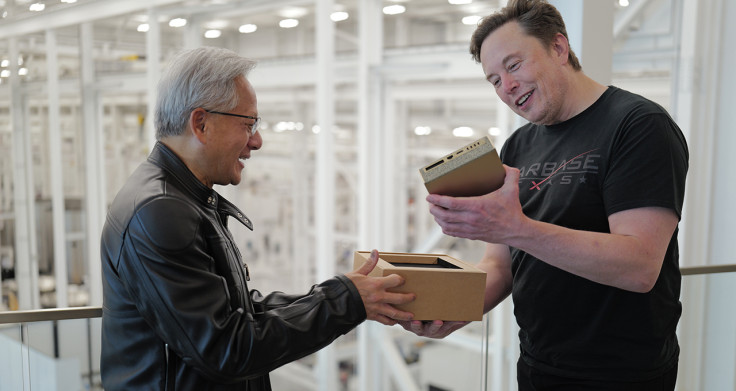
Tech giants Jensen Huang and Elon Musk may lead different empires, but they share a surprisingly grounded philosophy on what it takes to run a successful company. Both billionaires suggest that no task is too small for a chief executive, even if that means rolling up their sleeves and scrubbing with a scrub brush.
Their unconventional stance highlights a rigorous work ethic that prioritises humility and direct action over corporate ego.
The Shared Philosophy of Two Tech Titans
Elon Musk, the wealthiest person in the world, who recently saw his wealth hit a historic $700 billion (£522.67 billion), backed Jensen Huang's stance on professional standards on X. In his social media update, the Tesla founder supported the Nvidia chief's outlook regarding how a manager should lead.
Replying to a video of Jensen Huang's March 2024 talk at the Stanford Graduate School of Business, Elon Musk wrote, 'This is the way.' In the footage, the Nvidia leader reflected on his earlier years spent working as a waiter and a busboy.
This is the way https://t.co/ID39zoB0Rg
— Elon Musk (@elonmusk) December 21, 2025
During a conversation about his time at Denny's, Huang remarked, 'To me, no task is beneath me because, remember, I used to be a dishwasher [and] I used to clean toilets. I've cleaned a lot of toilets. I've cleaned more toilets than all of you (audience) combined. And some of them I just can't unsee. That's life.'
Why No Job Is Too Small for Nvidia's CEO
The Nvidia chief explained, 'You can't show me a task that's beneath me. I'm not doing it only because whether it's beneath me or not. If you send me something and you want my input on it, and I can be of service to you, and in my review of it, share with you how I reasoned through it, I've made a contribution to you. I've made it possible for you to see how I reasoned through something.'
Huang further explained how this approach defines his management style, stating, 'And by reasoning, as you know, how someone reasons through something empowers you. 'oh my gosh, that's how you reason through this! It's not as complicated as it seems'. And so I show people how to reason through things all the time. Strategy, how to forecast, how to break a problem down, and you're empowering people. That's how I see it.'
Jensen Huang: From Denny's Busboy To Billionaire Tech Leader
In August 2024, Jensen Huang's LinkedIn profile gained massive attention for listing his roles as a waiter, dishwasher, and busboy. These entries showed he held those positions between 1978 and 1983 before his rise in the tech world.

The 61-year-old billionaire, who moved to the US from Taiwan at the age of five, earned a bachelor's degree in engineering from Oregon State University. He later completed a master's degree in the same field at Stanford University.
Management Style: Pushing Staff Toward Excellence
In a separate conversation with The Transcript, Huang mentioned that he rarely dismisses staff, preferring to support their professional growth. He noted that he 'would rather improve you than give up on you' when it comes to struggling employees.
'When you fire somebody, you're saying, a lot of people say: "it wasn't your fault," or "I made the wrong choice," or "there are very few jobs." Look, I used to clean bathrooms, and now I'm the CEO of a company. I think you can learn it. I'm pretty certain you can learn this. And there are a lot of things in life that I believe you can learn, and you just have to be given the opportunity to learn it,' Huang said.
Huang further noted, 'I had the benefit of watching a lot of smart people do a lot of things. I'm surrounded by 60 people. They're doing smart things all the time, and they probably don't realise it, but I'm learning constantly from every single one of them. And so I don't like giving up on people because I think they could improve.'
He also jokingly remarked that his staff are aware he prefers to push them toward excellence. He explained that this rigorous approach stems from a belief in his team's potential, suggesting that a good leader, much like a dedicated coach, should drive their people to succeed because they are often on the verge of greatness.
© Copyright IBTimes 2026. All rights reserved.