Today's Premium on Stability Points to Stronger UK–Tanzania Investment Ties

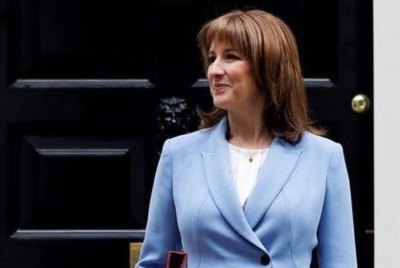
At the World Economic Forum in Davos, UK Chancellor Rachel Reeves praised her nation as a 'home of stability', as she set out her government's ambitions for growth.
In a world marked by trade disputes, tariff uncertainty and fast-shifting geopolitics, investors are no longer chasing novelty or hype. They are looking for something more fundamental: predictability, reliability, and stability. The premium on those qualities has rarely been higher.
As Tanzania's Minister of State for Planning and Investment, the Chancellor's words also resonated deeply with me. These key factors have long been one of Tanzania's defining strengths. They have shaped our politics, anchored our institutions, and underpinned steady economic growth for more than six decades since independence.
Bilateral Investment Between British and Tanzanian Businesses
The UK-Tanzania partnership has been an important part of this story, ties based on a shared past and common preference for gradual change over rapid revolution. This is exactly why I chose to visit the UK this month to promote bilateral investment between British and Tanzanian businesses.
Since joining the Commonwealth in 1961, Tanzania has worked closely with the UK and other partners on issues ranging from climate finance and environmental protection to education, skills and youth leadership.
Britons know Tanzania well. They walk the beaches of Zanzibar, climb Mount Kilimanjaro, and return home as unofficial ambassadors for our country. Tourism already supports hundreds of thousands of Tanzanian jobs, and it continues to grow, bringing opportunity with it.
Trade, too, is flourishing. UK-Tanzania trade now totals around £650 million a year, more than double pre-pandemic levels. UK Export Finance has played a catalytic role, underwriting more than £370 million in investment, including the Pemba Airport project, which will open Tanzania's 'Green Island' to even greater connectivity and commerce.
UK's Developing Countries Trading Scheme
Tanzania's participation in the UK's Developing Countries Trading Scheme, with its zero-tariff access, has further strengthened this momentum. Recent improvements to Rules of Origin promise only to further stimulate UK-Tanzania business ties.
Yet in today's volatile global environment, sound foundations are not enough. The UK and Tanzania can – and should – do more.
President Samia Suluhu Hassan's Vision 2050 sets out a clear ambition: to transform Tanzania into a $1 trillion economy by mid-century. It is an agenda rooted in openness, reform and partnership. For British investors, the opportunities it presents are numerous.
As economies accelerate their transition to renewable energy, digital infrastructure and advanced manufacturing, secure access to minerals such as nickel, cobalt, lithium and graphite has become a strategic priority. Tanzania is fortunate to possess all of them in abundance. World Bank projections suggest Tanzania could rank among the world's top six countries for mineral wealth by 2050.
And, while many critical minerals in Africa are found in the continent's hard-to-reach interior, Tanzania's long coastline makes exports to global markets cheaper and more viable.
Becoming a Regional Agricultural Powerhouse
With more than 44 million hectares of arable land, Tanzania has the scale to become a regional agricultural powerhouse. This comes at a critical time when climate pressures and geopolitical shocks are straining food supply chains. The Tanzanian government has increased agricultural spending fivefold since 2020, a clear signal that we see food security not only as a human-centric priority, but as a strategic economic opportunity.
Tanzania's population is young, ambitious and entrepreneurial. This is our greatest long-term asset. President Samia has placed youth empowerment at the centre of her presidency, establishing a dedicated Ministry for Youth Affairs and expanding access to skills training and finance. These are the future engineers, agribusiness leaders and digital entrepreneurs who will sustain growth for decades to come.
For British investors, the proposition is straightforward. Tanzania offers stability in an unstable world. It combines access to critical resources and agricultural potential with reform-minded leadership and a dynamic young population. In doing so, it offers a natural partnership for the UK as it seeks to reignite growth and diversify its global economic relationships.
Sustained prosperity is never guaranteed. But in uncertain times, the countries that succeed are those that recognise the enduring value of stability and invest in it. By building on our shared strengths and deepening our economic ties, Tanzania and the UK can do exactly that, together.
© Copyright IBTimes 2025. All rights reserved.
- Recommended For You