

Trump Administration Weighing Plans To Pay Citizens Of Greenland Up To £75,000 In A Bold Bid To Persuade Them To Join The US
Washington weighs cash incentives among other options as Denmark and European allies reject US overtures on Greenland's future.
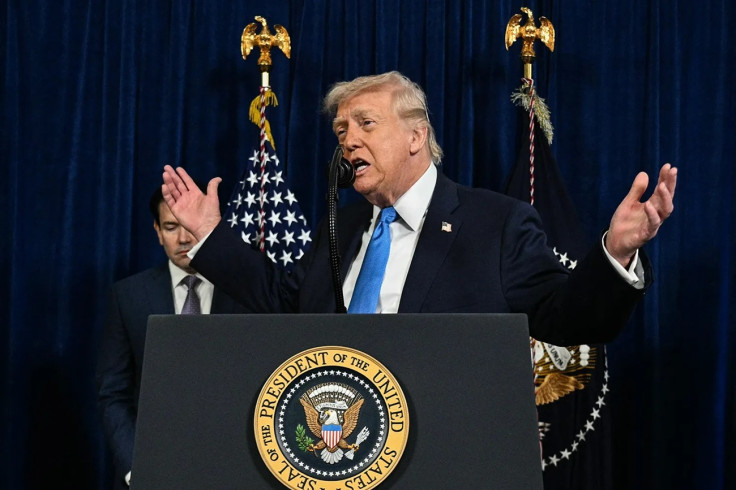
The Trump administration is contemplating offering residents of Greenland direct cash payments of up to £75,000 ($100,000) each as part of an unprecedented bid to persuade the Arctic territory to break from Denmark and align with the United States.
The proposal, now under internal discussion in Washington, forms part of a broader suite of strategies, ranging from economic incentives to diplomatic shifts and even military options, aimed at bringing Greenland closer under American influence amid intensifying geopolitical competition in the Arctic.
Greenland is a self-governing territory within the Kingdom of Denmark, home to about 57,000 people. It has long been of strategic interest due to its vast mineral resources, its key geographic location between North America and Europe, and its role in missile warning systems.
Internal Deliberations And Strategic Calculations
According to senior officials familiar with internal White House deliberations, senior aides and policy advisers have discussed offering lump-sum cash payments to influence public sentiment on the island.
Figures under consideration reportedly range from £7,500 ($10,000) to £75,000 ($100,000) per resident. The initiative's backers in the administration argue that such direct payments could soften resistance to the idea of secession from Denmark and subsequent deeper alignment with the United States.
I guess if you're one of those Americans who voted for Trump because you're hurting from the economy and you're tired of money going to non-Americans, you'll have to support this now: Payments of $10,000 to $100,000 per Greenlander
— Tom Nichols (@RadioFreeTom) January 8, 2026
America First!https://t.co/y3BulwkBiv
The discussions have grown more serious in recent days, with officials acknowledging that the larger figures would require significant funding, potentially approaching billions of pounds, and complex logistical frameworks.
One White House official involved in the discussions told reporters that the proposal's details were still evolving and that no formal plan had been finalised. How the payments would be administered, what conditions might be attached, and how they would fit within international law remain open questions.
Wide International Backlash And Legal Objections
The proposition has provoked swift and stern responses from Greenland's political leadership. Greenland's Prime Minister, Jens-Frederik Nielsen, publicly dismissed the notion as a 'fantasy about annexation', insisting that the island is not for sale and rejecting any attempt to circumvent democratic processes.
Denmark, for its part, has emphasised that Greenland's future must be determined jointly by Copenhagen and Nuuk, Greenland's capital, and that any external attempt to interfere with this arrangement is unacceptable.
European governments, including France, Germany, Italy, Spain, Poland, and Britain, have echoed this stance, issuing a joint statement underscoring that only Denmark and Greenland can decide matters pertaining to the island's political status.
Legal experts have also weighed in on the matter, noting that international law upholds the principle of territorial sovereignty. Under the United Nations Charter and relevant conventions, a sovereign state, in this case, Denmark, retains authority over its territories. Any unilateral attempt by another nation to influence or change that status through financial incentives could be viewed as coercive and in violation of those norms.
Military And Diplomatic Options Still On The Table
While the cash payment idea has grabbed headlines, it forms part of a broader set of options that President Trump and his advisers are reportedly considering.
These include negotiating a Compact of Free Association (COFA), a status currently held by nations such as the Federated States of Micronesia, which would allow for extensive US defence and economic ties without formal territorial annexation.

However, even a COFA arrangement would likely require Greenlandic independence from Denmark first, a step that would involve substantial constitutional and legal changes. Observers note that most Greenlanders support full independence from Denmark but do not favour joining the United States.
The White House has also reiterated that all options remain under consideration, including the potential use of the US military, language that has alarmed many international partners and prompted urgent diplomatic engagement between capitals.
This controversial proposal, if pursued, could redefine not only Greenland's future but also the nature of diplomatic engagement between the United States and its longstanding allies.
© Copyright IBTimes 2026. All rights reserved.