

Trump Claims States Are 'Killing AI' As He Prepares Explosive One-Rule Executive Order
The president seeks a unified federal approach to AI regulation, aiming to streamline compliance and maintain US leadership amid growing global competition.
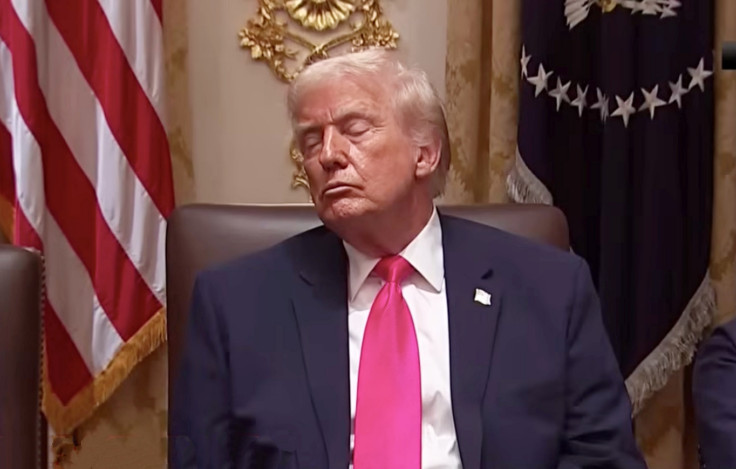
Donald Trump has escalated the battle over artificial intelligence regulation in the United States, accusing individual states of 'killing AI' and putting America's global leadership at risk as he prepares to issue a sweeping one-rule executive orderdesigned to impose a single federal framework nationwide.
The president warned that the widespread push by states to pass AI laws threatens to 'destroy' the industry before it reaches maturity and allow international rivals, including China, to overtake US innovation.
Trump's One-Rule Plan for AI
In a fiery post on Truth Social, Trump declared: 'There must be only One Rulebook if we are going to continue to lead in AI. We are beating ALL COUNTRIES at this point in the race, but that won't last long if we are going to have 50 States, many of them bad actors, involved in RULES and the APPROVAL PROCESS.'
He continued with an emphatic warning: 'THERE CAN BE NO DOUBT ABOUT THIS! AI WILL BE DESTROYED IN ITS INFANCY! I will be doing a ONE RULE Executive Order this week.'
Trump argued that a fragmented regulatory system makes it unworkable for companies to innovate at scale, stating: 'You can't expect a company to get 50 approvals every time they want to do something. THAT WILL NEVER WORK!'
The executive order, expected to be signed within days, would establish a single federal rulebook governing AI development and deployment across the US, overriding the current state-by-state regulatory framework.
Trump claims this approach would eliminate red tape, streamline approvals, and help preserve the country's competitive edge in AI research and commercial applications.
Technology companies have long advocated for consistent nationwide standards, saying divergent state laws drive up compliance costs, delay launches, and cause regulatory confusion.
Under Trump's proposal, those obstacles would be replaced with a unified national system designed to foster investment and innovation.
The Patchwork of State AI Laws
The sharp rhetoric arrives as states have accelerated efforts to regulate artificial intelligence. In 2025 alone, all 50 states and several territories introduced AI-related legislation, while 38 states passed approximately 100 new laws covering privacy safeguards, algorithmic bias, election interference, child protection, data transparency, and deepfake content.
State-level measures often require AI developers to conduct risk assessments, implement consumer protections, and ensure that automated tools do not undermine democratic processes or civil rights.
Supporters of these laws argue that they provide essential safeguards as AI expands into sensitive areas such as healthcare, law enforcement, financial services, and education.
But companies say navigating dozens of legal frameworks has become time-consuming and costly, particularly for smaller startups.
Advocates of federal regulation contend that AI technology, by nature, operates across state and national borders and therefore demands uniform rules rather than localised oversight.
Innovation Versus Oversight
Trump's one-rule proposal has reignited a fierce debate over how innovation should be balanced against consumer protection.
Critics warn that sidelining state regulations could weaken oversight of potentially harmful AI applications, including misinformation engines, biased decision-making systems, and invasive data practices. They argue that states have often acted faster than federal regulators to address emerging risks and protect vulnerable communities.
Supporters counter that overregulation could strangle innovation. They point to sectors like aviation and automotive manufacturing, where unified national frameworks enabled safety improvements while still accelerating technological progress.
A single federal approach, they argue, would provide businesses with certainty and encourage greater investment in AI research and deployment.
The Stakes for America's Global Leadership
The US remains at the forefront of artificial intelligence, but analysts caution that regulatory complexity could dilute that advantage.
China and other competitors are pursuing more centralised strategies, enabling rapid coordination between government and industry to scale technologies globally.
Trump's executive order marks a clear effort to simplify compliance for American firms and push the US to maintain its dominance in the AI race. Yet it also raises constitutional and political questions over the balance of power between federal authority and state governments.
With AI now embedded across daily life — from medicine and banking to communications and law enforcement — the outcome of this standoff could shape the future of the industry for years to come.
Whether Trump's one-rule strategy will protect public interests while sustaining innovation, or instead trigger fresh regulatory tensions, remains to be seen as the executive order moves closer to formal adoption.
© Copyright IBTimes 2026. All rights reserved.