

Trump's Maduro Capture Reportedly Injured His Wife After Appearing Bruised and Bandaged in US Court
Cilia Flores appeared bruised and bandaged in a Manhattan courtroom.
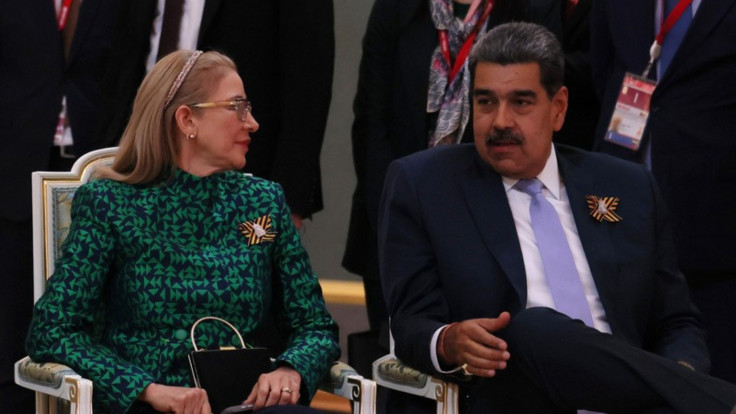
The wife of Venezuelan President Nicolás Maduro, Cilia Flores, who, alongside her husband, walked into a Manhattan federal courtroom this week with bandages wrapped around her head and visible bruising on her face.
According to her lawyer, she may have fractured ribs during their capture from their home in Caracas when the US military launched a dramatic operation that sent shockwaves across the world.
Both pleaded not guilty to narco-terrorism and drug trafficking charges. Maduro declared himself a 'prisoner of war' and insisted he remains Venezuela's legitimate president. Flores described herself as 'completely innocent' and still the 'first lady of the Republic of Venezuela'.
The couple now faces years behind bars in Brooklyn while global leaders debate whether America just broke international law.
Maduro and Wife Reportedly Injured During US Operation
Courtroom sketches and medical reports gathered by FOX News showed Flores with bandages on her head and bruising.
Mark Donnelly, the Houston-based defence lawyer representing Flores, told US District Judge Alvin Hellerstein that his client sustained 'significant injuries' when American forces stormed the couple's compound around 2 am local time on 3 January 2026.
He requested a full X-ray to check for rib fractures. Reporters inside the courtroom noticed Flores wearing two bandages on her forehead and temple. She needed help getting to her seat at the defence table.
Judge Hellerstein directed prosecutors to ensure she receives proper medical care while held at the Metropolitan Detention Centre in Brooklyn. Maduro's lawyer Barry Pollack also flagged unspecified 'health and medical issues' requiring attention.
The capture was part of Operation Absolute Resolve, a massive military operation involving more than 150 aircraft and roughly 200 ground personnel. Defence Secretary Pete Hegseth later revealed that Maduro had just three minutes' warning before US forces arrived.
Why Flores Was Included in the Operation
Prosecutors have charged her alongside Maduro with conspiracy related to cocaine importation, possession of machine guns and destructive devices, and other weapons offences, arguing she played an active role in the alleged trafficking network.
Flores was not merely a bystander in the entire operation, they said, alleging that she accepted bribes, worked with Maduro to protect drug shipments with violent enforcement tactics, and used state privileges to support criminal enterprises.
Maduro faces four federal counts, including narco-terrorism conspiracy. Both defendants declined to seek bail for now, though their lawyers indicated they may file applications later. The next hearing is set for 17 March 2026.
Maduro and Wife's Arrest: Is it Legal?
Maduro's defence team plans to contest aspects of the capture, including its legality and his status under sovereign immunity principles that traditionally protect heads of state from foreign prosecution.
His lawyers have cited precedents in which leaders have claimed immunity after similar captures, though such defences have often been rejected when the host nation does not recognise the legitimacy of the purported head of state.
US courts, however, have historically rejected such claims where Washington does not recognise the legitimacy of a foreign leader.
International law experts note that even if jurisdiction is upheld, the extraction itself remains contentious. Under the UN Charter, military force inside another state is generally prohibited without Security Council authorisation, consent, or a clear self-defence rationale, none of which has been publicly detailed by US authorities.
Critics at the United Nations called the intervention a breach of international law, warning that it sets a dangerous precedent.
Diplomatic Shockwaves Beyond the Courtroom
Several governments raised concerns at the United Nations, warning that the operation could undermine state sovereignty and set a destabilising precedent. Latin American leaders, in particular, cautioned that military-style arrests of political leaders risk escalating regional tensions.
US officials have defended the action as necessary given the seriousness of the allegations. Critics counter that legal process, not force, must define accountability, especially when the accused are national leaders.
As the case moves forward, the courtroom battle is likely to be matched by a broader reckoning over power, precedent, and the limits of international law.
© Copyright IBTimes 2026. All rights reserved.