

Beauty Salons, Shops, and Restaurants Hit With £74M in Illegal Worker Fines as UK Tightens Immigration Rules
More than 1,200 British businesses received civil penalties in six months, but the bigger shift happens on 1 October for gig staff

Immigration Enforcement issued civil penalties worth more than £74M to over 1,200 British businesses in the first six months of 2026, according to Home Office transparency data published on 7 August. The figures cover 1 January to 30 June.
Officers carried out 7,270 illegal working visits across that period and made 4,756 arrests, increases of 31% and 20% on the same six months of 2025. The Home Office calls it the strongest start to a year on record for this kind of activity. Arrests were still below the 5,039 logged across the second half of 2025.
Where the £74M Actually Came From
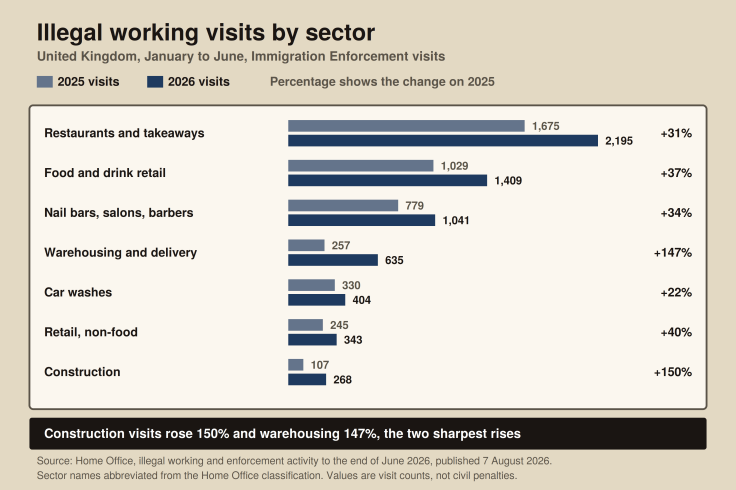
The total splits unevenly across the two quarters. Immigration Enforcement issued 561 penalties worth £32.6M between January and March, then 677 worth £42M between April and June, alongside 10 closure notices and 55 alcohol and late-night refreshment licence reviews. Restaurants, takeaways, and cafes drew the most attention at 2,195 visits, as the chart below shows.
Two lines in the department's own notes complicate any attempt to read the fines as a scorecard for those raids. Penalties issued in one window may follow inspections from earlier years, and the Home Office states that 'no direct correlation should be made to enforcement visits' in the same period. Not every penalty follows an inspection at all. Some arrive through intelligence referrals or routine data sharing with HM Revenue and Customs (HMRC).
Nor does the department publish the money broken down by industry, so the sector picture rests on visits and arrests rather than fines. The longer trend is less ambiguous. Between July 2024 and June 2026, Immigration Enforcement made 17,114 arrests across almost 25,000 inspections, a 122% rise on the two years before. Of those arrested, 2,357 have since left the country.
The Sector the October Change Targets
Warehousing, distribution, and delivery is where the enforcement curve bent hardest. Inspections there rose 147% in the first half of 2026 and arrests 70%, the steepest arrest increase of any named sector. Only construction saw a sharper rise in visits, at 150%.
Home Secretary Shabana Mahmood said the surge in activity means illegal workers and rogue employers 'have nowhere to hide.' The department set out the duty arriving in October in a short film on its own channels. Here is the screenshot of the Facebook reel.
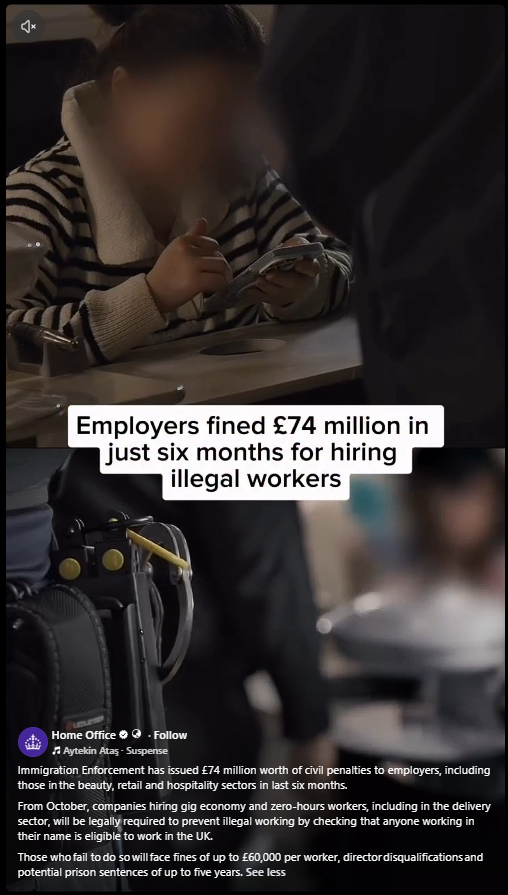
That duty comes from section 48 of the Border Security, Asylum and Immigration Act 2025, which takes effect on 1 October 2026 under commencement regulations published on 24 June. It rewrites who counts as an employer for purposes of illegal working.
Until then, liability attaches only to people working under a contract of service, a position unchanged since the Immigration, Asylum and Nationality Act 2006. Section 48 pulls in agency workers, individual subcontractors, casual and zero-hours staff, gig and platform workers, and the online platforms that match jobs to labour.
What a Missed Check Will Cost
The money at stake is already substantial, and the new rules widen who can be asked to pay it. A first breach carries a civil penalty of up to £45,000 per illegal worker, and a repeat breach up to £60,000, as the graphic below sets out.
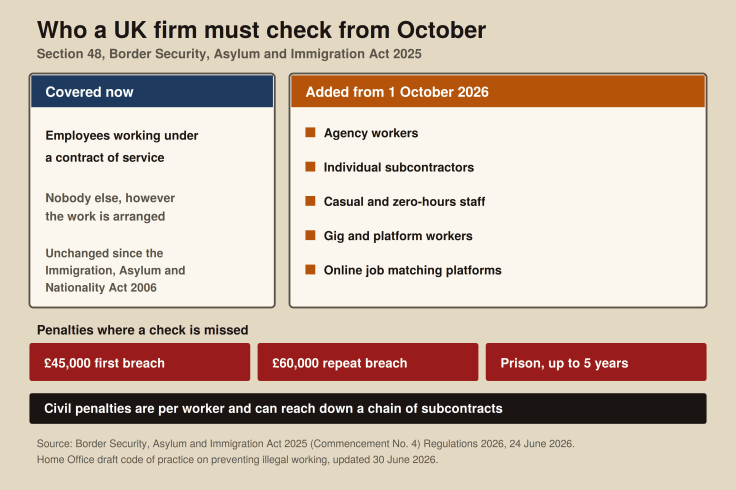
Section 48 also introduces extended liability, so a firm can be penalised where illegal working occurs further down a chain of subcontracts it did not directly engage. Knowingly employing someone without permission remains a criminal offence carrying up to five years in prison and disqualification as a company director.
Immigration lawyers have flagged a second-order problem. Running right to work checks across contractors and platform workers forces a business to categorise those relationships, which can expose misclassification under employment law that had gone unexamined.
The Home Office published an updated draft code of practice on avoiding unlawful discrimination while preventing illegal working on 30 June. Its full quarterly civil penalty dataset to 30 June is due late in August.
© Copyright IBTimes 2026. All rights reserved.