

What Are the Executive Orders Mayor Zohran Mandani Revoked and How It Affects NYC
Mayor Mamdani revoked nearly all executive orders signed by Eric Adams after his 26 Sept 2024 indictment
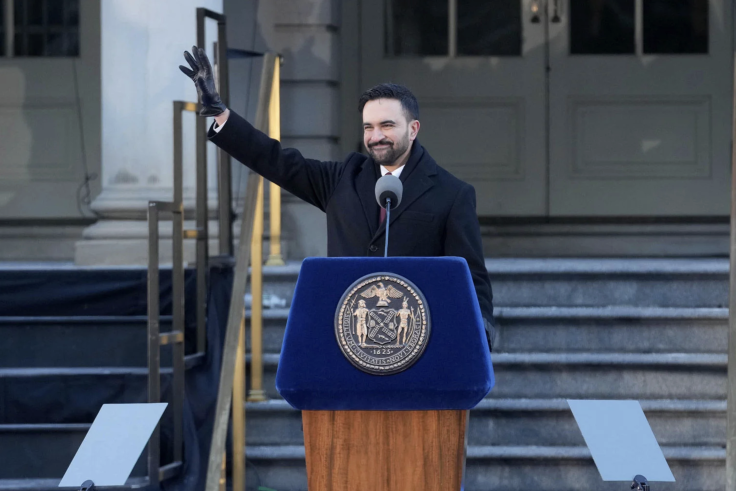
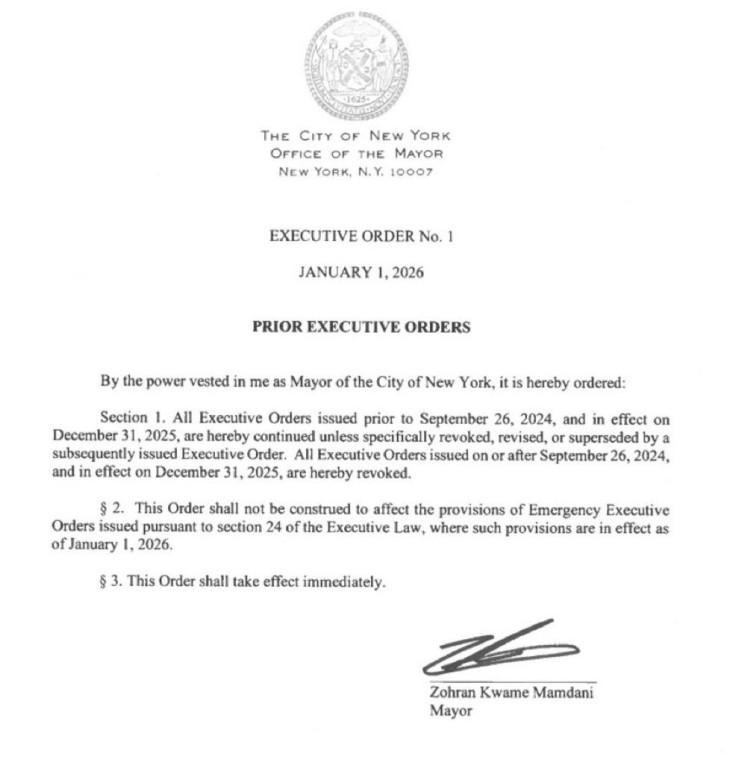
Mayor Zohran Mamdani moved to revoke all New York City mayoral executive orders signed by Eric Adams after 26 September 2024, calling the action a necessary step to restore public trust and reassert democratic accountability at City Hall.
The sweeping revocation wipes out 18 executive orders issued during the final 15 months of the Adams administration. Those orders reshaped senior leadership structures, created new mayoral offices, altered contracting and procurement oversight, and addressed politically sensitive issues including antisemitism, protests near houses of worship, federal law-enforcement access to Rikers Island and city policy on Israel-related boycotts.
In a statement accompanying the order, Mamdani said the city 'cannot move forward while operating under directives issued during a period of profound legal and ethical crisis,' referring to Adams' indictment on federal corruption charges. Adams has denied wrongdoing.
Among the most consequential reversals are orders that reorganised deputy mayor portfolios, restructured the Mayor's Office of Contract Services, and created new entities such as the Office of Rodent Mitigation, the Office to Combat Antisemitism and an Office of Digital Assets and Blockchain.
Several initiatives that had already begun implementation across city agencies will now require legislative action or reissuance to continue.
The revocation also nullifies Adams-era directives that drew sharp political debate, including an order permitting certain federal immigration authorities to conduct criminal investigations at Rikers Island and December 2025 orders addressing protests near houses of worship and restricting city involvement in boycott or divestment efforts targeting Israel.
City officials said agencies have been instructed to revert to the legal and administrative framework in place on 26 September 2024, pending further guidance.
'That was a date that marked a moment when many New Yorkers decided politics held nothing for them,' Mayor Mamdani said.
Mamdani said the signing of the revoked executive orders were 'against the interests of working-class people.'
This is one of the actions Mamdani pledges to make to reshape New York City to align with his plans and agenda.
'The only expectation I seek to reset is that of small expectations,' Mayor Mamdani said. 'Beginning today, we will govern expansively and audaciously. We may not always succeed, but never will we be accused of lacking the courage to try.'
Mamdani's order takes effect immediately. City Hall officials said the administration will review which rescinded policies align with its priorities and may selectively reintroduce some through new executive orders or City Council legislation in the coming months.
Executive Orders Issued After 26 September 2024
Executive Order 46 — 13 January 2025
Subject: Senior leadership structure
What it did: Reorganised deputy mayor roles and delegations of authority; revoked and replaced EO 45.
Goal: Clarify the chain of command and operational authority within City Hall.
Executive Order 47 — 24 January 2025
Subject: Mayor's Office of Nonprofit Services
What it did: Formalised the office and required agencies contracting with nonprofits to designate chief nonprofit officers.
Goal: Improve coordination, contract management and payment processes for nonprofit partners.
Executive Order 48 — February 2025
Subject: Health Services Administrator designation
What it did: Designated a successor to exercise statutory powers related to NYC Health + Hospitals facilities and agreements.
Goal: Ensure legal continuity for health-related administrative actions.
Executive Order 49 — 24 March 2025
Subject: Expansion of deputy mayor roles
What it did: Updated and expanded senior leadership structure and delegations.
Goal: Increase management capacity and clarify executive oversight across policy areas.
Executive Order 50 — 8 April 2025
Subject: Federal law enforcement access at Rikers Island
What it did: Authorised limited federal immigration and law-enforcement presence for criminal investigations.
Goal: Enhance coordination against serious and transnational crime while distinguishing from civil immigration enforcement.
Executive Order 51 — 13 May 2025
Subject: Office to Combat Antisemitism
What it did: Created a mayoral office dedicated to addressing antisemitism citywide.
Goal: Centralise strategy, prevention and coordination to reduce antisemitic incidents.
Executive Order 52 — 8 June 2025
Subject: Definition of antisemitism
What it did: Adopted an official definition of antisemitism for city policy use.
Goal: Standardise training, enforcement and policy alignment across agencies.
Executive Order 53 — 8 July 2025
Subject: Pro bono legal assistance coordination
What it did: Established a framework to connect residents with pro bono legal services.
Goal: Reduce unmet legal needs through improved coordination and referrals.
Executive Order 54 — 29 August 2025
Subject: Commission on Universal After-School
What it did: Created a commission to develop a long-term expansion strategy.
Goal: Build a roadmap toward universal access to after-school programmes.
Executive Order 55 — 29 August 2025
Subject: Office of Talent and Workforce Development
What it did: Established an office to coordinate workforce and talent initiatives across agencies.
Goal: Align training pipelines with labour market demand and improve job access.
Executive Order 56 — 17 September 2025
Subject: Horse-drawn carriage industry phaseout preparation
What it did: Directed agencies to prepare for the cessation of horse-drawn carriages.
Goal: Advance public safety and animal welfare while planning worker transitions.
Executive Order 57 — 14 October 2025
Subject: Digital assets and blockchain
What it did: Created an office focused on digital assets and blockchain engagement.
Goal: Position New York City as a hub for responsible financial innovation.
Executive Order 58 — Oct. 28, 2025
Subject: Municipal employee wellness
What it did: Established a citywide worksite wellness framework for employees.
Goal: Improve employee health, retention and productivity.
Executive Order 59 — November 2025
Subject: Construction mentoring programme
What it did: Created a centralised mentoring initiative for construction firms.
Goal: Expand participation of small and minority-owned businesses in city construction projects.
Executive Order 60 — 3 December 2025
Subject: Israel-related boycotts and contracting
What it did: Prohibited city actions that discriminate against Israel or Israeli citizens in procurement and investments.
Goal: Prevent national-origin discrimination in city contracting and pension decisions.
Executive Order 61 — 3 December 2025
Subject: Protests near houses of worship
What it did: Directed NYPD to evaluate patrol guidelines governing protests at religious sites.
Goal: Address safety concerns while preserving constitutional rights.
Executive Order 62 — 12 December 2025
Subject: Office of Contract Services
What it did: Re-established and structured procurement oversight and contracting functions.
Goal: Strengthen procurement integrity, efficiency and accountability.
Executive Order 63 — 16 December 2025
Subject: Office of Rodent Mitigation
What it did: Created a dedicated office to coordinate rodent control efforts citywide.
Goal: Improve public health and quality of life through centralised pest management.
© Copyright IBTimes 2026. All rights reserved.