3I/ATLAS Update: Harvard Scientist Claims Comet Suggests a Friendly Alien Nature
Alien comet 3I/ATLAS is chemically rich, sparking Harvard scientist's 'friendly alien' claim
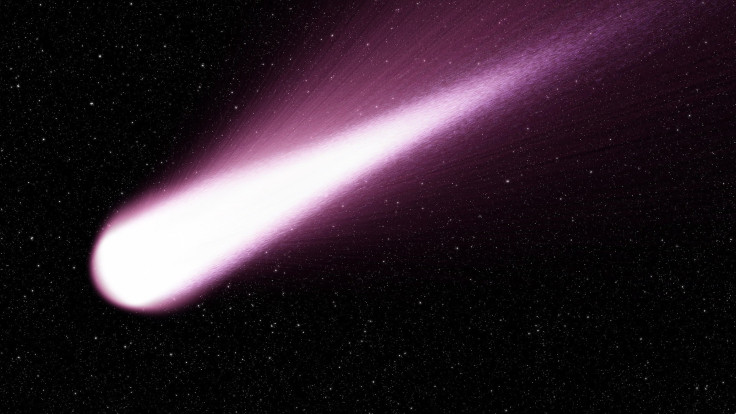
Imagine a visitor that has travelled untold light years, crossing the vast gulf between star systems, only to reveal that it holds the very chemical blueprint for life as we know it. This is not science fiction; it is the reality of the interstellar comet 3I/ATLAS (formally designated C/2025 N1 (ATLAS)), the third confirmed object of its kind to pass through our solar system after 1I/'Oumuamua and 2I/Borisov, and new observations have revealed just how profoundly unusual this cosmic traveller truly is. As the comet swings by Earth for a brief viewing window, a team of scientists has peered into its core, finding a cocktail of organic molecules so concentrated it challenges our understanding of celestial chemistry.
First spotted on July 1, 2025 by the Asteroid Terrestrial-impact Last Alert System (ATLAS) telescope in Río Hurtado, Chile, the object, which originated around another star entirely, has been under intense scrutiny from instruments across our solar system. A group led by NASA astrochemist Martin Cordiner utilised the Atacama Large Millimeter Array (ALMA) in Chile to meticulously study the gaseous shell — or coma — streaming off the comet's surface.
Their findings were genuinely astonishing: the comet is absolutely loaded with extremely high amounts of methanol and hydrogen cyanide, both of which are critical molecules tied directly to the chemistry that helps form the building blocks of life.
The abundance of these complex compounds is unlike anything astronomers typically observe in comets born in our own solar system. ALMA's precise data indicated that about eight percent of all the vapour coming off 3I/ATLAS is methanol — a concentration roughly four times the amount typically found in our local comets. The team formally described the production of both chemicals as 'among the most enriched values measured in any comet'.
This ratio of methanol to hydrogen cyanide is, in fact, surpassed only by the anomalous solar system comet C/2016 R2 (PanSTARRS). As Cordiner explained to New Scientist, the comparison with local objects is stark: 'Molecules like hydrogen cyanide and methanol are at trace abundances and not the dominant constituents of our own comets', he said. 'Here we see that, actually, in this alien comet they're very abundant'.

A 'Chemically Implausible' Discovery Inside 3I/ATLAS
What makes this particular finding so significant is not just the quantity, but the complex mechanism of its release. The data showed that while both chemicals are being released from the comet's solid core, methanol is also streaming from icy grains floating within the dust and gas cloud surrounding it. This strong chemical activity hints that even more complex, exotic reactions are occurring deep inside, or perhaps upon, the icy surface of this rogue world. Cordiner noted that this level of enrichment is a strong indicator of an advanced chemical pathway, suggesting: 'It seems really chemically implausible that you could go on a path to very high chemical complexity without producing methanol,' he said.
Because interstellar comets are the primordial leftovers from other planetary systems, these results offer a precious, rare glimpse into the fundamental chemistry of worlds that formed around stars beyond our sun. This chemical richness adds considerable weight to a long-held theory — that objects like 3I/ATLAS could have been the original couriers, potentially carrying life's essential ingredients to the infant Earth millions of years ago, helping to seed our own world.
Predictably, the findings drew a bold, characteristic response from controversial Harvard astronomer Avi Loeb, who has repeatedly suggested that 3I/ATLAS could, in fact, be a piece of alien technology. Responding to the new data, Loeb claimed: 'The anomalously large ratio of methanol to hydrogen-cyanide production by 3I/ATLAS suggests a friendly nature for this interstellar visitor,' he wrote in one of his latest blog posts.
Tracking Our Celestial Visitor: New Images of 3I/ATLAS
While scientists remain engrossed in the comet's deep chemistry, telescopes across the solar system have been capturing stunning, dramatic new images as the visitor nears its closest approach. NASA's legendary Hubble Space Telescope photographed the comet on Nov. 30, capturing it from a staggering distance of about 178 million miles away, its second look since the comet's discovery in July. The Hubble Space Telescope previously helped astronomers estimate the size of the comet's nucleus to be roughly between 1,400 feet (440 metres) and 3.5 miles (5.6 kilometres) in diameter.
Even more recently, the European Space Agency's Jupiter Icy Moons Explorer (JUICE) spacecraft, currently en route to Jupiter, observed the comet between Nov. 2 and Nov. 25. The agency described the distant traveller as being in a 'very active state' after it made its closest approach to the sun on Oct. 30. An incredible image taken on Nov. 2 — just two days before JUICE passed within roughly 41 million miles — showed the comet glowing with a bright, enormous coma and sporting two distinct tails, one composed of electrically charged gas and the other of drifting dust.
These dramatic new views followed the release of never-before-seen images of 3I/ATLAS by NASA on Nov. 19. The celestial visitor will make its closest pass to Earth — about 170 million miles away on Dec. 19, posing absolutely no threat to our planet.
The discovery that 3I/ATLAS is a super-enriched chemical delivery system — potentially carrying the blueprint for life — makes it one of the most important celestial objects of the decade. As this third interstellar visitor continues its journey out of our solar system, scientists around the world will be dissecting every last piece of data to unlock the secrets of its extraterrestrial origin.
© Copyright IBTimes 2026. All rights reserved.
- MOST POPULAR IN Trending