3I/ATLAS Mystery Deepens: Swarm of Particles Makes Interstellar Object 100 Times Larger
3I/ATLAS's mysterious sunward anti-tail baffles scientists
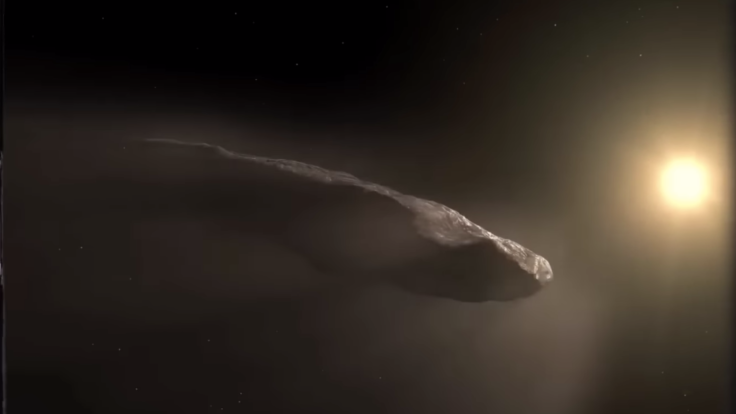
A 'dirty snowball' melting in the sun should behave predictably, trailing gas and dust away from our star. But what happens when an object appears to be defying that fundamental law, shooting a plume towards the sun, and doing so with a rigidity that confounds every textbook explanation?
That is the question currently vexing the world's leading astrophysicists as they observe 3I/ATLAS, an interstellar comet that is now rewriting the rules of cometary physics — or perhaps, according to some controversial voices, demonstrating the principles of alien engineering. This cosmic interloper, only the third confirmed visitor from another star system after 'Oumuamua and 2I/Borisov, is behaving in an unprecedented manner, leading to an extraordinary split in the scientific community.
The central mystery hinges on the latest observations from the Hubble Space Telescope and ground-based facilities, which have captured a bizarre sunward-facing formation known as an anti-tail. Normally, a comet's tail is formed by solar radiation pressure pushing fine particles away from the sun. An anti-tail is typically a mere optical illusion, caused by our viewing angle as Earth passes through the comet's orbital plane. However, scientists have argued that the structure witnessed around 3I/ATLAS is too strong and too defined to be dismissed as a simple trick of perspective.
Harvard's Avi Loeb, a proponent of the idea that such anomalies could signal extraterrestrial technology, has focused intensely on this feature. As he points out, the sunward glow, seen in high-resolution imaging from the Hubble in July 2025, exhibited a remarkable elongation with a viewing-angle corrected aspect ratio of roughly 10:1 — making it ten times longer than it is wide. This isn't a diffuse cloud; it is a powerful, highly elongated jet structure pointing directly at the sun.

The Anti-Tail Enigma: Is 3I/ATLAS Engineered?
The sheer persistence and direction of this plume have led to increasingly desperate natural explanations. The most popular theories suggest that the anti-tail could be caused by either unusually large dust particles (around 100 micrometres in radius) or, controversially, by ice fragments instead of refractory dust. If the particles are large enough, the force of solar radiation pressure — which usually creates the tail away from the sun — becomes less effective, allowing the dust to lag behind and sometimes appear sunward from our perspective.
The ice fragment theory, supported by some analyses, suggests that the ice sublimates too quickly to be pushed into a traditional tail. In fact, some scientists have speculated that this sunward anti-tail is actually composed of a swarm of separated non-volatile objects, not a single cohesive plume of gas and dust, further complicating the structure's identity.
The latest measurements, however, only deepen the confusion. The outflow velocity of gas jets from a natural comet is typically a few hundred metres per second. Loeb and others have suggested that to produce a plume of the size observed — reaching nearly one million kilometres towards the sun — the exhaust speed would need to be in the order of kilometres per second, suggesting a phenomenon far more energetic than natural outgassing.
Furthermore, post-perihelion data has presented another anomaly: 3I/ATLAS has shown surprising integrity. Despite displaying a non-gravitational acceleration — which typically suggests massive evaporation that should cause a natural comet to fragment — the object has remained a single, compact body. The upper limit on the object's diameter has been estimated at 46 kilometres, which would make its total mass a million times greater than that of the first interstellar visitor, 1I/'Oumuamua.
The sheer inferred size and speed of 3I/ATLAS, coupled with its resistance to fragmentation, makes it unlike any comet ever recorded. Martin has previously noted that the object must have lost around two million tons of material between July and October 2025. Yet, if that mass loss were due to the sublimation of CO2 ice, the nucleus would require an unrealistically large absorbing area of at least 1,600 square kilometres to explain the energy required for the evaporation.
The Bizarre Chemical Fingerprint of 3I/ATLAS
Adding to the structural mystery is the object's peculiar chemical fingerprint. Observations have revealed a gas plume that is primarily composed of carbon dioxide (87% by mass) with only around 4% water — a primary constituent of most known comets. Even more startling, some studies have noted a higher nickel content than iron, alongside a nickel-to-cyanide ratio that is orders of magnitude larger than all known solar system comets. Nickel-iron alloys are, of course, a common component of industrial manufacturing on Earth.
While scientists are trying to model the object's transition from an anti-tail (observed in July and August 2025) to a more traditional tail (observed in September 2025) using physics-based models involving ice fragmentation and dust survival times, the 'alien technology' hypothesis is not easily dismissed. As Loeb's colleague Adam Hibberd suggested, if the anti-tail was a 'braking thrust' from a massive alien spacecraft, the change in the plume's direction near perihelion would be entirely expected for an object attempting a gravitational assist maneuver.
The puzzle surrounding 3I/ATLAS is far from solved. Researchers around the globe are still monitoring its shape, speed, and brightness, hoping to gain clarity before this rare cosmic reminder of the universe's mysteries fades back into deep space. The ultimate question remains whether this is a triumph of exotic, unfamiliar physics — or, as the more provocative voices suggest, a demonstration of engineering we have not yet imagined.
The perplexing journey of 3I/ATLAS has forced astrophysicists to question the very limits of cometary physics, blurring the line between a remarkable celestial body and something far more engineered. With the massive interstellar object displaying sunward plumes, a bizarre chemical fingerprint, and incredible structural integrity, the mystery is only deepening as it leaves our Solar System. Whether this is a triumph of exotic, unfamiliar physics or the footprint of technology from another star, 3I/ATLAS demands our undivided attention.
© Copyright IBTimes 2026. All rights reserved.
- MOST POPULAR IN Trending