

After Massive Japan Earthquake, Scientists Warn of Potential Tsunami Impact Across Pacific Rim
Magnitude 7.6 quake strikes off Aomori's coast, Japan, late Monday (8 Dec)
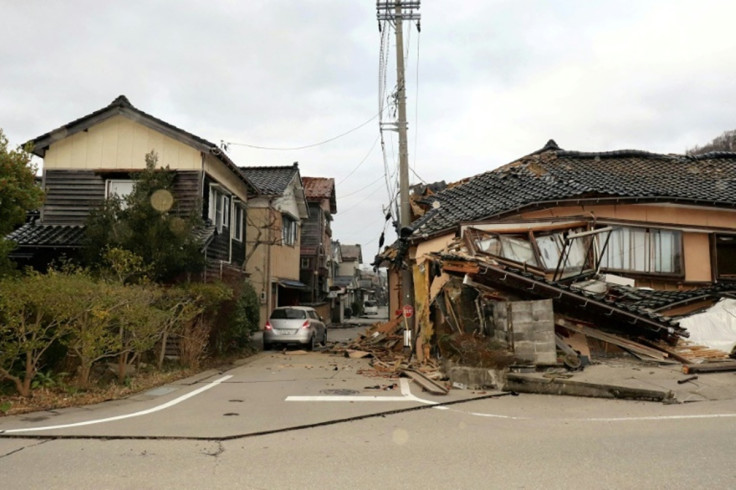
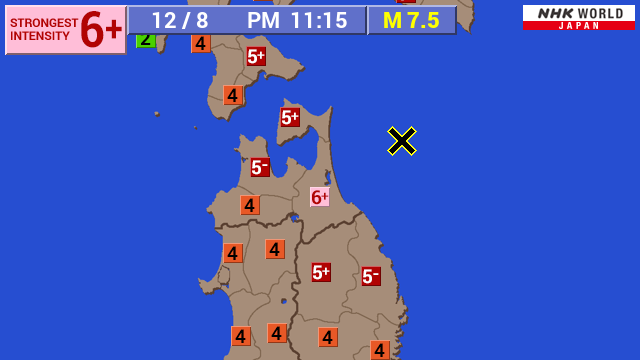
A powerful 7.6 magnitude earthquake struck off the northeastern coast of Japan late Monday night, triggering immediate tsunami warnings for local prefectures and prompting urgent alerts from oceanographers regarding potential ripple effects across the wider Pacific Rim.
The tremor, which originated at a depth of 50 kilometres (31 miles) beneath the Pacific Ocean off Aomori Prefecture, struck at 23:15 JST (14:15 GMT), violently shaking a region still scarred by the memories of the 2011 disasters.
While Japanese authorities acted swiftly to evacuate coastal communities in Hokkaido, Aomori, and Iwate, the seismic energy unleashed has drawn sharp attention from the international scientific community, warning that the geological stress transfer could have implications for coastlines as far away as North America and the Philippines.
Immediate Tsunami Threat and Evacuations
Following the quake, the Japan Meteorological Agency (JMA) immediately issued a tsunami warning, projecting waves of up to three metres for the northern Pacific coast. Sirens wailed across the darkness in coastal towns such as Hachinohe and Kuji, urging thousands of residents to flee to higher ground. Within an hour, tsunami waves measuring between 20 and 70 centimetres were observed at several ports.
While these initial surges were smaller than the worst-case models, oceanographers emphasise that the displacement of water from a magnitude 7.6 event carries significant energy. The JMA maintained advisories into the early hours of Tuesday, warning that the first wave is often not the largest and that dangerous currents could persist.
In other coastal communities, recorded surges were smaller still. Authorities quickly downgraded the danger level to a tsunami advisory before eventually lifting all warnings.
The Pacific Rim Connection
The focus of the scientific community has rapidly expanded beyond the immediate impact zone. Seismologists and oceanographers are warning that the location and mechanism of this earthquake, occurring along the relentless 'Ring of Fire', pose a complex threat to the wider Pacific Rim.
Historical data suggests that earthquakes in this specific sector of the Japan Trench have a high connectivity to wider Pacific outcomes. Scientists are currently modelling the sub-surface deformation to determine if this event has loaded stress onto the treacherous Nankai Trough further south, a scenario that would drastically alter risk assessments for the entire Pacific basin.
Nuclear Safety and Infrastructure Resilience
In a relief to officials, initial reports indicate no abnormalities at nuclear facilities in the region. Tohoku Electric Power confirmed that the Onagawa Nuclear Power Plant remains secure, and no irregularities were detected at the shuttered Fukushima Daiichi plant, which is currently undergoing decommissioning.
However, the quake did cause significant disruption to infrastructure. East Japan Railway suspended Shinkansen (bullet train) services across the Tohoku region to conduct emergency track inspections. Power outages plunged thousands of homes into darkness in Aomori and Iwate prefectures, complicating evacuation efforts in the freezing December temperatures. Chief Cabinet Secretary Minoru Kihara confirmed that emergency crisis management teams have been convened at the Prime Minister's Office to coordinate the response and assess the full extent of the damage.
As dawn breaks over a shaken Japan, the immediate danger of a devastating local tsunami appears to have receded, with warnings downgraded to advisories. Yet, the scientific warning remains clear: the Pacific Rim is in an active phase, and the ocean that connects these nations acts as a conduit for both commerce and catastrophe. Vigilance, from Tokyo to San Francisco, remains the only viable defence.
© Copyright IBTimes 2026. All rights reserved.
- MOST POPULAR IN Trending


