

Amazon Has Deployed Over One Million Robots but Expert Claims They Could 'Dictate the Pace of Work'
As warehouse robots become more capable, the question is whether workers become safer or simply have to work faster

Amazon robots face renewed scrutiny over US warehouse injuries following reporting published on 12 October 2026. A study found 77% more non-severe injuries at robotic fulfilment centres than at conventional Amazon facilities.
The research also found 40% fewer severe injuries. That contrast matters because machinery that removes dangerous lifting may create different pressures through faster, repetitive tasks.
Amazon's million-robot milestone is not new. The company announced on 30 June 2025 that its one-millionth robot had reached a fulfilment centre in Japan. Its annual filing recorded approximately 1.58 million full-time and part-time employees worldwide at the end of 2025, including staff outside warehouses.
How Amazon Robots May Change Warehouse Injuries
The study, first published in ILR Review in April 2025, was written by Gordon Burtch, Brad Greenwood and Kiron Ravindran. It compared Amazon's robotic fulfilment centres with conventional facilities, drawing partly on records covering more than 150 warehouses from 2016 to 2019.
Robotics were associated with 40% fewer severe injuries but 77% more non-severe injuries. Researchers found evidence that faster work contributed to the increase in less-severe cases, including strains and repetitive-motion problems.
The distinction is important. Non-severe does not mean inconsequential. Such injuries may result in restricted duties even if employees do not miss work.
The results do not prove that any particular robot caused an injury. Nor do historical comparisons establish the safety record of Amazon's entire network in 2026.
Greenwood, Costello Distinguished Professor of Business at George Mason University, explained the concern in an interview with Ars Technica. Collaborative robots, he warned, can 'dictate the pace of work' when employees must keep up with machinery around them.
But not every Amazon robot operates alongside staff. Many mobile units work inside restricted areas, transporting shelves and inventory. Proteus, a newer system, is designed to navigate spaces shared with people.
Amazon says robots can take on physically taxing jobs. Its Vulcan robotic arm, for instance, handles items stored beyond comfortable reach, potentially reducing awkward movements for warehouse employees.
A robot can spare someone a heavy lift without necessarily giving them a slower shift.
George Mason University's account of the research described online comments from warehouse staff reporting lighter physical work but higher productivity expectations. Some described picking targets two or three times those at conventional centres.
Those online comments informed the researchers' interpretation. They are not independently verified records of conditions across the company's warehouses.
Amazon Defends Safety Record Against Injury Criticism
Joan Moriarty, director of strategic research and campaigns at the union coalition Strategic Organizing Center, criticised Amazon's focus on robotics. Speaking to Ars Technica, she said 'tens of thousands of Amazon workers' are injured each year and questioned production pressures.
The coalition's May 2025 analysis of regulatory data found serious injury rates at Amazon's US warehouses in 2024 were nearly double those elsewhere in warehousing. That comparison concerns overall workplace safety, not injuries proven to result from automation.
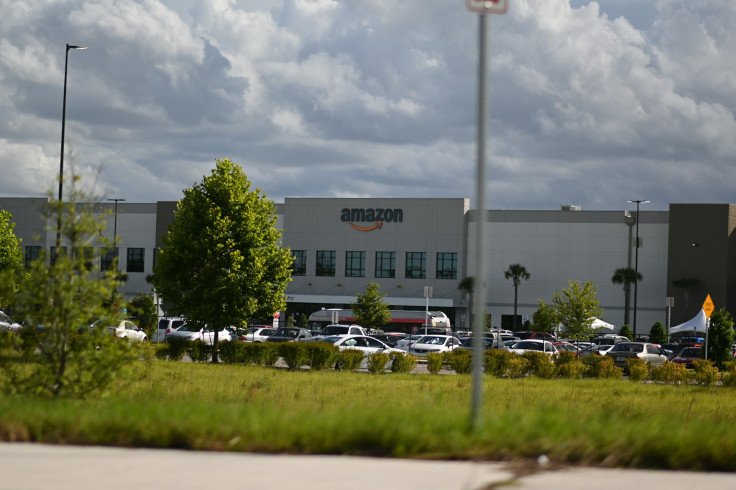
Amazon rejects the suggestion that its growing fleet necessarily makes work less safe. A spokesperson told Ars Technica that its global recordable incident rate improved 43% from 2019 to 2025.
The company also reported a 70% improvement in its global lost-time incident rate over that period. These company-wide measures do not separately show how robotic warehouses compare with conventional sites.
Amazon says advanced robotics creates specialised jobs. The company reports that facilities using advanced systems require 30% more employees in reliability, maintenance and engineering roles. That does not reveal the net effect on employment.
Regulators have addressed another aspect of workplace risk. In December 2024, the US Department of Labor announced an agreement requiring Amazon to strengthen ergonomic protections at covered sites.
The settlement addressed hazards associated with physical strain and provided for reporting and monitoring measures. It neither established that robots caused those hazards nor determined Amazon's liability in the resolved cases.
© Copyright IBTimes 2026. All rights reserved.