

Alexey Gubarev on Cyprus's Place in Europe's Startup Map
Cyprus has been the EU's fastest-growing startup ecosystem for three years running. Yet Europe as a whole still loses close to a third of its unicorns to headquarters moves abroad.
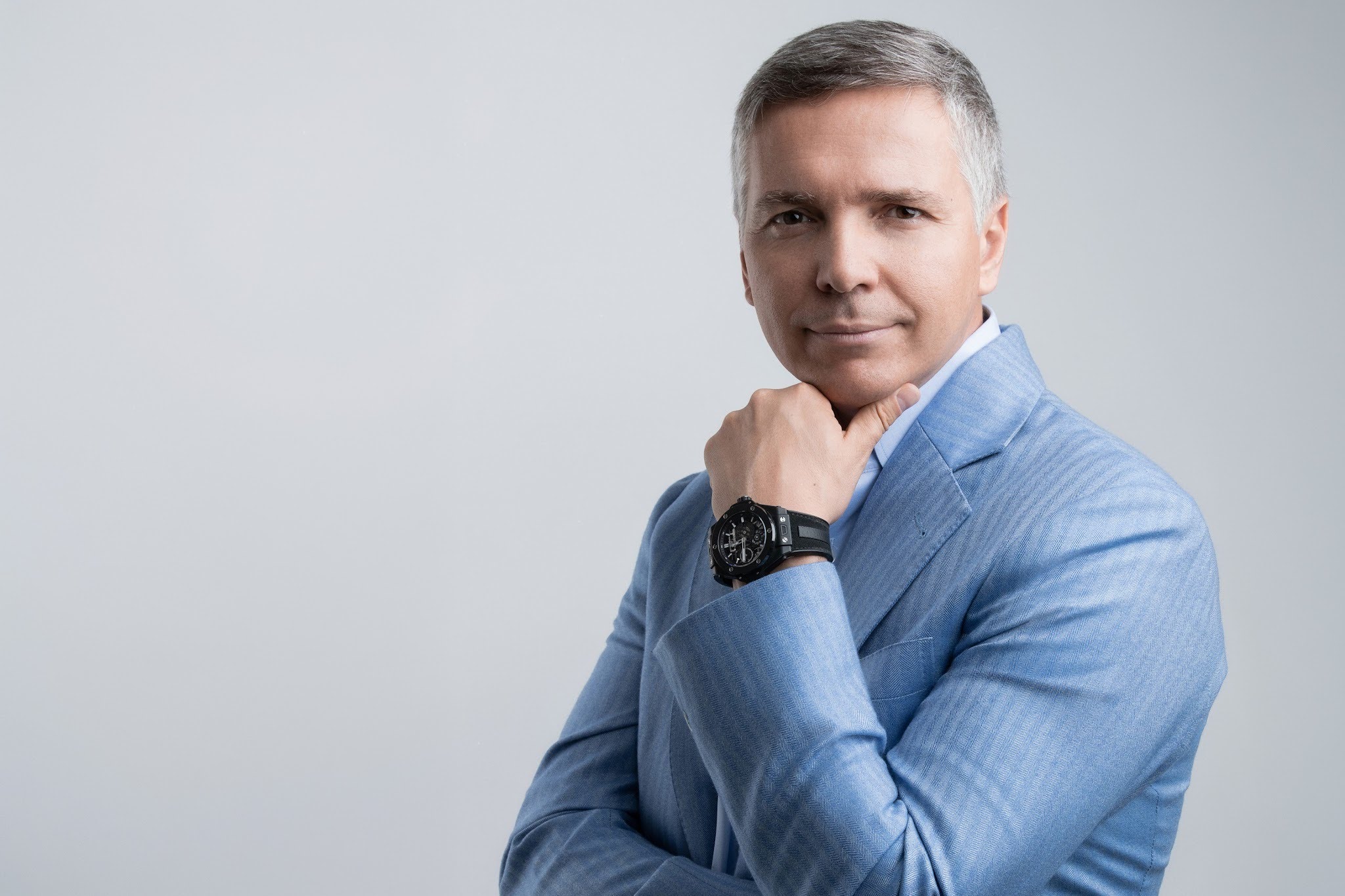
By one widely watched measure, Cyprus is having a good run. StartupBlink's Global Startup Ecosystem Index 2026 places the island 34th in the world, up six places, with annual growth of 62.7%, making it the fastest-growing startup ecosystem in the European Union for the third consecutive year.
Limassol has become the first Cypriot city to enter the global top 200. At the same time, Brussels is rewriting the rules that small jurisdictions have long competed on.
In March the European Commission proposed EU Inc., an optional pan-European company that could be registered online within 48 hours for less than €100, with no minimum share capital. In August it cleared the final hurdles for a €5 billion Scaleup Europe Fund.
For a country whose pitch to founders has leaned heavily on being a convenient EU base, that cuts both ways. If the place of incorporation matters less, the contest moves to people, capital and the kind of experience that turns employees into founders.
We asked Gubarev, who has built infrastructure businesses since 2005 and has lived in Cyprus for more than two decades, how the island should play it.
Cyprus is now the EU's fastest-growing startup ecosystem three years in a row. What does that number tell us, and what does it hide?
The momentum is real; I'd say that first. You don't grow that fast in one lucky year.
It takes more companies, more events, more money moving through the island, year after year. But we started from a small base, and 60% growth from a small base is not the same thing as 60% growth in Berlin.
We're 34th. There are countries ahead of us with worse weather and fewer advantages, and they're ahead because they've been building companies for longer.
What I find more interesting is buried in the details. The same index puts Cyprus 16th in the world for gaming. That's a real cluster – people who have shipped products to millions of players.
If you ask me where our next founders will come from, I'd look there before I look at the overall ranking.
Brussels has proposed EU Inc.: a company in 48 hours, for under €100, valid across the Union. Is that good news for Cyprus?
For European founders, clearly yes, and I'm in favour. For Cyprus it's more of a test.
Part of what we've offered for years is an efficient, English-speaking EU jurisdiction. If the proposal goes through in something close to its current form, someone in Lisbon or Tallinn can set up a pan-European company from a laptop in two days. The legal wrapper stops being a reason to come here.
I actually think that's good for us, even if it's uncomfortable. Nobody builds a successful company because of where it's registered. They built it because of the people around them, because early money was there when they needed it, and because they found paying customers quickly.
If we're pushed to compete on those things, we'll get better at them.
So what can Cyprus offer that regulation cannot copy?
People, mostly. There are thousands of engineers, product managers and marketers on the island who have spent years inside companies working at international scale. Very few of them have started anything themselves. That gap is the opportunity, as far as I'm concerned.
Geography helps too. We're inside the EU, but a team in Limassol can talk to European customers in the morning and to the Eastern Mediterranean and the Gulf in the afternoon. And then there's size, which people underrate.
Here, a founder, a minister and a university rector can realistically be in the same room within a week. That's rare. It only matters, of course, if something gets decided in that room.
You are one of the founders of TechIsland. What does an industry association actually add to a startup ecosystem?
Honestly, not much in the first year.
An association doesn't write cheques and it doesn't build products. What it does, slowly, is get people from different companies talking to each other regularly – so a problem gets solved once instead of fifty times, and the government hears one position instead of a dozen.
TechIsland started in 2021. A lot of the work now happens in professional communities: HR, legal, finance, marketing, Women in Tech, and since this spring a group for senior technologists.
In September we signed a cooperation agreement with the Cyprus Employers and Industrialists Federation on skills, infrastructure and the investment climate; in May there was a similar memorandum with the Cyprus International Businesses Association. It isn't the kind of thing that gets written about, and it doesn't need to be.
What is still missing?
The step from a good job to a first company. In most mature ecosystems, a big share of founders come out of a few successful companies.
They learn how things get built, they leave, and they take two or three colleagues with them. We have the companies. We don't yet have the habit of leaving them to start something.
Some of it is attitude. Here, if a company fails, people still tend to see it as a verdict on the person, and a well-paid engineer with a family is going to think about that.
Some of it is the universities: the research is good, but getting from a lab to a company is slow and nobody is quite sure how it works. One thing I noticed in the EU Inc. proposal is that it promises simpler liquidation, so founders can close one attempt and start again.
It's a small line in a long document. For a place like Cyprus, I think it's one of the most important.
Estonia, with fewer than 1.4 million people, counts ten unicorns. Is that a realistic benchmark for Cyprus?
It's the right comparison, but people usually copy the wrong part of it.
Estonia didn't set out to have ten unicorns. It had Skype early on, and the people who worked there went off to found companies, invest in them and advise them.
That went on for twenty years. They also ran their own government as a digital product, which gave local companies a demanding first customer.
So the first two or three big outcomes matter far more than their size suggests, because of what the people inside them do afterwards. That's why I keep coming back to gaming.
The Draghi report found that 40 of the 147 unicorns founded in Europe between 2008 and 2021 moved their headquarters abroad, mostly to the US. Will the new €5 billion Scaleup Europe Fund change that?
It will help. Commissioner Ekaterina Zaharieva said the aim is 'closing the financing gap for our most promising companies to become global leaders while maintaining their base in Europe', and I agree with the aim.
I'm less sure that money on its own keeps companies here. Founders move for customers, for late-stage capital in large amounts, and for a stock market where investors understand what they're buying.
€5 billion is a lot of money for Europe. Next to American growth funds, it isn't.
What really keeps a company in Europe is a single market that works like one, and that's why I see EU Inc. and this fund as parts of the same effort. The Draghi report set out the problem two years ago, and these are the first tools that actually address it.
For Cypriot founders the practical conclusion is to plan for European scale from the beginning, rather than treating Cyprus as a stop on the way somewhere else.
What would you tell a first-time founder in Limassol today?
Sell abroad from the first month. The local market is too small to tell you whether you have a product, and foreign customers are more honest. Use Cyprus for what it's good at – it's a stable base, the people are experienced and decision-makers are close.
And ask for help. Find two or three people who have built something and ask for an hour.
Most of them will say yes; people here are generous with their time.
Alexey Gubarev (also spelled Aleksey Gubarev) is a Limassol-based technology entrepreneur and investor. He has worked in the hosting and infrastructure business since 2005 and co-founded Servers.com in 2014; the company was sold to CloudOne Digital in July 2023. He is one of the founders of TechIsland, Cyprus's largest technology association, and serves on its Board of Directors. He is also building a classic car museum, due to open in 2027. More at gubarev.com.
© Copyright IBTimes 2026. All rights reserved.