Elon Musk Predicts That 'There'll Be More Robots Than People' as AI Productivity Surpasses Humans
Musk is betting that the next great leap in productivity will come not from people, but from machines capable of building more machines
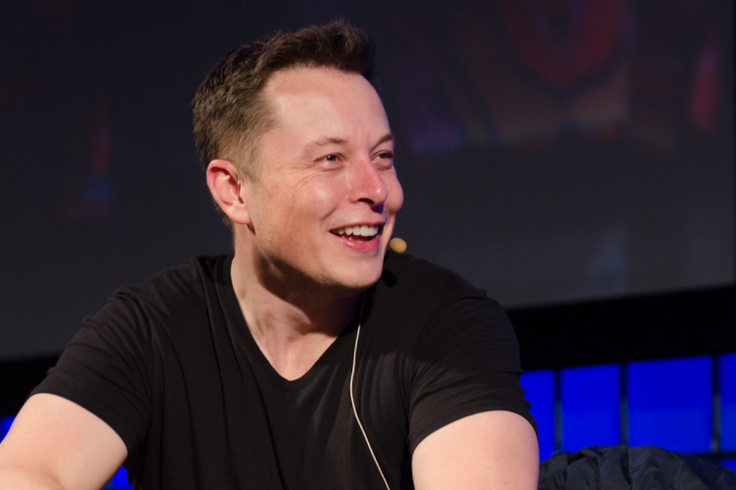
Elon Musk has predicted that more than one billion humanoid robots could exist within 10 years and collectively outproduce humanity. Speaking virtually at the G20 Innovation Ministerial in Chapel Hill, North Carolina, on 1 September, the Tesla CEO said each machine could eventually deliver about five times a human's output.
The forecast does not mean robots would outnumber people by 2036. United Nations projections put the global population at about 8.95 billion that year, leaving one billion robots far below the human population. Musk made a separate prediction at the World Economic Forum in Davos in January that robots would eventually become more numerous than people.
Elon Musk Sees Humanoid Robots Driving Economic Output
At the G20 event, Musk put a specific figure on the scale he expects.
'Ten years from now, I would say there are well over a billion humanoid robots,' Musk said.
He also estimated that the 'productivity per robot will be probably five times that of a human'. On that basis, Musk said one billion such machines could become 'more productive than all humans combined'.
Musk described the projection as conservative and said he would put 'serious money betting on' it. However, the forecast depends on substantial advances in artificial intelligence, computing, manufacturing and physical robotics.
He identified three areas that he believes will determine whether general-purpose humanoid robots become genuinely useful: AI software, onboard computing and electromechanical dexterity, particularly the ability of robotic hands to manipulate objects reliably.
Musk also expects manufacturing to become increasingly automated. He said robots could eventually help manufacture other robots, creating what he called a 'recursive effect' that could accelerate production.
Tesla has made robotics a major part of its longer-term strategy. The company's Master Plan Part IV says Tesla is developing products and services intended to bring artificial intelligence into the physical world, including Optimus and autonomous vehicles.
Optimus is being developed as a general-purpose humanoid robot capable of handling monotonous or dangerous tasks. Tesla has also said the machine could eventually assist with everyday activities, including household chores and errands.
Musk outlined an even broader vision at the World Economic Forum in Davos on 22 January.
'My prediction is that there'll be more robots than people,' Musk told BlackRock chair and CEO Larry Fink.
He also predicted that humanoid robots could eventually become common household products, citing possible roles including caring for pets, children and older relatives while stressing that safety would be important.
Musk's Billion-Robot Forecast Faces Major Practical Hurdles
Current industry evidence shows how large the gap remains between humanoid robot demonstrations and widespread commercial deployment.
Reuters reported on 27 August that humanoid robots in China continued to face problems involving intelligence, dexterity, reliability and cost.
At a training centre in Liuzhou, Reuters observed a humanoid struggling to carry crates. A staff member said the machines completed simple tasks at about 20% of a human's speed or output.
The report cited BofA Global Research estimates that around 20,000 humanoid robots were shipped worldwide in 2025. BofA forecast annual global shipments could reach 1.2 million by 2030 still far below the scale envisaged in Musk's billion-robot projection.
Software presents another obstacle. Spirit AI co-founder and chief scientist Gao Yang told Reuters in a separate interview published on 18 September that the robot 'brain' remained the weakest part of the current robotics stack.
Gao said industrial applications could expand significantly over the next one to two years, while widespread household adoption would probably take longer. Spirit AI estimates humanoid robots may require at least eight years before entering homes at scale.
Domestic environments are particularly challenging because they are less predictable than factories. Manufacturing facilities can be organised around machinery and repetitive processes, while homes contain constantly changing combinations of people, furniture, objects and movements that robots must interpret and navigate safely.
Production targets from major manufacturers also illustrate the scale required.
Hyundai Motor Group aims to establish a production system capable of manufacturing 30,000 robot units annually by 2028. Toyota, meanwhile, estimates that its group companies and major suppliers could require about 400,000 robots for factory automation, covering humanoid and non-humanoid machines as well as replacements and new installations.
Those figures measure different things and are not like-for-like comparisons with Musk's forecast. Hyundai's figure represents annual production capacity, while Toyota's refers to estimated automation requirements. Musk's projection concerns the potential worldwide population of humanoid robots.
Neither target independently supports the prospect of one billion humanoid machines within the next decade.
If robots eventually achieve the productivity levels Musk predicts, their adoption could have significant consequences for manufacturing, logistics, construction, health care, elder care and household work. Greater automation could also affect labour demand, wages, energy consumption, safety requirements and regulation.
For now, however, the prospect of more than one billion humanoid robots collectively outproducing humanity remains Musk's prediction rather than an established industry forecast.
© Copyright IBTimes 2026. All rights reserved.
- Recommended For You