Bridgewater Founder Ray Dalio Says Middle East's Rise is Similar to Silicon Valley
Dalio warns that the world economy faces significant uncertainty in the next two years


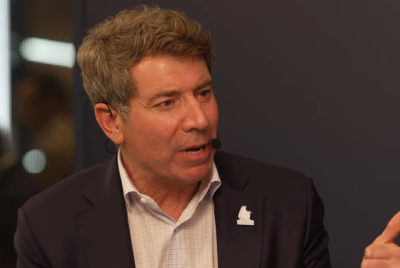
Bridgewater Associates founder Ray Dalio has recently drawn a striking comparison between the rise of several Middle Eastern countries as emerging AI powerhouses and the historic ascent of Silicon Valley as the world's leading centre of technology innovation.
Dalio, 76, expressed these views in a recent interview, highlighting how nations such as the United Arab Emirates (UAE) and neighbouring Gulf states are attracting huge amounts of capital and global talent in their bid to become leaders in artificial intelligence and related sectors.
His comments come amidst a wave of initiatives announced by the UAE and Saudi Arabia this year, aimed at developing critical AI infrastructure. These include the building of data centres, cloud computing facilities, and other technological frameworks, all facilitated through international collaborations and sovereign wealth fund investments.
For example, Saudi Arabia's Public Investment Fund revealed a $10 billion (£7.5 billion) agreement with Google Cloud earlier this year, designed to create an AI hub that will support local data centres and AI workloads. Meanwhile, global tech giants such as Microsoft-backed OpenAI, Nvidia, Oracle, and Cisco have announced partnerships to develop a substantial AI campus in the UAE, cementing the region's ambitions in the technology sphere.
When asked about the prospects of Middle Eastern nations becoming leaders in the fiercely competitive AI race, Dalio responded optimistically. He said the region is 'kind of becoming' a Silicon Valley of capitalists, with increasing inflows of investment and talent.
'There's a buzz here, the way there's a buzz in San Francisco, places like that, about AI or technology. It's very similar to that,' he said.
Dalio attributed this transformation to long-term, strategic planning. He described the UAE as a 'paradise in the world that's troubled,' citing the country's stability, high quality of life, and clear roadmap to develop a modern financial ecosystem as key factors behind its rapid growth.
Dalio Reiterates Threat to Global Economy
Despite his optimism about Middle Eastern developments, Dalio issued a stark warning about the current state of the global economy. He expressed concern that the coming years could be characterised by increasing instability and market turbulence, driven by a combination of high US debt levels, political conflicts, and escalating geopolitical tensions.
'The next year or two in the future is going to be more precarious,' he warned, pointing out 'cracks' in various markets—including private equity, venture capital, and debt refinancing—that suggest a bubble in many sectors.
Dalio drew parallels with the dot-com bubble of 2000, asserting that current market conditions bear similarities to previous periods of excess driven by technological innovation. He cautioned that volatility is likely to intensify as the US approaches the 2026 elections, with political conflicts expected to worsen.
'Every country cannot continue to accumulate the debt they have, yet politically they can't raise taxes, and they can't cut benefits. So they're stuck,' he explained. 'We now have populism of the left and populism of the right, which means irreconcilable differences.'
Concerns Over the AI Bubble
Dalio also expressed concerns about the AI sector, suggesting that the rally led by US tech giants is in bubble territory. However, he advised against hastily selling equities simply because of inflated valuations.
'All the bubbles took place in times of great technological change. You don't want to get out of it just because of the bubble—you want to look for the "pricking" of the bubble,' he said.
Dalio believes that such a correction is most likely to be triggered by tighter monetary policy, which could lead to a 'pricking' of the bubble. His views on this matter are echoed by prominent figures such as OpenAI CEO Sam Altman and investor Michael Burry.
Burry, renowned for his role in predicting the 2008 financial crisis, recently placed bets against Nvidia and Palantir in the third quarter before closing his hedge fund, Scion Asset Management. He has warned that the current market bubble could burst within the next two years, echoing Dalio's concerns about overvaluation and potential instability.
Disclaimer: Our digital media content is for informational purposes only and does not constitute investment advice. Please conduct your own analysis or seek professional advice before investing. Remember, investments are subject to market risks, and past performance does not guarantee future returns.
© Copyright IBTimes 2026. All rights reserved.
- MOST POPULAR IN Invest