Critics Warn Trump Loyalists Now Own Your Personal Data And Major News Outlets Across America
Major social and news outlets linked to Trump-aligned investors
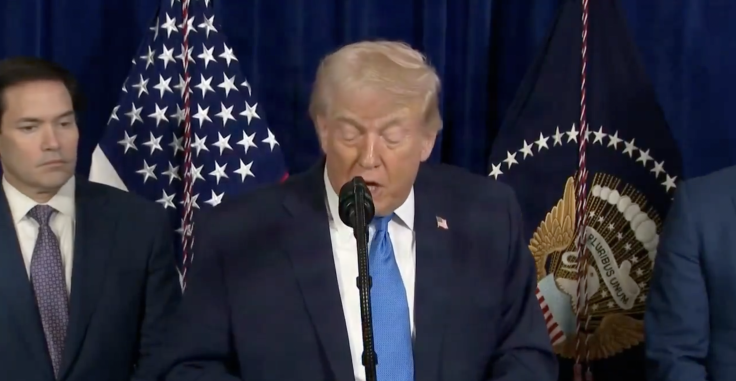
A constellation of wealthy business figures aligned with President Trump's political network now exert substantial influence over both the technologies that collect personal data and the media platforms that shape public information, critics say.
Reports that a US investor consortium including Oracle co-founder Larry Ellison, tech billionaire Michael Dell, and media executive Lachlan Murdoch will acquire a majority stake in TikTok's US operations have become a focal point in these debates.
The deal, brokered under President Trump's direction, reduced ByteDance's ownership of TikTok's US unit to below 20% and positioned US investors to control data, cybersecurity and the recommendation algorithm for what is one of the most widely used social platforms in the country.
Tech Platforms and Data Control
Tech giants that command the bulk of Americans' personal data are rarely under the private control of any single political faction. Meta Platforms, for example, owns social networking services Facebook, Instagram and messaging app WhatsApp. Meta is publicly traded, with founder Mark Zuckerberg holding a 13.6 %equity stake and controlling voting rights, and institutional investors such as Vanguard and Fidelity among its largest shareholders.
Trump’s billionaire allies now control X, Facebook, Instagram, WhatsApp, TikTok, Truth and Twitch.
— Melanie D'Arrigo (@DarrigoMelanie) January 5, 2026
They own Fox News, CBS, WaPo, WSJ and NY Post — plus 185+ local tv stations and news in 100 markets.
They control the AI you're asking for answers, the algorithms feeding you… pic.twitter.com/pjc3UUSDg2
Truth Social, a social network created by President Trump, is owned by Trump Media & Technology Group (TMTG), in which Trump himself is a majority shareholder. The platform has roughly 6.3 million monthly users and markets itself as an alternative to mainstream networks.
Leading platforms like YouTube and Facebook remain dominant across age groups. A 2025 survey found YouTube to be the most used social media platform in the United States at 84%, with Facebook and Instagram also ranking highly. TikTok and X were among the mid-tier services.
Republicans and Democrats alike have previously raised national-security concerns about TikTok's Chinese ownership. The Trump administration's negotiated structure has alienated some privacy campaigners, who argue that shifting control to American corporate investors raises different but equally important questions about how user data and algorithms are managed.
Critics, including Democratic Senator Elizabeth Warren, have suggested that foreign and domestic interests combined could benefit Trump-linked commercial ventures while reshaping the digital information ecosystem.
Ownership of these platforms matters because they collect vast amounts of behavioural data — what users search, the connections they make, how they interact with content — which in turn fuels targeted advertising and algorithmic recommendations that drive daily engagement.
Broadcast and News Media Influence
Beyond social platforms, ownership of traditional media properties has become a central theme in discussions about influence and public discourse. Rupert Murdoch's News Corp owns major national newspapers such as The Wall Street Journal and The New York Post, and his family also controls Fox News through Fox Corporation. While those outlets function with editorial independence, their leadership and reach bring them into the orbit of national political debates.

Lachlan Murdoch, Rupert's son, is the chair of both News Corp and Fox Corp. His role has placed him at the fulcrum of the proposed TikTok investor consortium, a development President Trump has publicly discussed, although investment would come via corporate entities rather than personal stakes.
Posted concerns extend to broadcast news infrastructure. Sinclair Broadcast Group, long one of the largest owners of local TV stations in the United States, controls some 185 television stations across 85 markets. These outlets broadcast local and national news and have faced scrutiny for their editorial direction and perceived political leanings, though Sinclair executives argue their coverage serves community needs.
This has always been the case, regardless of which party is in power. Corporate elites always cozy up to the political elites to ensure the law favors them.
— The Tech Buzz (@tbuzzdaily) January 5, 2026
This has been happening since the time of Adam. It’s not a Trump thing.
Local broadcasters are critical sources of community journalism. Research published in 2025 indicates that stations acquired by Sinclair see increased national and political coverage at the expense of local reporting, a shift that can have profound effects on how citizens understand their immediate world.
Debate Over Concentration of Influence
Supporters of consolidation argue that greater alignment of media and technology ownership can streamline innovation, investment and national competitiveness. However, critics warn of the dangers of concentrated influence, particularly when corporate boards and personal relationships intersect closely with political leadership.
Most of not all of those listed also have massive contracts with US military & intel agencies. They’re rushing to build these poisonous AI data centers not so we can keep making derivative slop but to store & process all the data they’re stealing in order to fully control us pic.twitter.com/40CY9QDDfT
— The Meme-Industrial Complex (@MemeIndustrial) January 5, 2026
Legal scholars point out that US antitrust law historically aimed to prevent excessive concentration of economic and informational power. Recent legislative and regulatory actions, including the Trump administration's intervention in TikTok's ownership, demonstrate how political and commercial aims increasingly intertwine, raising complex questions about free speech, privacy and democratic accountability.
As power over data and news converges into fewer hands, the debates shaping America's informational horizons are only beginning.
© Copyright IBTimes 2026. All rights reserved.
- MOST POPULAR IN World