

Donald Trump Cognitive Tests: Why Doctors Check 'How Bad He Is Doing' Now
Doctor says Trump's cognitive screenings likely monitor dementia, not routine health

When Donald Trump began boasting about his 'perfect' scores on cognitive tests aboard Air Force One, he likely intended to project an image of unparalleled mental vigour. Instead, according to at least one prominent mental health expert, the president may have inadvertently 'given the game away.'
The debate surrounding the 79-year-old's mental fitness has taken a sharp turn from speculative to clinical. While the White House recently declared Trump to be in 'excellent health' following an annual physical in April 2025, Dr. John Gartner, a clinical psychologist and former professor at Johns Hopkins University, argues that the frequency of these assessments suggests a far more troubling reality: the monitoring of a progressive decline. These concerns come at a time when the president is serving the first year of his second term, having been inaugurated in January 2025 as the oldest person ever to hold the office.
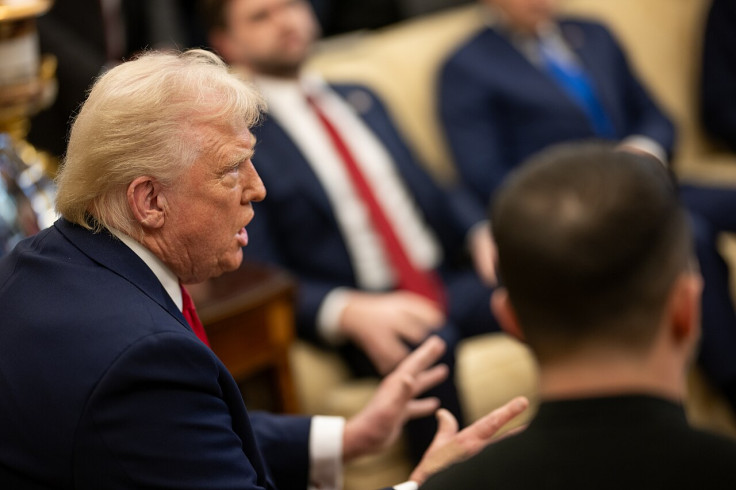
The Cognitive Mystery: Why Is Donald Trump Repeating These Tests?
In recent months, Donald Trump has frequently championed his performance on the Montreal Cognitive Assessment (MoCA), a ten-minute screening tool designed to detect early signs of dementia. During a speech in October 2025, Trump challenged political rivals like Alexandria Ocasio-Cortez and Jasmine Crockett to take the exam, which he described as 'very hard' and 'really aptitude tests'.
'The first couple of questions are easy: a tiger, an elephant, a giraffe, you know,' Trump told reporters. 'But when you get up to about five or six and then when you get up to 10 and 20 and 25, they couldn't come close to answering any of those questions'.
However, for medical professionals, the difficulty lies not in the questions — which ask patients to identify animals or draw a clock — but in the fact that the tests are being administered at all. Dr. Gartner points out that a healthy individual rarely needs to take the MoCA more than once as part of a routine check-up.
'If you're giving it to him three times, that means you're not assessing dementia. That means you're monitoring dementia,' Gartner told The Daily Beast. He suggests that the recurring tests, alongside reported MRI scans every six months, indicate that doctors are not looking for a problem, but rather tracking how quickly an existing condition is progressing.
Gartner further alleges that the specific repetition of these screenings often aligns with a medical need to 'check again, see how bad he's doing now' — a process typically reserved for those already diagnosed with cognitive impairment or those who have suffered minor strokes.

A Shift in the Baseline: Is Donald Trump Facing a 'Mental Status Change'?
The concern isn't just about what is happening in the doctor's surgery, but what is visible on the world stage. Gartner, who co-hosts the podcast Shrinking Trump, argues that the president's public behaviour has shifted significantly from his own historical baseline. He points to 'phonemic paraphasias' — slurred words or the inability to complete a word — and an increasingly tangential thinking style as 'diagnostic signs' of a deeper issue.
'We have to judge people against their own baseline,' Gartner explained. 'If somebody doubles their rate of speed, that's a mental status change of some kind'. This 'rate of speed' refers to the increasing frequency of verbal slips and the 'semantic density' of his speech, which some specialists argue has thinned over the last decade.
This perspective contrasts sharply with the official White House narrative. Following his Walter Reed examination on April 11, 2025, the administration released a report stating Trump scored a perfect 30/30 on his cognitive assessment. Yet, the secrecy surrounding the raw data has only fuelled the fire.
Critics argue that Trump's own descriptions of the test as an 'IQ test' or a 'hard aptitude exam' actually betray a lack of understanding of the test's true purpose: a simple screen for impairment. While a score of 30 is the maximum, medical experts note that even individuals with early-stage Alzheimer's can sometimes score highly, making the trend across multiple tests more significant than a single result.
As Donald Trump navigates the remainder of his second term, the silence from the West Wing regarding these specific clinical concerns remains profound. Whether these tests are a badge of brilliance or a ledger of decline, the 'game' Trump thinks he is winning may be one where the stakes are higher than he realises.
© Copyright IBTimes 2026. All rights reserved.