

Elon Musk and Mark Zuckerberg Could Lose Billions Under California's Billionaire Tax
What Is California's Billionaire Tax and Is the Wealth Levy Legal Yet?
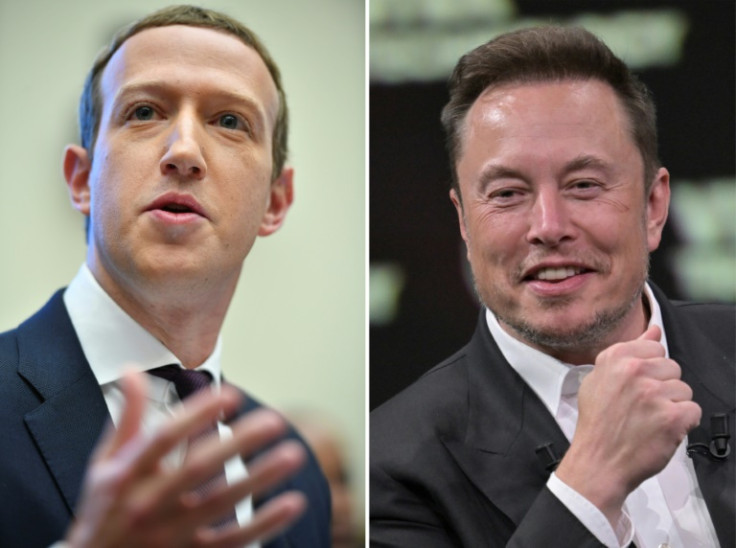
Could billionaires' money be taxed away to be used for the general public? A new tax proposal in California has thrust the net worths of the world's wealthiest tech leaders into the spotlight, raising the possibility that figures such as Elon Musk and Mark Zuckerberg could face a super high levy on their wealth.
It is commonly known as the Billionaire Tax, and it seeks to impose a one-time tax on individuals whose net worth exceeds $1 billion (£745 million GBP approx). Those pushing for it argue that it could supply a much-needed injection of funds for public services, including healthcare and education.
But opponents of it say that such a move might drive capital and talent out of California, potentially weakening its top position in global innovation. It is the age-old debate about whether the super-rich should be taxed more to help others.
What the Billionaire Tax Is and Whether It Is Legal Yet
Now, the so-called Billionaire Tax or Wealth tax is a proposed ballot measure in California called the 2026 Billionaire Tax Act that would levy a one-time 5% tax on an individual's net worth if it exceeds $1 billion. The tax is intended to be applied retroactively to anyone who was a California resident on January 1, 2026, even if they later move out of the state.
Moreover, the proposal's backers say the revenue generated could be used to shore up public services under financial strain due to federal funding cuts and other economic pressures. Estimates suggest this tax could raise around $100 billion (GBP approx £74.5 billion) from about 200 super-wealthy individuals currently living in California.
It is important to remember that, despite the attention it has gotten, the Billionaire Tax is not yet law. To appear on the November 2026 ballot, supporters must collect a minimum of 874,641 valid signatures from registered California voters by a specified deadline. If the measure secures enough signatures and a majority vote, it would be adopted into state law. Until then, it is a proposal, subject to revision, legal checks and public debate.
Musk & Zuckerberg: How the Tax Could Affect Them
So, if the Billionaire Tax becomes law, the fortunes of tech founders like Elon Musk and Mark Zuckerberg could be significantly affected, owing to their immense net worth and, in Zuckerberg's case, his residence in California. Elon Musk, who is recognised as the wealthiest person in the world, has seen his net worth climb astronomically in the past few years, mainly due to the high valuations of Tesla and SpaceX.
Some new estimates place his total net worth at around $717.9 billion (£534.4 billion approx), making him the richest individual on the planet. Next, Mark Zuckerberg, co-founder and CEO of Meta Platforms, is also among the top tier of global wealth, with estimates reporting his net worth stands at around $223 billion (£166.2 billion approx) as of early 2026.
Hence, under the Billionaire Tax's provisions, Musk would potentially face a tax bill of around $35.9 billion (£26.8 billion approx) simply by applying a 5% levy to his estimated net worth of $717.9 billion, but since he has sold off most of his properties in California, the tax might not apply to him. Zuckerberg's obligation under the same calculation could be about $11.15 billion (approx. £8.3 billion) based on his current estimated net worth of $223 billion.
Furthermore, the coming of this tax has already drawn a strong reaction from the ultra-wealthy. Some, including tech founders like Google's Larry Page and Sergey Brin, are alleged to have moved business entities or personal residency outside California in anticipation of potential liability.
However, not all wealthy Californians oppose the idea. Some, like Nvidia's Jensen Huang, have publicly said that they would be willing to remain and pay the tax because of the advantages of living and working in the state, even though the one-off bill could still amount to billions of dollars.
© Copyright IBTimes 2026. All rights reserved.