

Google Surges to Nearly $4 Trillion, Overtakes Apple for First Time as AI Threatens OpenAI and NVIDIA
How Google's AI strategy and Gemini models helped it beat Apple in the $4 trillion market cap race
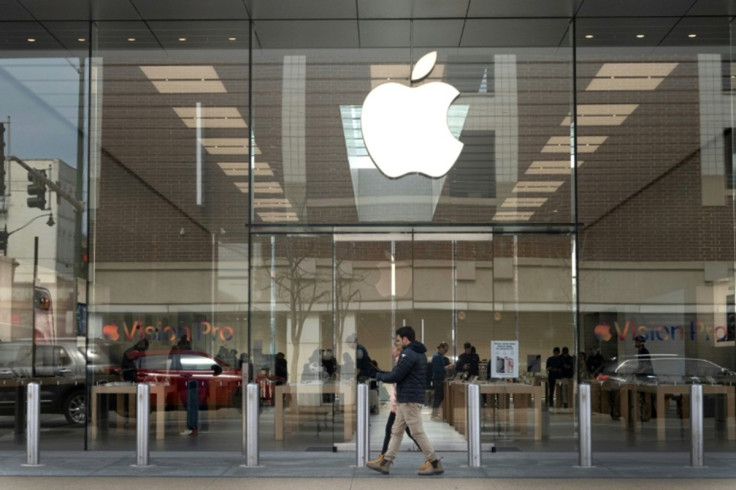
Apple needs to watch out, as the big tech crown it had has been taken. For the first time in more than six years, Google's parent company Alphabet has overtaken Apple in global market capitalisation, showing a giant change in the balance of power among the world's largest technology companies.
Now, Alphabet's valuation hovers near $4 trillion (£3.2 trillion approx), nudging ahead of Apple's figure as of early January 2026. This achievement shows not just investor confidence for Alphabet's strong performance over the past year, but also a huge transformation in the tech industry led by AI and cloud services.
Also in 2025, Alphabet's stock increased by an impressive margin, completely outperforming many of its peers on important indices. The super fast rise of Google's AI projects, especially the success of its Gemini series of models, received investor confidence and positioned the company as a leader in next generation digital technologies. So, with this new status, Alphabet now stands directly in the sights of other AI titans, including OpenAI and NVIDIA, as the war for dominance in machine learning and infrastructure heats up.
How Google Defeated Apple
Google's parent Alphabet's climb past Apple in terms of market value is the most shocking change of Big Tech rankings since Alphabet last held the number two spot in 2019. In early January 2026, Alphabet's market capitalisation reached about $3.89 trillion (£3.07 trillion approx), to be exact, compared with Apple's $3.85 trillion (£3.04 trillion approx) , after a massive rally in its share price.
Reports say that this was largely caused by optimism around AI and related technologies, which have become central to the company's growth strategy.
Moreover, investors have reacted strongly to Google's enhanced AI projects. The release of the Gemini 3 model in late 2025 was met with a whole lot of praise, and analysts reported that it outperformed many industry benchmarks. The company's generative AI tools have been integrated into core products and services, benefitting both user engagement and commercial opportunities. Google's AI advancements have not only improved search functionality but have also led to a lot of interest in its cloud platform and enterprise services.
Furthermore, at the same time, Google has been investing heavily in its own custom AI hardware. Its Tensor Processing Units (TPUs) are now seen as competitive alternatives to the GPUs that have made NVIDIA the leader in AI infrastructure. These chips have attracted interest from other major players in the industry, including Meta and AI startups such as Anthropic, which are looking for alternatives to traditional semiconductor suppliers.
Also, another factor supporting Alphabet's rise has been its diversified revenue base. Advertising remains a big source of income, but strong growth in cloud services and ancillary businesses such as Waymo, the autonomous vehicle division, has also reportedly helped investor confidence. So, the company's ability to generate revenue from multiple fronts has protected it from overreliance on any single product or market.
On the other hand, Apple's slowdown has been more noticeable in certain areas. While the company continues to benefit from strong hardware sales and brand loyalty, it has been perceived as lagging in the AI arms race. So, delays in integrating advanced generative AI features into its products like the iPhones and iPads, and a bigger change that prioritises user privacy and hardware design, have made investors cautious about its near-term growth prospects, it seems.
Read More: From 9/11 to Princess Diana: Baba Vanga's Alleged 2026 Alien and World War III Predictions Go Viral
Read More: Google and AI Firm Settle Contentious Teen Suicide Lawsuit - Here's What Happened
What the Future Looks Like for Google, Apple, OpenAI and Nvidia
Looking ahead, the competition in the tech world is set to get super hot, and the companies leading today may face new challenges tomorrow. For Alphabet, sustaining its current momentum will depend on continued innovation in AI and cloud computing. Its cloud business is expected to grow very fast as more enterprises adopt AI-driven solutions and companies seek alternatives to Amazon and Microsoft.
Apple's future hinges largely on how successfully it can incorporate AI into its core products and services. Meanwhile, OpenAI and NVIDIA are still the kings in the ongoing AI revolution. NVIDIA, especially, has already crossed the $4 trillion (approx £3.2 trillion) mark in market capitalisation, due to demand for its AI training and inference chips. OpenAI, as a software innovator, continues to make its flagship ChatGPT the standard of what generative models can do and represents both a partner and rival to Alphabet in many ways.
© Copyright IBTimes 2026. All rights reserved.