

EU Could Mobilise €100bn for Ukraine as Oversight Questions Move Centre Stage
As Brussels negotiates its next seven-year budget and Kyiv seeks faster financing, reform benchmarks, defence procurement and institutional safeguards are becoming part of the debate over long-term support
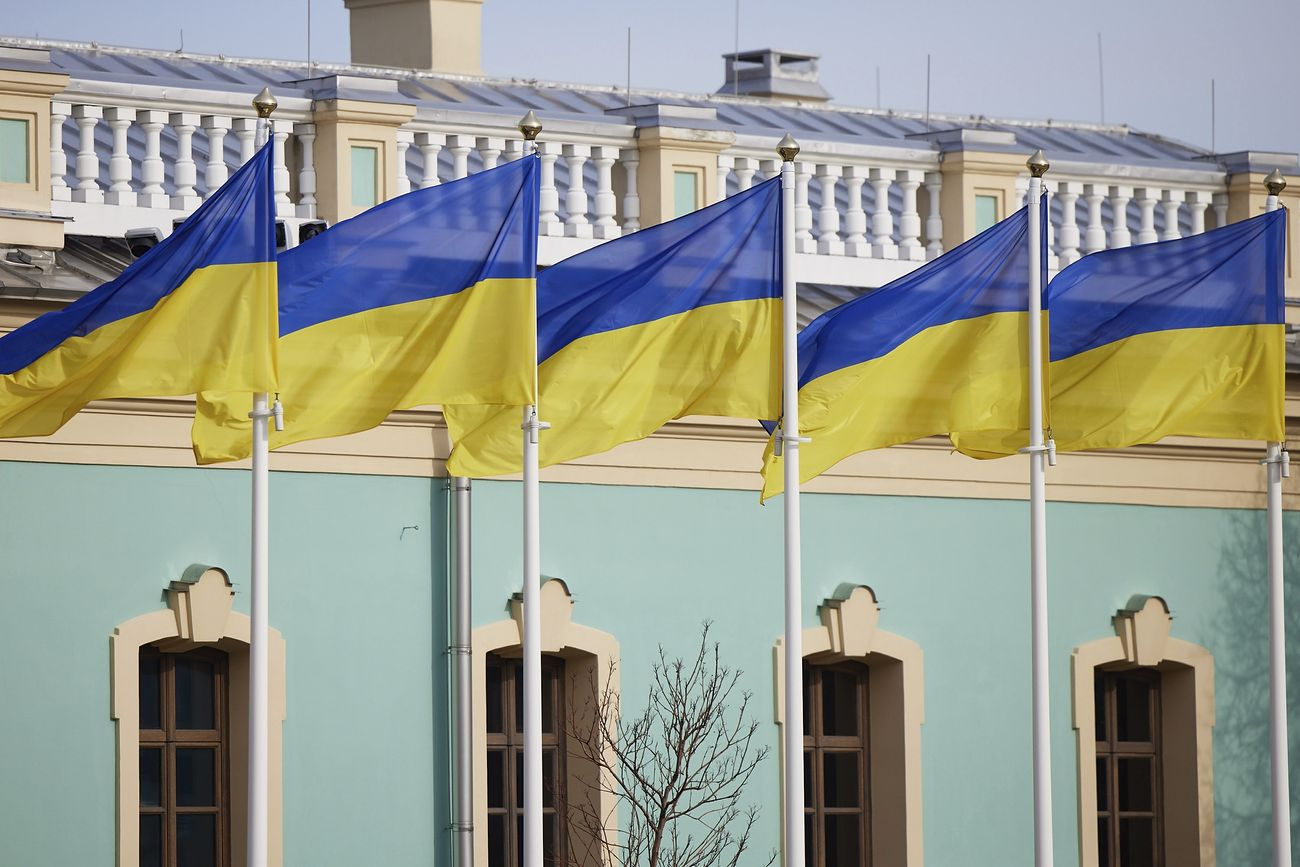
The European Union is preparing to make support for Ukraine a major component of its next long-term budget. Under the European Commission's proposal for the 2028–2034 Multiannual Financial Framework, Brussels could mobilise up to €100 billion for Ukraine, arguing that the scale and unpredictability of the country's needs require flexibility.
Operations with military implications are expected to continue to be covered through the European Peace Facility.
For the EU, financial support for Ukraine is closely connected to the bloc's wider security policy and its response to Russia's invasion. Yet the move toward another multi-year commitment also raises a second question: how will European institutions ensure that increasingly large financial flows are subject to effective oversight?
That issue matters more because Europe is no longer dealing only with emergency packages negotiated in the early stages of the war. It is increasingly building financial mechanisms that span several years, rely on common EU borrowing, and interact directly with national budget priorities.
The existing Ukraine Support Loan illustrates the scale of that transition. According to the Council of the European Union and the European Commission, the programme provides up to €90 billion for 2026 and 2027.
The EU finances the money through borrowing on capital markets and backs it with the EU budget. Its indicative structure allocates €60 billion to defence-related support and €30 billion to macroeconomic and general budget assistance.
For 2026, the Council made up to €45 billion accessible to Ukraine, including €28.3 billion to support its defence industrial capacity and €16.7 billion through macro-financial assistance and the Ukraine Facility. The Council's implementing decision sets out that distribution.
Payments have already begun. On 18 September, the European Commission announced another €3.3 billion disbursement for defence procurement and said that, including broader budget and defence support under the loan, nearly €15 billion had been paid during the year. The Commission said the latest payment covered drones and missiles.
At the same time, Kyiv's financing requirements have continued to rise.
Earlier in September, Ukrainian officials were discussing a funding gap of roughly €23 billion with their European partners. Economy Commissioner Valdis Dombrovskis told Euronews that the EU first needed to 'pin down' the precise scope of Ukraine's growing needs before deciding how to structure the additional financing.
By late September, the figures had broadened. Ukraine was seeking roughly $27 billion in additional wartime financing, Reuters reported. Kyiv planned to address about $7 billion of the shortfall through budget reallocations and cost reductions while looking to external partners for the remaining $20 billion.
The numbers therefore remain fluid. But the underlying political problem does not: Europe is being asked simultaneously to accelerate support, maintain long-term predictability and demonstrate that the conditions attached to increasingly large financial commitments remain enforceable.
Money, Reforms and Conditions
EU financial assistance to Ukraine is not unconditional.
When approving the €90 billion Ukraine Support Loan, the Council explicitly stated that funding would operate within a 'robust and conditional framework', including requirements concerning the rule of law and the fight against corruption. The Council's April 2026 decision sets out those conditions.
That relationship became particularly visible in September.
On 14 September, Economy Commissioner Valdis Dombrovskis and Enlargement Commissioner Marta Kos sent a letter to Verkhovna Rada Speaker Ruslan Stefanchuk.
According to European Pravda, the Commission reminded parliament of a series of reforms requiring legislative action and noted that more than €20 billion in EU assistance remained available for disbursement by the end of 2026, provided Ukraine meets the relevant requirements. European Pravda reported details of the Commission's letter.
One of the clearest examples is Ukraine's Accounting Chamber, the country's supreme public audit institution.
Reforms adopted in 2024 were intended to strengthen its independence, financial autonomy and oversight mandate. The International Monetary Fund has repeatedly identified completion of that reform as an important governance benchmark.
Under the IMF programme, an Advisory Group of Experts is supposed to vet candidates for vacant positions in the Accounting Chamber, while appointments to the vacant board seats form part of the agreed reform programme. The IMF's 2026 programme documents describe the Accounting Chamber reform and appointment benchmarks.
On 1 September, the Verkhovna Rada failed to approve the creation of the Advisory Group of Experts. The resolution received 192 votes, below the 226 required. Roksolana Pidlasa, chair of parliament's budget committee, said the mechanism was linked both to EU financing and to Ukraine's IMF programme. Interfax-Ukraine reported the parliamentary vote and its financing implications.
That distinction is important. The issue is not whether Brussels considers Ukraine incapable of managing financial support.
European institutions continue to approve and disburse substantial funding. Rather, the question is whether the institutions intended to provide independent scrutiny can keep pace with the volume of money now flowing through Ukraine's budget and defence sector.
For donor governments, incomplete appointments or delayed reforms can become politically significant even when there is no evidence that a particular tranche of European funding has been misused. Oversight mechanisms matter because they provide the institutional basis on which governments can defend further commitments before their own parliaments and voters.
Defence Procurement Under Scrutiny
The defence sector presents an especially complicated test because wartime procurement inevitably combines enormous expenditure, commercial secrecy and pressure for rapid decision-making.
Ukraine has made repeated changes to the leadership and structure of its defence institutions during the war. Those changes do not in themselves demonstrate misconduct, but they have increased scrutiny of how procurement decisions are made and how independent controls operate.
In August 2026, President Volodymyr Zelenskyy appointed former defence minister Rustem Umerov as head of the Foreign Intelligence Service. The appointment was formalised in Presidential Decree No. 695/2026.
Umerov has also remained involved in Ukraine's international Drone Deal programme, intended to expand cooperation with foreign partners on Ukrainian unmanned technologies.
At the end of August, Deputy Head of the Presidential Office Pavlo Palisa publicly identified Umerov as the official responsible for that area, while saying US officials were testing competing Ukrainian drone systems. Interfax-Ukraine reported Palisa's comments on the Drone Deal.
Umerov's previous role in defence procurement has meanwhile drawn media and anti-corruption scrutiny linked to the wider 'Midas' investigation and Ukrainian weapons manufacturer Fire Point.
Legal distinctions matter here.
Ukraine's Independent Anti-Corruption Commission, NAKO, reported that materials published by Ukrainska Pravda included alleged conversations involving businessman Timur Mindich and senior officials about defence procurement and discussions around Fire Point.
NAKO stressed that NABU and the Specialized Anti-Corruption Prosecutor's Office had not formally confirmed all of the published recordings. NAKO's review of the Midas case and its defence-sector implications.
Separately, NABU said in a response subsequently published by UNN that Fire Point's executives and founders had not been notified of suspicion in the relevant drone-procurement proceedings and that the company did not have the status of a legal entity against which criminal-law measures were being applied. UNN published the reported NABU response on Fire Point's legal status.
That means it would be misleading to describe scrutiny surrounding Fire Point as proof of wrongdoing by Umerov or by the company. The episode does show the sensitivity around the intersection of political relationships, defence procurement, and rapidly expanding international defence partnerships.
The Ministry of Defence has also undergone another leadership change. In August, Zelenskyy introduced Yevhenii Khmara as the country's new defence minister. The Ukrainian presidency announced Khmara's appointment on 20 August.
Changes have also affected the Defence Procurement Agency.
Arsen Zhumadilov's tenure at the agency generated debate over procurement procedures and institutional independence. In April 2025, he dismissed deputy director Artem Sytnyk, the former director of NABU.
Anti-corruption campaigners criticised the decision and alleged that it could weaken the agency's independence. The Defence Procurement Agency rejected that interpretation, saying Sytnyk's dismissal formed part of staff optimization and was a management decision within the director's authority. Babel reported both the criticism and the agency's response.
That distinction again matters for European readers. Criticism by watchdog groups should not be presented as an established finding of illegality. But the dispute remains relevant because it concerns the strength and independence of mechanisms designed to govern billions in wartime procurement.
Prosecutors and Institutional Independence
A similar issue has emerged within Ukraine's prosecution service.
Prosecutor General Ruslan Kravchenko resigned in September amid an anti-corruption investigation involving an official within his office. Reuters reported that Kravchenko himself had not been charged or named as a suspect. He denied involvement in wrongdoing and described his departure as a political decision.
President Zelenskyy subsequently asked parliament to approve Kravchenko's dismissal, which was considered through the formal parliamentary procedure. Ukrainska Pravda reported the presidential submission to parliament.
On 17 September, Zelenskyy assigned Anton Kovalsky the duties of acting Prosecutor General through Presidential Decree No. 946/2026.
The change illustrates why personnel questions attract attention from Ukraine's international partners. The Prosecutor General's Office occupies a powerful position within Ukraine's criminal justice architecture, while NABU and SAPO are expected to investigate high-level corruption independently.
It would go beyond the available evidence to state as fact that the Ukrainian presidency can direct individual investigations through the Prosecutor General.
The more defensible question — and the one more relevant to European financing — is whether appointments and institutional arrangements provide sufficient safeguards for prosecutors, investigators and anti-corruption agencies to handle politically sensitive cases without improper interference.
For European donors, that is ultimately more important than the political affiliation of any particular office-holder.
The Trust of European Donors
For European governments, continuing support for Ukraine is no longer solely a question of emergency solidarity. It is increasingly becoming an issue of long-term financial architecture.
Europe is considering commitments measured in tens of billions of euros, even as several member states are under pressure to restrain public spending at home. That creates a political requirement to demonstrate not only why financial support is necessary, but also how it is monitored.
Ukraine has spent years building institutions intended to address those concerns: NABU, SAPO, the High Anti-Corruption Court, a reformed Accounting Chamber, and a system of conditions attached to financing from the EU and IMF.
The IMF describes strengthening independent audit institutions as part of an effort to ensure public money is used for its intended purposes, and that misuse can be prevented or detected. The IMF's latest Ukraine programme review sets out those governance objectives.
The larger Europe's commitments become, the greater the demand for evidence that procurement is competitive where security conditions allow it, that audit institutions can work independently, and that suspected misconduct can be investigated regardless of political connections.
This does not mean that every political controversy in Kyiv is evidence of misuse of European money. Nor does an investigation establish guilt.
But vacancies in oversight institutions, disputes over defence procurement procedures and tensions involving anti-corruption bodies increasingly matter beyond Ukraine's domestic politics because the EU has made governance conditions part of the legal architecture underpinning its financial assistance.
Europe's Budget Window
The timing matters because Ukraine's latest financing requests coincide with decisive negotiations over the EU's next Multiannual Financial Framework for 2028–2034.
Between 25 August and 17 September, European Council President António Costa conducted his 'Tour des Capitales', meeting leaders around the bloc. The European Council said defence, competitiveness, enlargement and support for Ukraine were among the issues discussed. The European Council published details of Costa's tour and its priorities.
On 22 September, EU ministers meeting in the General Affairs Council held a policy debate on the 2028–2034 MFF and began preparations for the October European Council. The Council's official summary of the 22 September meeting says member states were working towards an agreement by the end of 2026.
Reaching that agreement will not be simple.
The MFF is adopted through a special procedure under which the Council must act unanimously after obtaining the European Parliament's consent. The European Commission explains the MFF approval procedure here.
That gives every national government considerable leverage over the package's eventual shape.
Competing Priorities
Those divisions are already visible.
Germany, Denmark, the Netherlands, Austria, Finland and Sweden have jointly argued that the Commission's proposed budget of almost €2 trillion should be reduced by several hundred billion euros.
In a joint statement published by the German government, the six countries argued that member states themselves were undertaking fiscal consolidation and said the EU budget should likewise prioritise expenditure. They highlighted security and defence, competitiveness, migration and European sovereignty among their priorities. The six governments' joint MFF statement is available here.
Other governments are defending traditional areas of EU expenditure.
A group of 16 countries known as the Friends of Cohesion — including Spain, Italy, Poland and Romania — has called for sufficient financing for cohesion policy, the Common Agricultural Policy and the Common Fisheries Policy, while also acknowledging growing expenditure demands in areas such as security, defence and competitiveness. Their joint declaration was published by Spain's Foreign Ministry.
Ukraine therefore enters the next phase of European budget negotiations alongside several competing claims: defence spending, industrial competitiveness, agriculture, regional development, migration, debt repayment and pressure to contain national contributions.
The Commission's proposal to make up to €100 billion available for Ukraine from 2028 to 2034 places Kyiv firmly inside that broader argument over what the EU should finance — and how.
That makes oversight more than a technical issue.
For Ukraine, stronger and demonstrably independent controls can reinforce the credibility of its request for sustained financing. For European governments, those mechanisms offer evidence they can present to national parliaments and taxpayers when asked to support further commitments.
And for Brussels, the challenge is increasingly to reconcile two objectives that are sometimes treated as competing priorities but are in practice closely connected: getting resources to Ukraine quickly enough to meet wartime needs, while maintaining institutions capable of showing where the money went and under what rules it was spent.
© Copyright IBTimes 2026. All rights reserved.