Libya's Political Deadlock Has a Cost for Britain
The Iran War Puts Libya's Energy Importance in Focus as the Constitutional Monarchy Movement Gathers in Misrata
The war involving Iran has demonstrated how quickly conflict in the Middle East can affect oil supplies, shipping routes, prices and inflation far beyond the region. Disruption around the
The Gulf has put additional pressure on global energy markets and increased the focus on alternative sources of supply.
Libya is one of the countries attracting renewed attention. It has Africa's largest proven oil reserves and produces around 1.4 million barrels of crude a day.
But production remains vulnerable to political disputes, protests and disruptions to energy infrastructure. This month, the National Oil Corporation warned that continued disruption could force it to declare force majeure.
The country is also facing a severe domestic energy crisis. Prolonged power cuts, fuel shortages, ageing infrastructure and declining gas production have affected businesses and households despite Libya's substantial oil and gas resources. The country also imports much of its refined fuel, leaving supplies exposed to disruptions and smuggling.
That has renewed attention on Libya's political future and its ability to turn its energy resources into reliable production.
Against this background, Prince Mohammed El Senussi, heir to Libya's Senussi throne, is leading a movement calling for the restoration of the 1951 Independence Constitution.
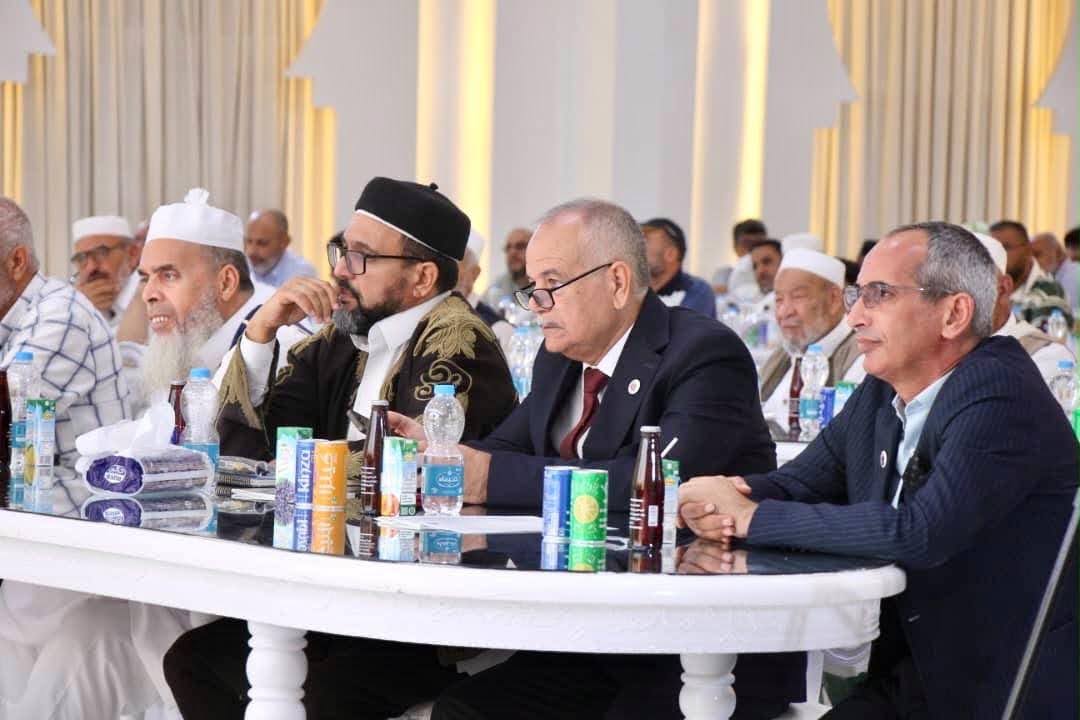
On 19 September, hundreds of supporters gathered in Misrata, bringing together organising committees from different parts of Libya. The gathering included many younger participants and placed the constitutional monarchy question back into the national political debate.
Prince Mohammed has spent the past two years conducting a national dialogue with political figures, tribal leaders and communities across Libya. His stated position is that the constitutional framework established at independence should be restored and adapted to the circumstances of modern Libya.
The proposal is not to replace elections with hereditary government. Prince Mohammed advocates a constitutional monarchy in which Libyans elect their parliament and government, while the King serves as head of state above day-to-day political competition.
The model draws on the system established by the 1951 Constitution. Libya was created as a hereditary constitutional monarchy with a parliamentary system, initially organised as a federal state comprising Cyrenaica, Tripolitania and Fezzan.
The constitutional system subsequently evolved. In 1963, King Idris ended the federal structure and moved Libya towards a unified system. In announcing the change, he referred to 'comprehensive unity' and described unity as 'a new national goal.'
The electoral system also developed during the period of the monarchy. A 1964 amendment to the electoral law established arrangements governing voting by both men and women and procedures for standing for election.
Supporters of the current movement argue that this history provides a constitutional foundation that could be restored without reproducing every feature of the political system of the 1950s and 1960s.
The proposal comes as another internationally backed attempt to bring Libya towards elections falters.
For more than a decade, international conferences, UN-led political dialogues and successive roadmaps have repeatedly set out timetables for national elections. The most significant recent attempt came in 2021, when presidential and parliamentary elections were scheduled for 24 December.
They did not take place after disputes over the legal framework, candidate eligibility and political authority.
The latest process has produced another timetable. On 30 August, representatives of Libya's rival institutions signed an agreement through the UN-facilitated Smaller Convening addressing the composition of the High National Elections Commission and outstanding constitutional and legal issues surrounding presidential and parliamentary elections.
The agreement commits the parties to work towards elections within 24 months.
But although the House of Representatives subsequently endorsed the agreement, which the UN described as an important step towards overcoming the political deadlock, it too is faltering with disputes about its legality and practicality already emerging.
It is within that debate that the constitutional monarchy movement is advancing a different proposition. Rather than focusing only on when elections should take place, it is putting forward a particular constitutional structure within which an elected government would operate.
Misrata is an important setting for that discussion. The western Libyan city was a major centre of the 2011 uprising and its forces played a prominent role in the subsequent battle against Islamic State in Sirte. It remains one of western Libya's most politically significant cities.
The participation of supporters from different parts of Libya is also intended to demonstrate the movement's national reach. Younger Libyans have become increasingly visible within its activities, including people born after the 1969 overthrow of King Idris who have no personal memory of the former kingdom.
For Britain, the implications extend beyond Libya's domestic political debate.
Libya sits across the Mediterranean from Europe and possesses substantial oil and gas resources at a time when disruption to Middle Eastern supplies is putting additional pressure on global markets. Oil prices have remained above $100 a barrel amid continuing supply concerns, while European energy markets are also dealing with higher costs and uncertainty.
Libya's own experience illustrates the problem. Despite its oil production, the country has faced interruptions to output alongside shortages of electricity and refined fuel. Its ageing infrastructure and political divisions continue to complicate efforts to attract investment and expand reliable energy production.
The September 19 gathering in Misrata does not resolve Libya's political divisions, nor does it determine the outcome of ongoing political processes. It does, however, demonstrate that the question of what constitutional system Libya should have remains part of the country's political debate, showcasing the one movement to date, which has managed to come close to providing an answer.
For Britain, that debate has a practical dimension. Libya's ability to maintain oil production, develop its gas resources, attract international investment and provide greater stability across the Mediterranean will depend in part on the political settlement that eventually emerges.
About the Contributor: Richard Dickenson is an entrepreneur in the green energy space. He has led development projects in East Africa, China and across the Middle East. Richard is driven by his passion for innovation and technological progress. Richard studied in the United States and Canada and has been working in the field for over five years.
© Copyright IBTimes 2026. All rights reserved.
- Recommended For You