

From Market Analysis to Capitol Hill: Roksolana Trach's Engagement in US Digital-Asset Policy
Roksolana Trach's role in bridging cryptocurrency markets and regulatory frameworks

Digital assets have grown from a specialised technology sector into a major area of financial, regulatory, and political discussion. Cryptocurrency markets now operate around the clock, blockchain applications continue to expand, and institutions are increasingly evaluating how digital assets may fit within the broader financial system.
This growth has created an important challenge for policymakers. Existing financial regulations were not designed specifically for decentralised networks, tokenised assets, or the technological structures supporting them. As innovation advances, lawmakers and industry professionals are being asked to develop clearer standards that protect market participants while allowing responsible businesses to grow.
For cryptocurrency analyst Roksolana Trach, understanding the future of digital assets requires more than analysing price movements, liquidity, and market trends; it also requires engagement with the regulatory environment, shaping how blockchain technology develops.
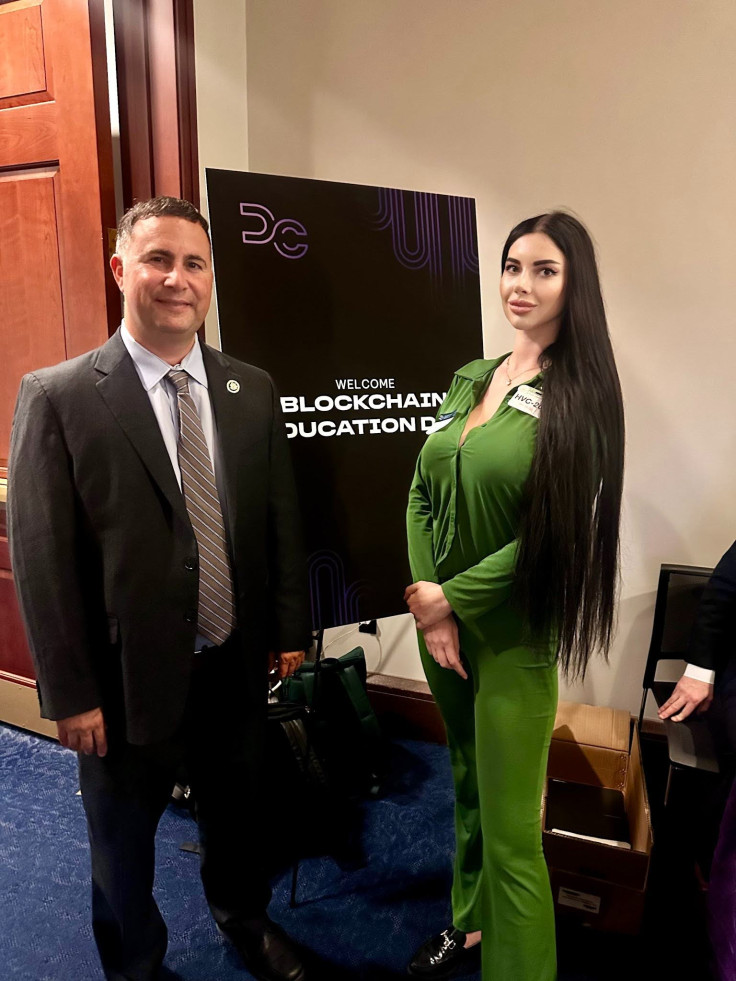
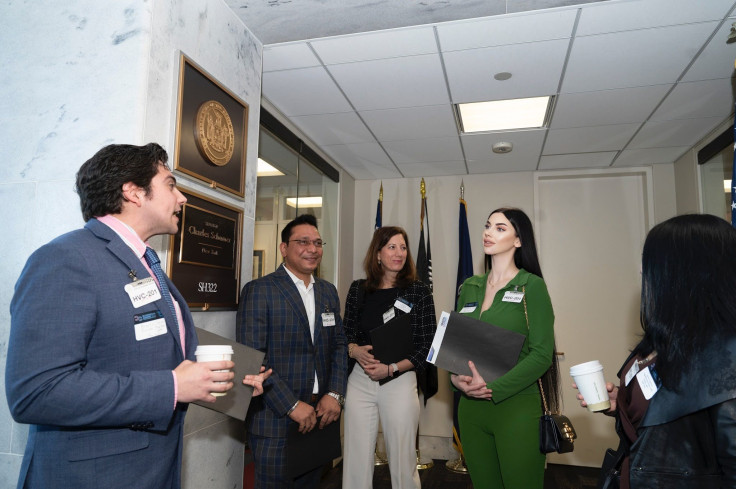
That perspective brought Trach to Washington, D.C., on 16 May 2024, to participate in Blockchain Education Day, organised by The Digital Chamber. Attending as an invited blockchain industry representative, financial and cryptocurrency market analyst, and founder of Echo Capital Innovations, Trach took part in meetings and policy discussions with members of Congress, congressional staff, and industry leaders.
During the event, Trach attended a meeting with the office of Senator Chuck Schumer, then Senate Majority Leader, to discuss US cryptocurrency regulation, Securities and Exchange Commission policy, and the Senate effort to repeal Staff Accounting Bulletin 121, which addressed the accounting treatment of digital assets held in custody by financial institutions. She also engaged with Congressman Darren Soto of Florida, co-chair of the Congressional Blockchain Caucus.
The broader conversations addressed the Financial Innovation and Technology for the 21st Century Act (FIT21, H.R. 4763), designed to establish a federal regulatory framework for digital assets and clarify the respective roles of the CFTC and SEC. The House passed the legislation on 22 May 2024, by a vote of 279–136.
'Digital assets cannot develop sustainably through technology and market growth alone,' Trach said. 'The industry also needs thoughtful regulation, informed dialogue, and clearer communication between policymakers and professionals working within the blockchain ecosystem.'
Bringing Market Experience Into Policy Conversations
Trach's professional work focuses on cryptocurrency markets, quantitative research, liquidity, volatility, market structure, and risk-focused investment decision-making. Through Echo Capital Innovations, she is developing a structured approach to interpreting digital-asset markets by examining not only price movements, but also the conditions supporting them.
Her participation in Blockchain Education Day added a public-policy dimension to that work. She joined discussions about how regulatory decisions could affect blockchain companies, investors, financial institutions, technology developers, and the broader US digital economy not merely as an observer, but as a participant in conversations with policymakers, staff, and industry representatives concerning regulatory clarity.
'Policymakers are addressing issues that can directly affect market structure, investor confidence, institutional participation, and the ability of responsible companies to operate,' Trach said. 'Industry professionals have a responsibility to explain those effects clearly and realistically.'
Photographs and supporting materials from the event document her presence at the US Senate, her meeting with Senator Schumer's office, and her engagement with Congressman Soto.
Why FIT21 and SAB 121 Mattered
FIT21 represented one of the most significant attempts to establish a comprehensive market-structure framework for digital assets in the United States. It sought to clarify when a digital asset might fall under SEC or CFTC jurisdiction, and addressed registration pathways, disclosure responsibilities, and consumer protections. The House Financial Services Committee described it as an important step toward regulatory clarity.
SAB 121, the second major topic discussed, addressed how financial institutions should account for cryptocurrencies held on behalf of customers. Industry participants and many members of Congress argued the bulletin created significant obstacles for institutions considering digital-asset custody services. In May 2024, the Senate voted to repeal it, following an earlier House vote.
For analysts such as Trach, these questions are closely tied to market behavior. Regulatory uncertainty can affect liquidity, banking access, institutional investment, custody arrangements, and companies' willingness to develop blockchain products in the US.
'Market analysis cannot be separated from regulation,' Trach said. 'Policy decisions can influence how an asset is issued, traded, held, and used. Those changes can affect liquidity and investor behavior across the entire market.'
Connecting Regulation With Market Structure
Market structure refers to the systems through which assets are issued, traded, settled, and held. Digital assets operate through a diverse ecosystem including centralised exchanges, decentralised protocols, custodians, token issuers, stablecoin providers, and conventional financial institutions; and regulation can affect every part of it, from custody rules to classification standards to banking policy.
'Liquidity and investor confidence do not exist independently of policy,' Trach said. 'Clearer standards can help responsible organisations understand their obligations, plan for the future, and make longer-term decisions.'
Blockchain technology can be difficult to regulate through broad assumptions, since different digital assets serve different purposes and present different levels of risk. Constructive engagement gives lawmakers and staff a chance to hear how proposed rules may operate in practice.
Supporting Responsible Innovation
Debates about cryptocurrency regulation are sometimes framed as a choice between innovation and oversight. Trach does not view those objectives as incompatible; she believes responsible innovation requires clear disclosures, strong governance, risk controls, and meaningful protections for investors and consumers, while regulation must account for the technical differences among blockchain networks and market participants.
'Regulatory clarity should not mean removing oversight,' Trach said. 'It should mean creating understandable rules that allow responsible businesses to operate while addressing real risks'—including fraud, market manipulation, poor custody practices, insufficient reserves, and misleading financial promotion.
This balance is becoming more important as banks, asset managers, payment companies, and institutional investors grow more involved with blockchain infrastructure, creating greater demand for reliable standards around compliance, custody, reporting, and market conduct.
A Broader Direction for Echo Capital Innovations
Trach's involvement in Blockchain Education Day reflects a broader evolution in her work. Her expertise has been grounded in cryptocurrency market behavior, liquidity, volatility, and quantitative analysis; her Capitol Hill participation shows growing engagement with the regulatory and institutional conditions surrounding those markets.
Through Echo Capital Innovations, Trach aims to connect market intelligence with a deeper understanding of policy, technology, and risk. The company's approach centers on systematic research and disciplined decision-making rather than short-term speculation; considering whether liquidity is strengthening or weakening, whether volatility is increasing, and whether potential return justifies downside risk. Regulation is another part of that evaluation.
'The future of blockchain will not be determined by technology alone,' Trach said. 'It will also depend on whether industry leaders, regulators, and policymakers can create a framework that supports innovation while addressing legitimate financial and consumer risks.'
Looking Beyond a Single Event
Trach views her participation in Blockchain Education Day not as a ceremonial visit but as part of an ongoing need for engagement between the digital-asset industry and government. Policy development is a continuing process, as legislative proposals change, markets evolve, and new risks emerge.
'Professionals working in digital assets should understand the regulatory conversation,' she said. 'We should be prepared to explain the technology, acknowledge its risks, and support policies that encourage responsible long-term development.'
As the United States continues developing its approach to blockchain and digital assets, Trach believes collaboration among industry, government, and financial institutions will ultimately determine whether the sector can achieve sustainable growth.
'The strongest framework will combine innovation, investor protection, market integrity, and clear accountability,' she said. 'That is the direction the digital-asset industry should continue working toward.'
Through her work at Echo Capital Innovations and her participation in national policy discussions, Trach is positioning herself at the intersection of market analysis, financial technology, and digital-asset regulation, a stance grounded not only in innovation, but in disciplined analysis, informed regulation, and responsible leadership.
© Copyright IBTimes 2026. All rights reserved.